
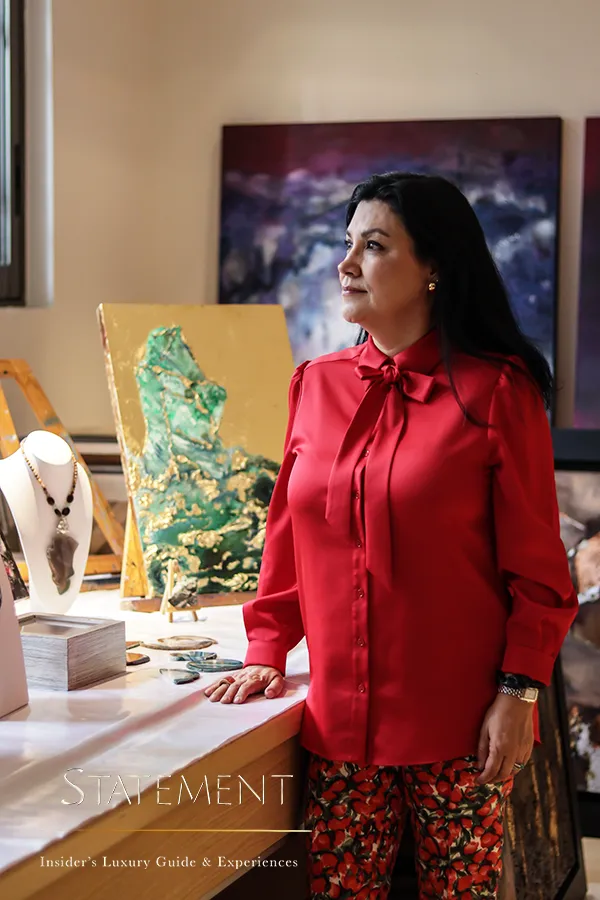
Some people find their way into jewelry through family tradition, artistic calling, or a fascination with luxury. Indra Ortiz arrived by an unexpected route: law. Born in Xalapa, Veracruz, she left her legal career behind to immerse herself in a universe where beauty begins long before design. In this conversation, the designer shares how studying gemstones and precious metals transformed the way she understands the world, leading her to discover that true luxury is not born in a display case, but deep within the earth, where minerals and gemstones wait in complete darkness for the moment when light reveals what has always been there.
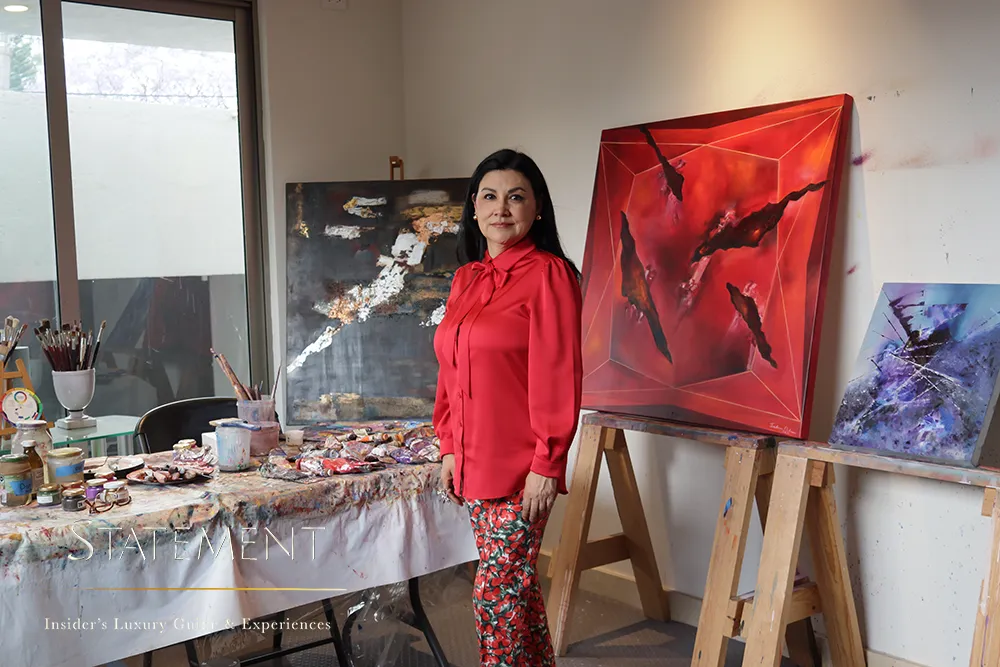
Would you say your artistic passion—which began with jewelry and has now expanded into the visual arts—was always within you? That perhaps it was there all along, even while you were studying law, and that this journey simply brought it to the surface?
Yes. At first glance, law and art may seem like two completely unrelated worlds. But law is perhaps the most human of all sciences, and art is one of humanity’s purest forms of expression.
They actually share remarkable similarities. Both have a methodology, a structure. Painting follows a process just as law does. One of the essential principles behind creating a beautiful work of art is, interestingly enough, justice. You have to consider balance, weight, proportion, form, and composition. Every element must occupy its rightful place. If you think about it, that’s very similar to what law seeks: justice, balance, harmony. Both disciplines are fundamentally concerned with human values, and those principles are embedded in their formal structures.
In that sense, I see the visual arts as another expression of justice. But eventually I left justice behind and devoted myself entirely to gemstones, metals, and jewelry-making. Take gold, for example. When you think of gold, you probably imagine something bright and yellow. But natural gold is neither. In its raw state, it’s almost brown and it doesn’t shine on its own. It has to be helped to reveal its brilliance.
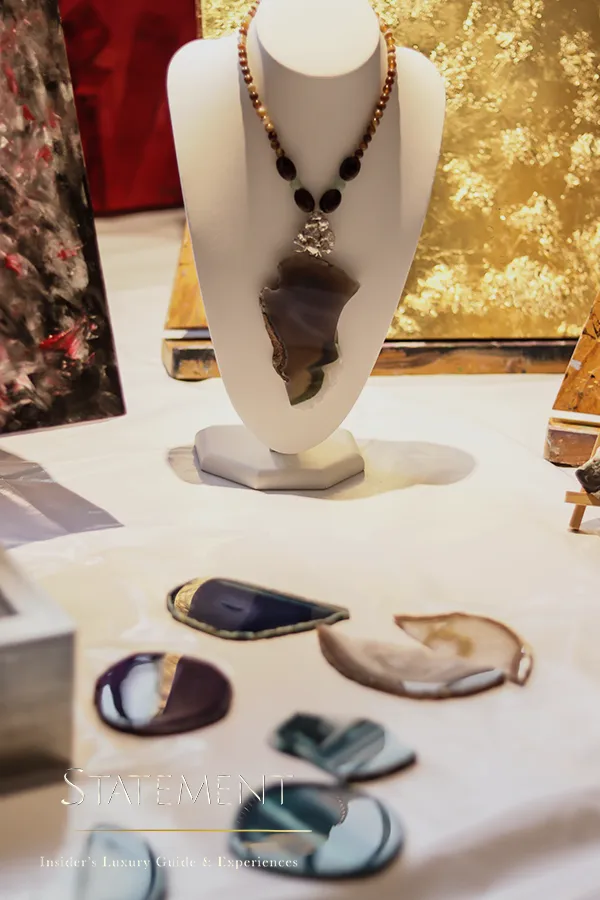
To become jewelry, metal journeys through the four elements: it comes from the earth, passes through fire, requires water, and finally air. Along that path it changes color, texture, shape, and even its molecular structure. Metal transforms completely.
Pure metals are actually too soft for jewelry. That’s why they must be alloyed with other metals to gain the strength required for wear.
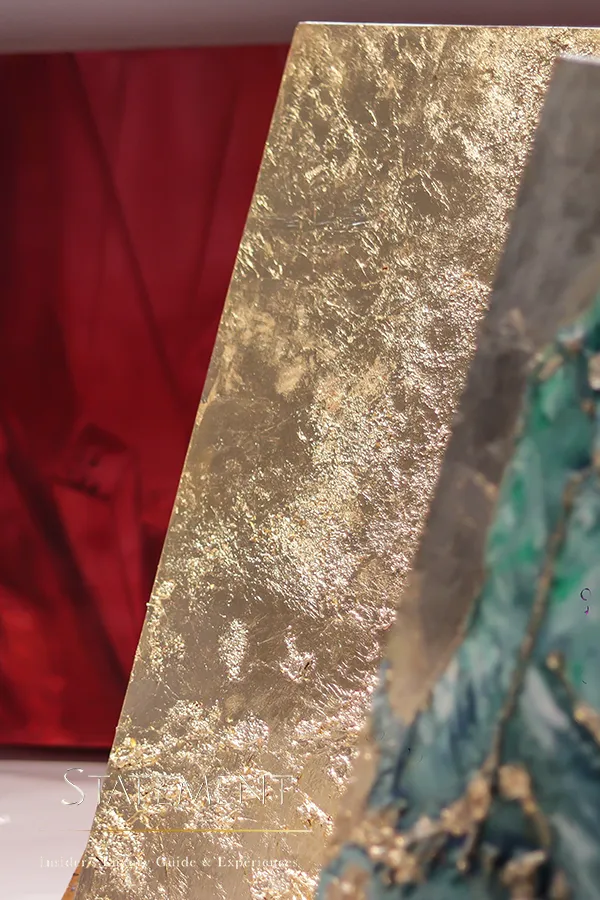
Gold is also fascinating because of its place in art history. Its use dates back to Mesopotamia and Babylon, but it was the Egyptians who truly elevated its craftsmanship. They mapped mining routes—what we know today through the Turin Papyrus—and established workshops directly beside the mines. They began hammering gold, polishing it, experimenting with alloys, and discovered that polished gold reflected light in extraordinary ways. They were also the first to produce gold leaf.
If you think of Egyptian art—Tutankhamun’s tomb, sarcophagi—you immediately understand how deeply gold became associated with the divine. Ra was the god of the sun, and the sun was represented by the color of gold. Gold became a symbol of humanity’s path toward the divine.
That symbolism continued into the Renaissance. When you enter Romanesque or Renaissance churches and see gilded altarpieces, the gold isn’t there simply for decoration. It represents the transition from the human to the sacred. This is why gold has remained present throughout the history of art—not only as a concept, but as an actual artistic material. Gustav Klimt later gave it a completely different interpretation, but gold has never disappeared from artistic practice.
Silver deserves its own chapter, especially in Mexico. Our land is extraordinarily rich in silver. Beyond jewelry, silver has played an essential role in industry—from electricity to automotive manufacturing. Metals are deeply woven into Mexican history and identity.
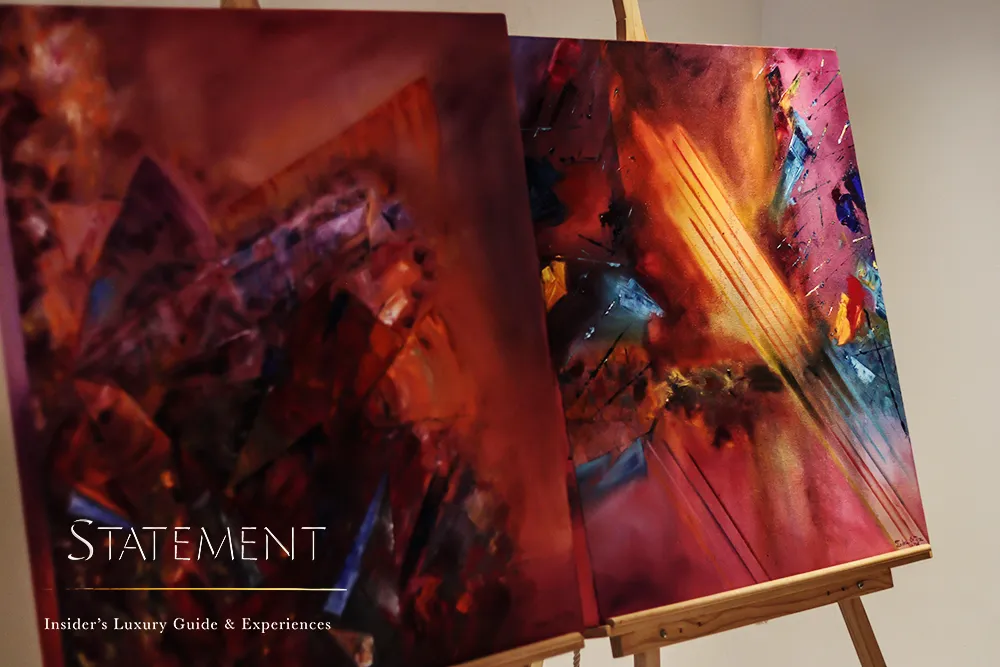
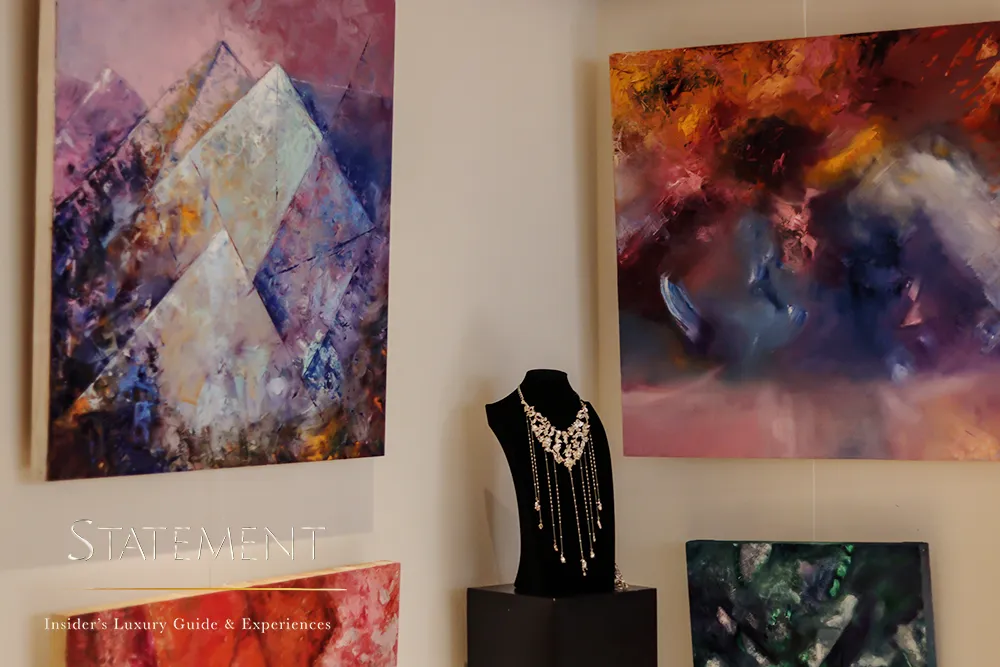
For me, however, they became a source of endless inspiration. Watching metal transform through fire opened an entirely new universe of colors and textures. Silver turns black, then brown, then red, purple, green, blue… the patinas are extraordinary.
Watching molten gold in its liquid state is unlike seeing it as a solid metal. It’s a completely different experience. The entire process of jewelry-making—the craftsmanship, the transformation, the design—is incredibly beautiful. And in recent years, Mexican jewelry design, particularly in cities like Guadalajara and Mexico City, has reached an exceptional level.
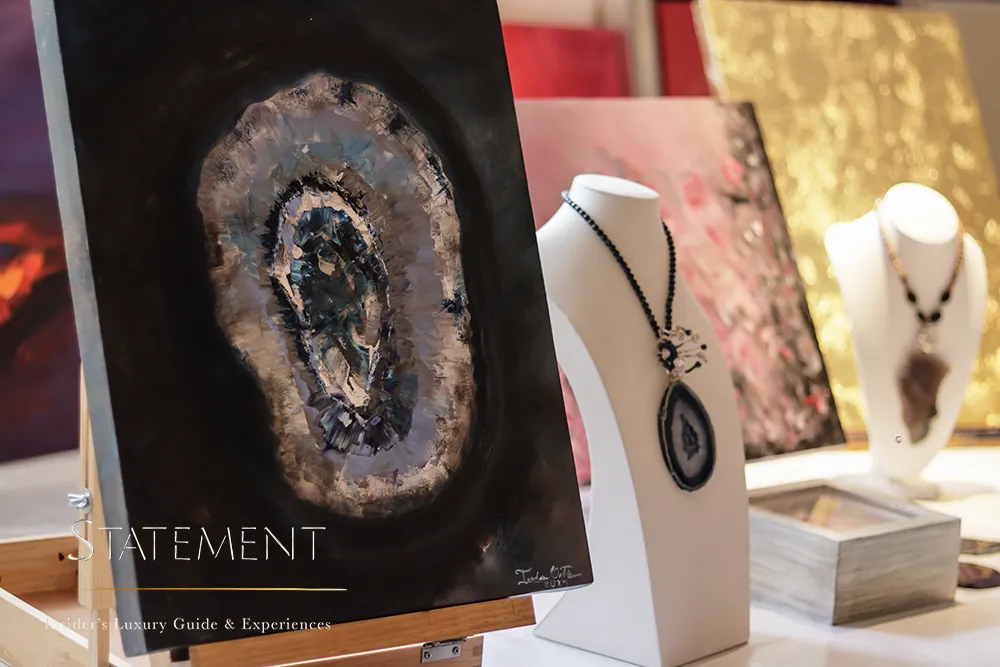
You came to art through jewelry—and before that, through law—where value is clearly defined. What changes when value becomes subjective, as it does in painting?
That’s a fascinating question.
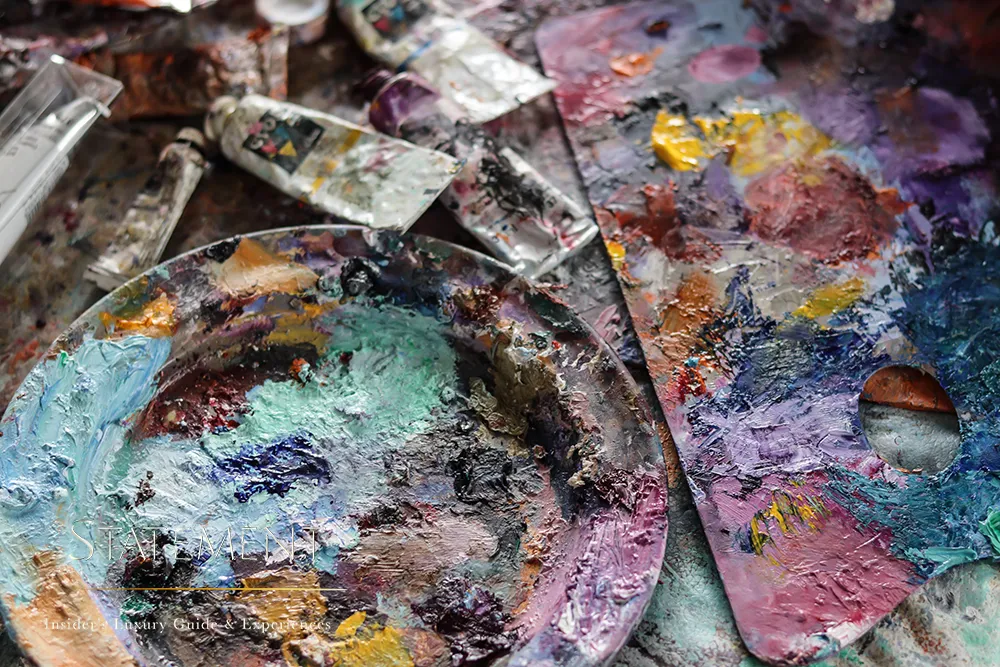
A painting’s value is a challenge for every artist. On one level, there’s the cost of the materials. Oil paints vary enormously in quality, and you can even create your own pigments from natural minerals like lapis lazuli.
But what seems subjective becomes far less subjective once curators and the art market enter the conversation.
For the artist, value comes from the love invested in the work, the time dedicated to it, the materials used, and the iconography behind it.
The market, however, evaluates other things: your career, your technical mastery, your experience, your collectors, the scale of your work. Unlike valuing a diamond or an ounce of gold, the value of a painting emerges through the dialogue between artistic practice and the art world.
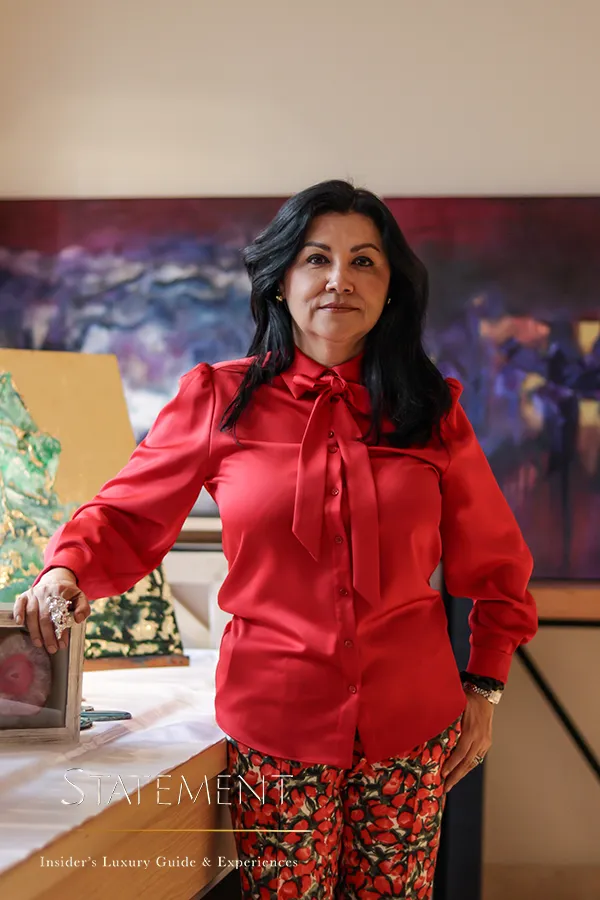
At what moment did you realize painting wasn’t simply an extension of your previous work, but something worth pursuing on its own?
The moment my daughter looked at one of my paintings and said, “Wow… that’s beautiful.”
That was the first time I realized someone else could connect with what I had created.
At the beginning, painting is an exercise in convincing yourself. You paint, you struggle, you become frustrated, you question everything. Eventually, you reach a point where you’re satisfied with your own work.
Then you share it. My daughter loved it. My son asked if he could buy one with his Sunday allowance. I said yes, and he paid me 300 pesos. I remember thinking: This is it.
He’s still my most important collector.
Your process seems to move constantly between control and accident. How much do you allow the work itself to decide?
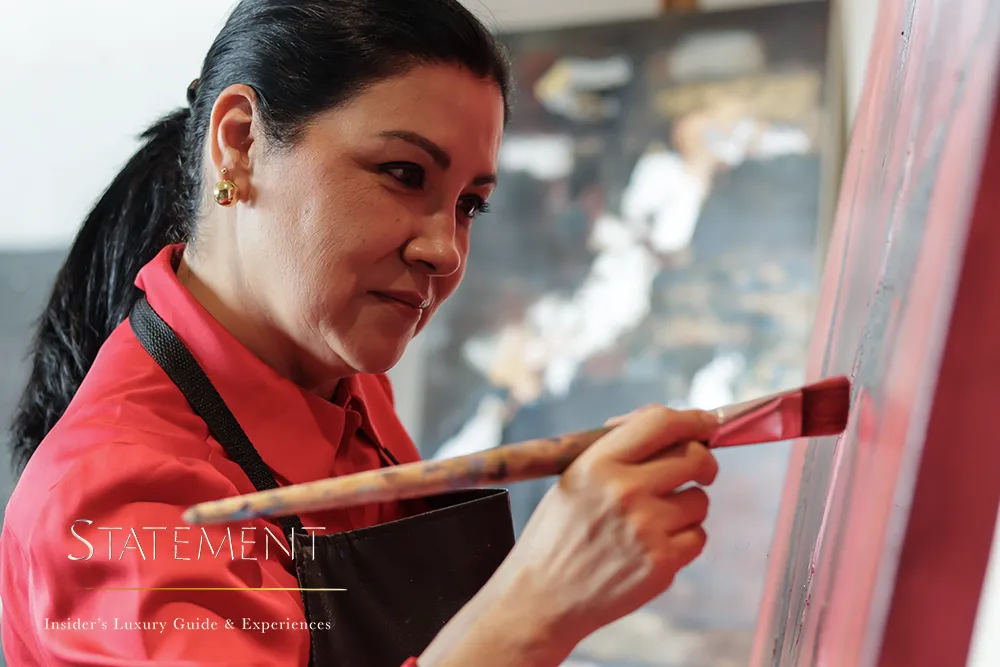
A great deal. Abstract art embraces accident. It teaches us that what appears to be a mistake can become an opportunity. There are no errors in abstraction—only possibilities.
What must remain under your control is your color palette, your technical mastery, and your composition.
What’s more important to you today: what a work communicates, or what it provokes?
What it provokes.
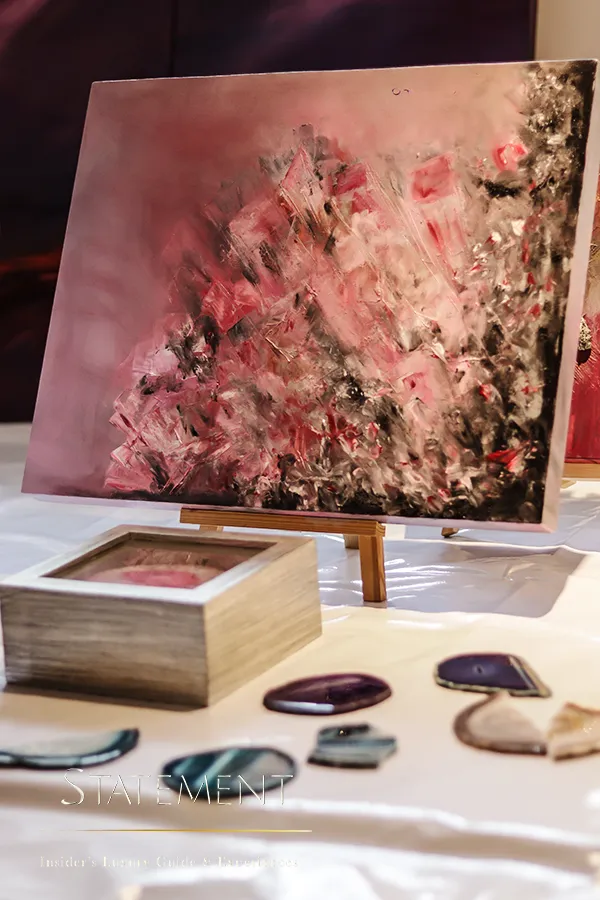
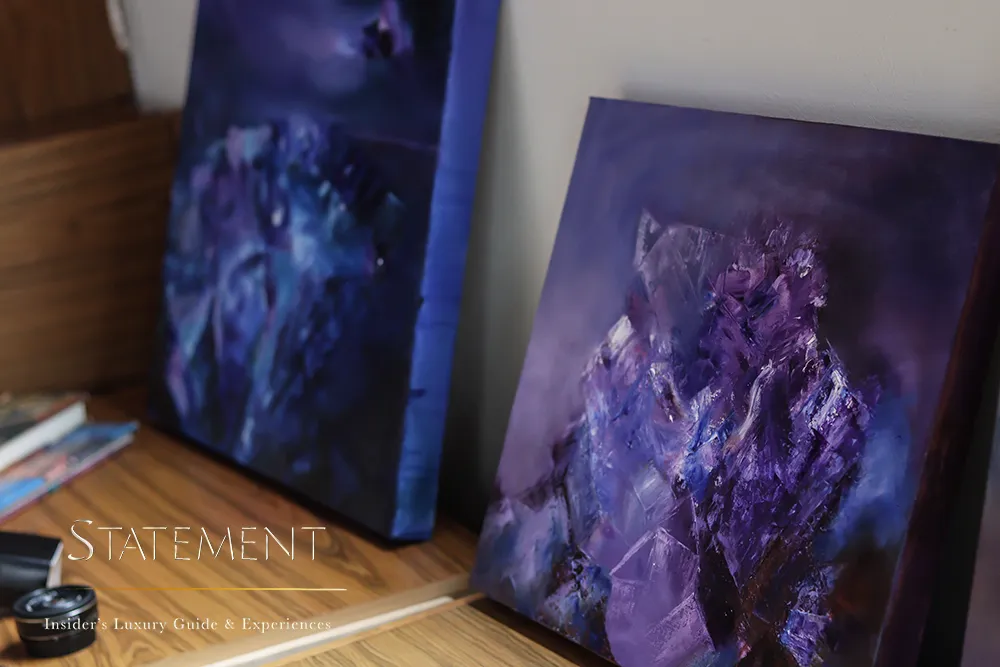
My paintings are abstract, but they aren’t random. They contain information. They always originate from minerals.
What truly matters, though, is what the viewer brings to the work. What my paintings awaken in someone else—that is the greatest gift.
What role does technique play in your practice: a tool, a limitation, or a point of departure?
A tool—and also a starting point.
Before touching a blank canvas, many technical decisions have already been made: the color palette, the materials, the technique, the composition. Without that preparation, it’s impossible to create a harmonious abstract painting with strong technical quality.
Is there anything you consciously avoid in your work?
Yes. I like gemstones not to look like gemstones. I want them to exist somewhere between recognition and ambiguity.
In today’s increasingly conceptual art world, artists often feel compelled to explain their work. What’s your position?
I prefer not to explain it.
The work should speak for itself. Everything I needed to study, research, and conceptualize is already inside the painting.
When people ask me, “Is this a vase?” or “Is this a flower?” I simply let them discover it for themselves.
What kind of gaze do you hope your audience brings to your work: contemplative, critical, or emotional?
Emotional.
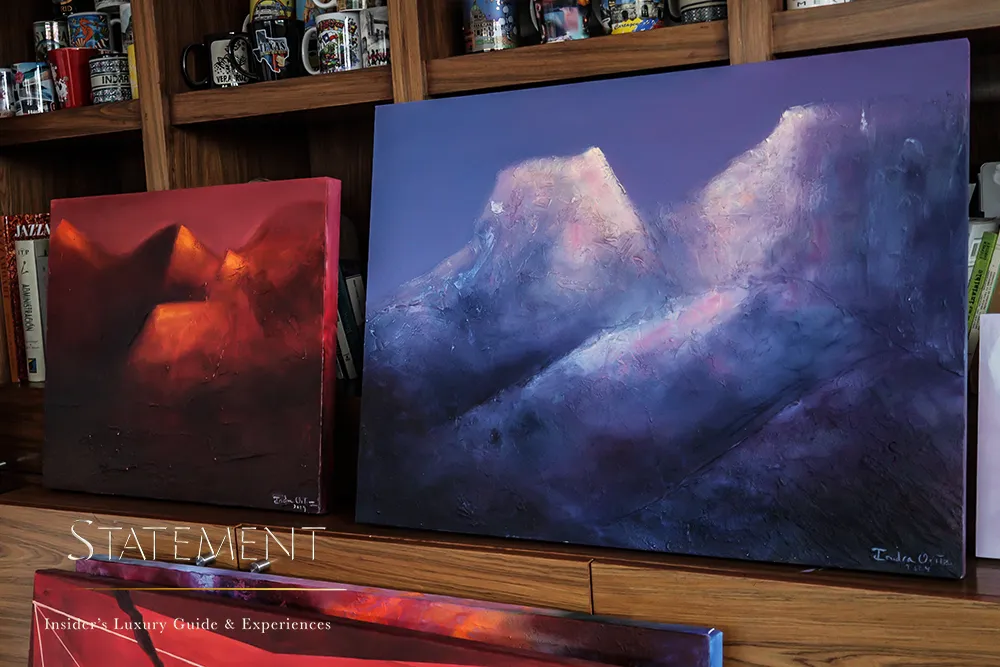
What are you working on now? Is there a new direction emerging in your practice?
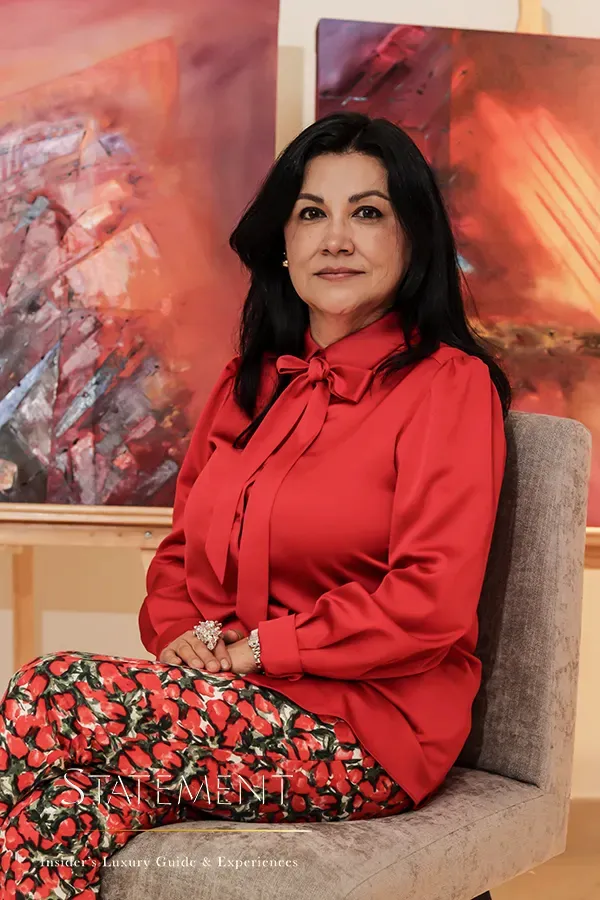
I’m developing a series called Inclusions for an upcoming exhibition.
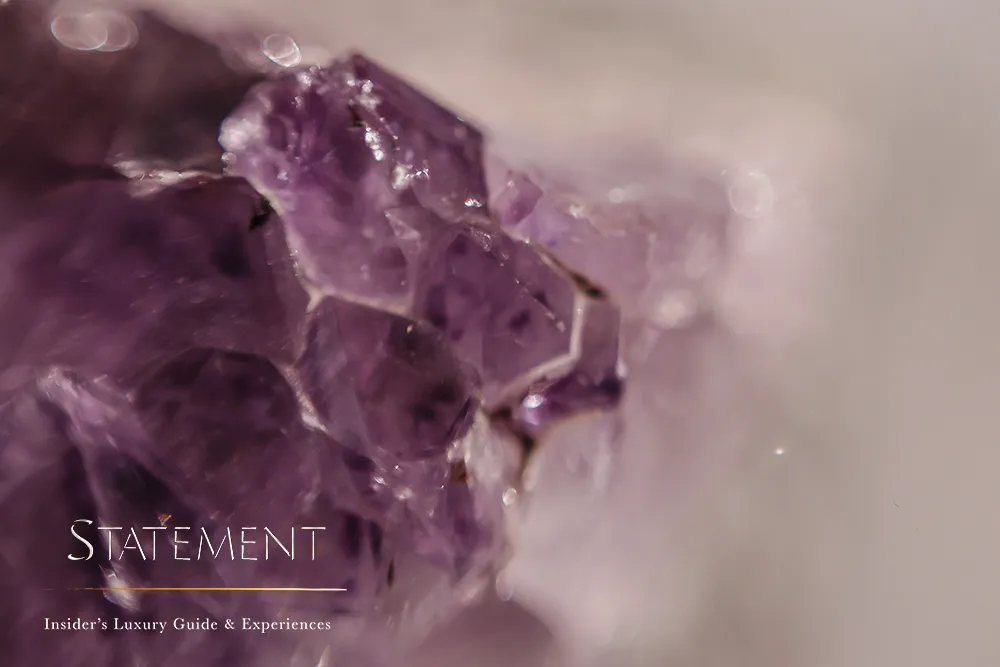
Every gemstone has an inner world. Under magnification you discover maps, fractures, layers, bubbles—sometimes even tiny pockets of water.
Those hidden interiors—the soul of the gemstone—are what I’m painting now.
indra Ortiz Statements
Light: Magic.
Matter: Everything.
Control: Study.
Mistake: Opportunity.
Emptiness: Work.
Art: Beauty.
Follow our networks on Statement.
images
Statement-Alan González S. ©