Reading Timea: 6 min.
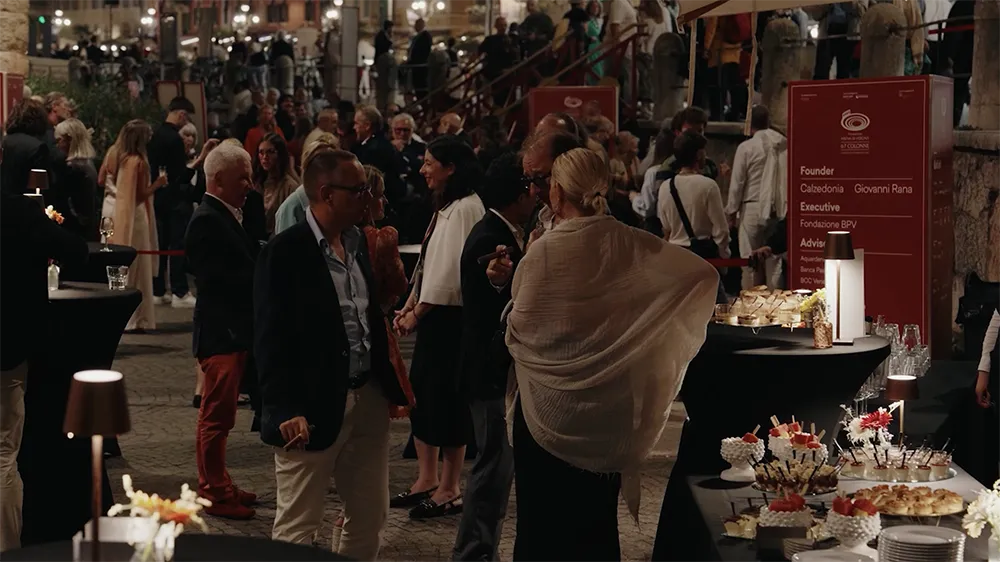
Verdi, the Moulin Rouge, Belle Époque Paris, and a Roman amphitheatre with nearly two thousand years of history come together in Verona this summer. For its 103rd Opera Festival, the Arena di Verona presents a new production of La Traviata, directed by Paul Curran and created through an unprecedented collaboration with the legendary Parisian cabaret. On August 29, Statement was there to experience it, beginning an evening in one of the Arena’s most extraordinary spaces: the exclusive Star Roof.
What happens when one of the world’s most famous operas meets one of Paris’s most legendary stages inside an ancient Roman amphitheatre? The answer is in Verona this summer.
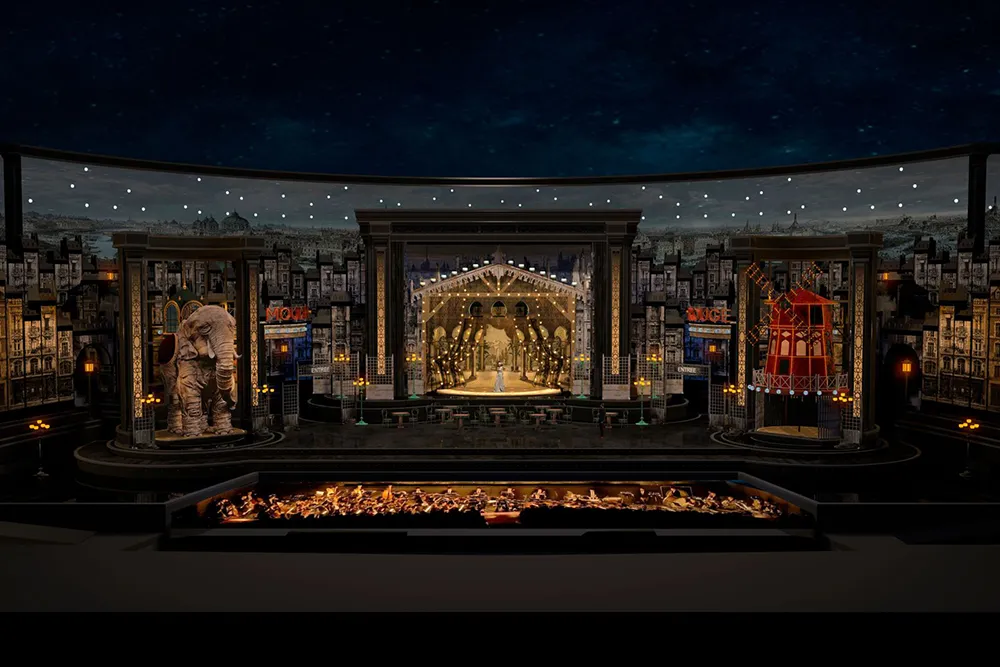
For the 2026 Arena di Verona Opera Festival, Giuseppe Verdi’s La Traviata returns completely reimagined. For the first time, the new production brings to the Arena one of the most recognizable institutions of Parisian nightlife: Moulin Rouge.
This is far more than an aesthetic reference. It is an unprecedented artistic collaboration between Fondazione Arena di Verona and Moulin Rouge, two institutions that, for more than a century, have shaped their own distinct visions of spectacle from seemingly different worlds. And it is difficult to imagine a more fitting opera to bring them together. Because before becoming one of opera’s most iconic characters, Violetta Valéry was a woman of Paris.
La Traviata, Moulin Rouge and the Paris That Invented Modern Life
Premiered in Venice in 1853, La Traviata was inspired by Alexandre Dumas fils’ La Dame aux camélias and by a society both fascinated and scandalized by women who existed beyond the boundaries of respectability. Violetta is sophisticated, independent, desired and observed. She is also a woman whose private life ultimately becomes a matter of public judgment. More than 170 years later, that tension feels remarkably contemporary.
For the new Arena di Verona production, Scottish director Paul Curran visually shifts the action to early 20th-century Paris: a city that had become a meeting point for artists, intellectuals, night owls and characters redefining modernity.
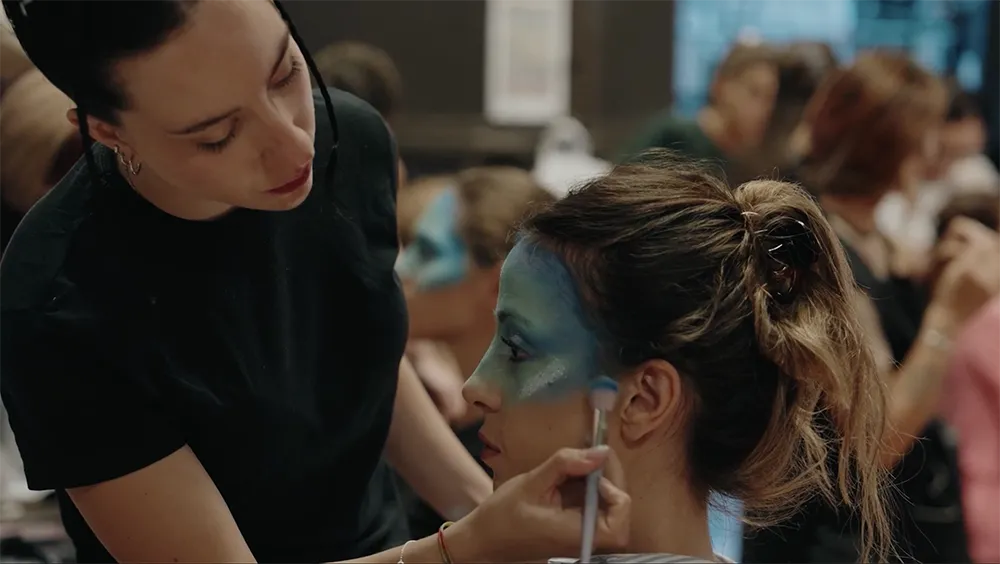
The production recreates the nightlife of Montmartre and the splendour of the Belle Époque, precisely the world in which Moulin Rouge first rose to fame as the birthplace of cabaret and the French Cancan.
The result promises to be less nostalgic recreation than collision of worlds:
Verdi meets Montmartre, opera meets cabaret, and Violetta inhabits a new era from which to tell her story once again.
Arena Meets Moulin Rouge: An Unprecedented Collaboration
The collaboration is historic for Moulin Rouge as well. For the first time, the legendary Parisian cabaret is collaborating with an opera and symphonic foundation. The partnership was officially unveiled in Paris as the meeting of two international icons of entertainment: Arena di Verona and Moulin Rouge, united through a new artistic interpretation of La Traviata. There is a fascinating logic behind this seemingly unlikely pairing.
Opera and the French Cancan speak different languages, yet both understand the power of spectacle perfectly. Both depend on music, movement, costumes, scenery, light and human presence. And both were created to be experienced in front of an audience.
This new Traviata uses precisely that common ground to reconstruct a Paris where art, pleasure, luxury, desire and public opinion existed in constant tension.
A Violetta Under Everyone’s Gaze
Paul Curran’s vision also offers an especially compelling reading of its protagonist.
Violetta Valéry emerges as an intelligent, sophisticated and beautiful woman inevitably exposed to other people’s gaze, desire, commentary and judgment. La Traviata has always been a story about love and sacrifice. But it is also about reputation. About who is allowed to live outside the rules. About how easily society can enjoy certain women while simultaneously condemning them.
Setting the story in Belle Époque Paris intensifies that contradiction. Because the same world that celebrates freedom at night can demand respectability when the sun rises. And that is precisely where the alliance with Moulin Rouge stops being merely spectacular and becomes narrative.
Arena di Verona: When a Roman Amphitheatre Becomes a Theatre
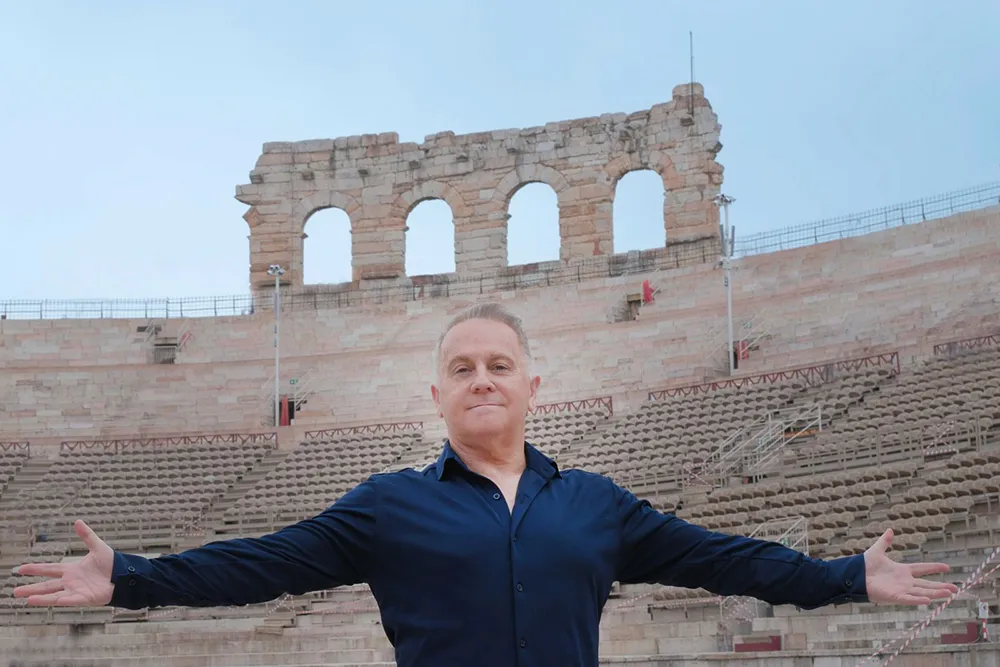
The Arena di Verona stage measures approximately 47 by 28 metres — around three times the size of a conventional theatre stage. The amphitheatre can welcome up to 10,000 spectators for a single performance.
But the story that transformed these ancient Roman stones into one of the world’s great opera stages began much later. In 1913. Veronese tenor Giovanni Zenatello had an idea that, on paper, sounded slightly absurd: to stage Aida inside the Arena to celebrate the centenary of Giuseppe Verdi’s birth. There was one problem. Nobody knew whether the acoustics would work.
One Voice, One Arena and a Test in 1913
According to the history preserved by Fondazione Arena di Verona, Zenatello and conductor Tullio Serafin entered the amphitheatre to find out. Zenatello sang. His voice travelled across the space. Another story surrounding those early acoustic tests claims that even the sound of paper being torn in the centre of the amphitheatre could be heard from the highest tiers. It worked. On August 10, 1913, Aida inaugurated what would eventually become the Arena di Verona Opera Festival. Zenatello performed Radamès, Ester Mazzoleni was Aida and Tullio Serafin conducted. Among those in attendance were Giacomo Puccini, Pietro Mascagni, Maxim Gorky and Franz Kafka.
More than a century later, we are still gathering in the same place to listen to Verdi.
Arena di Verona Opera Festival 2026
The 103rd Arena di Verona Opera Festival runs from June 12 to September 12, 2026, with 50 nights of opera, ballet, music and special events, featuring some of the leading names on the international opera scene.
La Traviata was chosen to open the season and will remain in the programme throughout the summer until the Festival’s closing night on September 12. For Statement, however, there is one particular date.
La Traviata on August 29: Rosa Feola, Adam Smith and Ludovic Tézier
On Saturday, August 29, 2026, at 9:00 p.m., La Traviata will be conducted by Francesco Ivan Ciampa, Rosa Feola will perform Violetta Valéry, and tenor Adam Smith will appear as Alfredo Germont, while one of today’s leading baritones, Ludovic Tézier, will take the role of Giorgio Germont. That is the night Statement will experience in Verona. But our evening will begin before the first note is heard. Much higher up.
Star Roof: A Table for 24 Above the Arena di Verona
Some places are exclusive because they are difficult to book. Others are exclusive because, quite literally, almost no one can fit inside them. Star Roof belongs to the latter. Located on the level connecting the Arena’s first ring with the Ala — the surviving section of the amphitheatre following the powerful earthquake of 1117 and today one of its most recognizable silhouettes — Star Roof welcomes only 24 guests for each experience.
There, guests are served a four-course gastronomic dinner prepared by one of Italy’s leading chefs. After dinner, they continue to the Royal Podium to watch the opera, with exclusive service offered during the interval. Calling it “dinner before the opera” feels almost ridiculously insufficient.
Because the table sits above a Roman amphitheatre. Below, hundreds of people are preparing a Verdi production.
All around is Verona. And above the table, the Italian night begins to fall.
Long Before the Curtain Rises
Technically, we hardly need a curtain here to understand the scale of the spectacle. An Arena production begins months before opening night.
Its enormous sets are built in workshops outside central Verona, where set designers, sculptors, carpenters and builders work on the structures before they are transported to the amphitheatre. Then an invisible choreography begins.
Teams can spend the night dismantling one production while preparing the following day’s performance. Giant scenic elements must move through passages the crews know virtually down to the millimetre. Around 1,400 people work onstage and behind the scenes over the course of a season.
Perhaps that is part of what makes attending the Arena so difficult to replicate in a conventional theatre. The performance is only the visible part of a temporary city rebuilt every night.
Why See an Opera at the Arena di Verona?
In 2025, 404,715 spectators attended the Arena Opera Festival. 61% came from outside Italy, representing 130 countries, while the season generated the highest box-office revenue in the Festival’s history: €35.619 million.
There is something revealing about those numbers. In an age of instant content, hundreds of thousands of people are still travelling to an Italian city to spend hours listening to a story written in the 19th century inside a building constructed nearly two thousand years ago.
Perhaps the explanation lies precisely there. At the Arena, there is no roof completely separating the performance from the outside world. The air can change. The wind can rise. The temperature drops. Daylight slowly disappears.
And above Violetta, Alfredo, Moulin Rouge, the orchestra and thousands of spectators, there is still the sky.
From Ancient Rome to the Belle Époque in a Single Night
Perhaps this is the most seductive element of the new Traviata. Within a few hours, almost two thousand years of culture overlap. A Roman amphitheatre. Verdi’s music. The Parisian society that inspired Violetta’s story. The Belle Époque. Montmartre. Moulin Rouge.
And a 21st-century production asking once again who this woman, watched by everyone around her, really was. Everything exists simultaneously. History does not disappear to make room for something contemporary. It accumulates.
Statement at La Traviata x Moulin Rouge
This Saturday, August 29, Statement was at the Arena di Verona to discover the new production of La Traviata created in collaboration with Moulin Rouge.
The evening began at Star Roof, with its gastronomic experience reserved for only 24 guests, before continuing with Rosa Feola, Adam Smith and Ludovic Tézier on the Arena stage.
It was our first time at the Arena di Verona Opera Festival. So we were not going there simply to confirm whether this is “one of those experiences everyone should have once in a lifetime.” That would be too easy. We discovered something far more interesting. What happens when Verdi, Violetta, Moulin Rouge, the Belle Époque and nearly two thousand years of history come together, for a night beneath the Verona sky? Stay tuned to find out.
Follow us Statement networks.
images
Fondazione Arena Di Verona.