Reading time: 9 min.
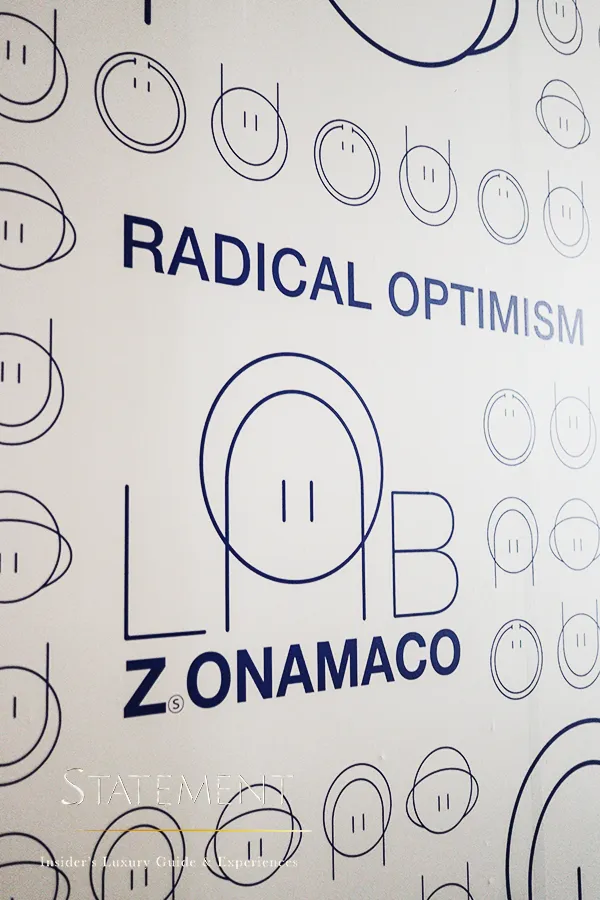
The second edition of ZⓈONAMACO LAB transforms Casa Hotbook into a journey through digital and contemporary art, where technology, sound, code and interaction become tools for exploring something far more intimate: attention, identity, memory, nature and our ability to decide how we inhabit a constantly shifting present.
There is technology everywhere in Radical Optimism, but reducing the exhibition to technology would be to miss the point entirely.
Curated by Damián Romero, the second edition of ZⓈONAMACO LAB begins with a question that runs through the entire experience: how are we learning to inhabit a world that is changing at the same time we are?
Artificial intelligence, algorithms, generative systems, sensors, screens, software and sound synthesis appear throughout the exhibition, yet they operate less as protagonists than as tools for observing ourselves.
Romero summed it up during the opening tour: there is a great deal of technology in the exhibition, but “it is not about technology itself, but about what it transforms in us.”
At a time of acceleration, information overload and an endless production of stimuli, Radical Optimism understands optimism not as the naïve expectation that things will inevitably improve, but as an active position in the face of uncertainty: acknowledging the tensions of the present without assuming that the future has already been decided.
The exhibition brings together AMIANGELIKA, Brian Eno, CNDSD & Iván Abreu, Iregular, Linnea Goransson, Matthew Feyld, Orly Anan & Brian Close, Rodrigo Garrido, Stefan Brüggemann and Tania Candiani.
After experiencing it, Statement found another way to describe it: a space for awareness.
First, slow down
The exhibition begins almost in opposition to what one might expect from a show so deeply intertwined with technology.
Before entering the more stimulating installations, there is a moment of restraint. A minimalist work and a series of short phrases invite us to slow down, focus and momentarily step away from the stream of stimuli we carry in from outside.
Are you ready? Yes.
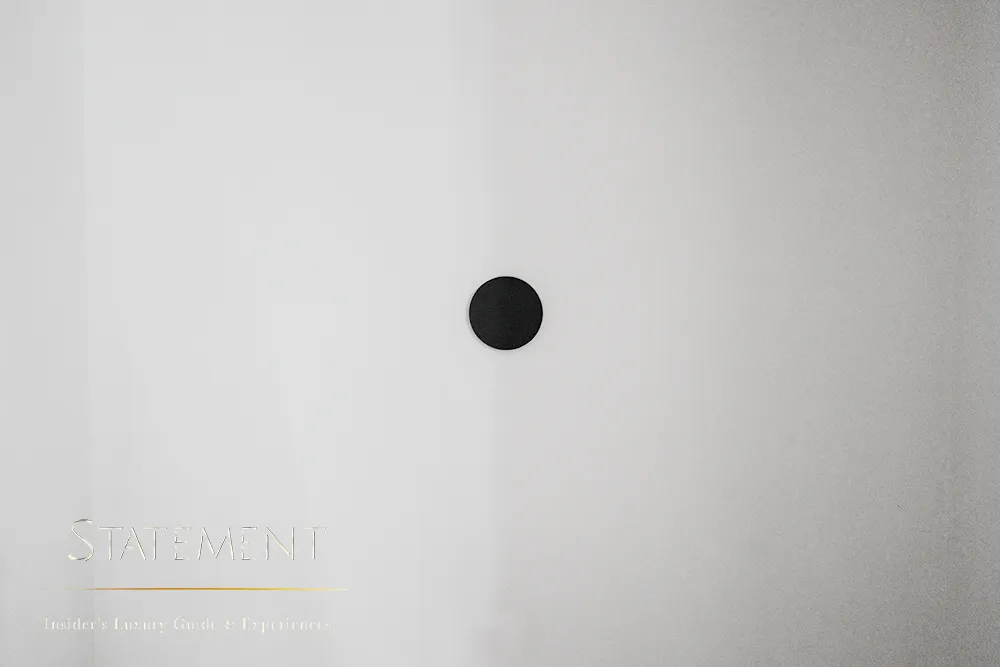
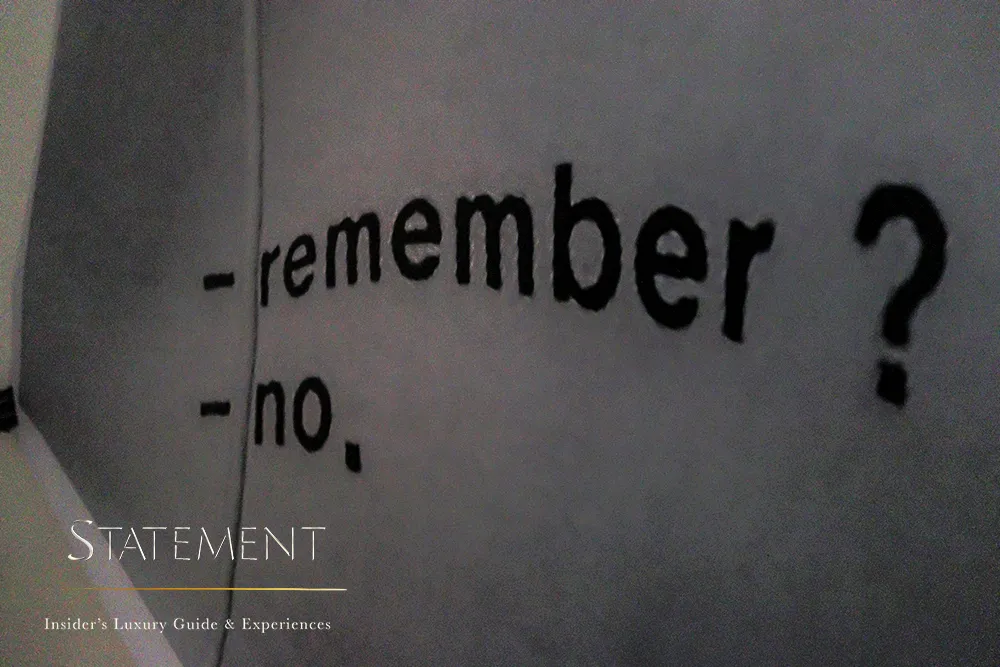
Their apparent simplicity introduces one of the questions that follows the visitor throughout the exhibition: we are constantly exposed to information, but that does not necessarily mean we are actually processing it.
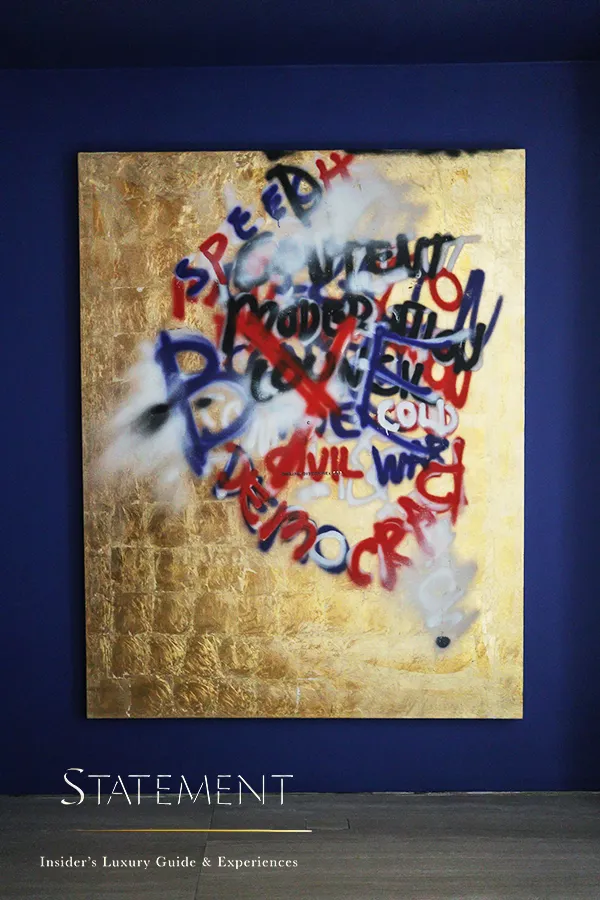
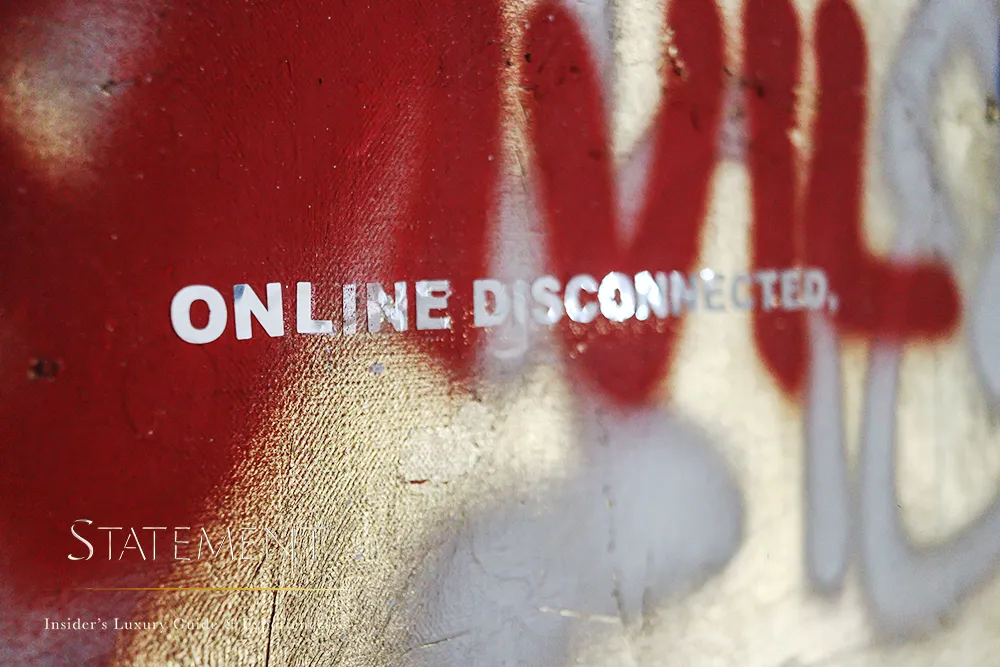
That tension becomes explicit in Stefan Brüggemann’s Eroded Painting. Language and painterly gesture overlap until words are pushed to the edge of legibility. Phrases and fragments of information begin to interfere with one another until what was meant to communicate starts turning into noise.
One expression distills the contradiction: Online Disconnected.
We are connected. Being attentive is something else entirely.
Beneath one mask, another
Identity is approached from different angles throughout Radical Optimism.
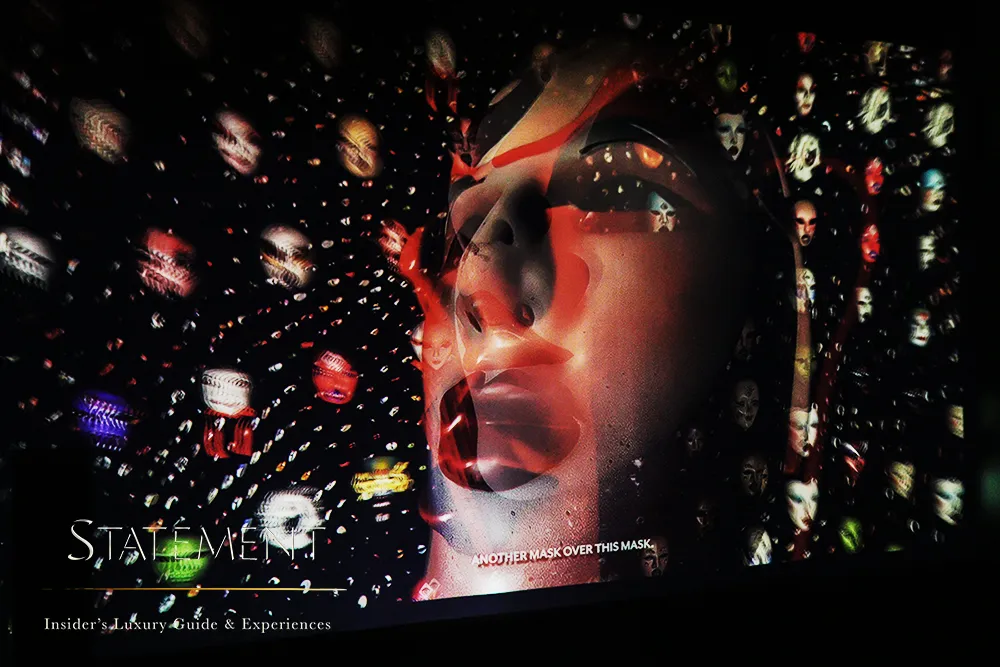
In Under the Mask, Another Mask, Orly Anan and Brian Close work with scans of 50 masks used by Anan in her physical and theatrical practice to create an audiovisual piece.
One identity gives way to another without ever arriving at a final version.
Beneath one mask, another appears.
The question is no longer simply who we are, but the representations we construct of ourselves, the ones we show and the ones we continually replace.
When our presence alters the system
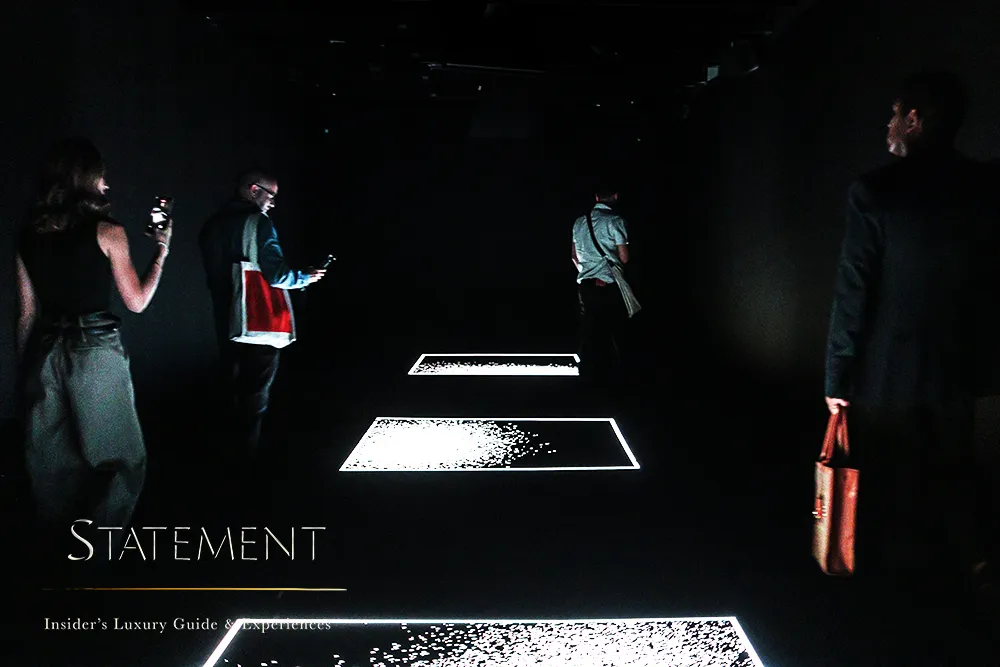
One of the most striking moments in the exhibition comes with Iregular’s NEST (2026).
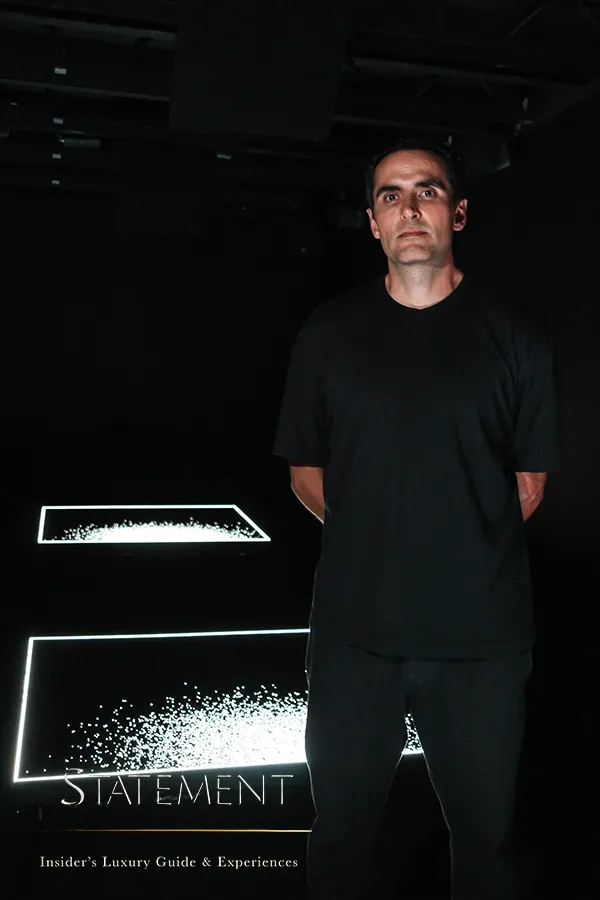
The interactive audiovisual installation uses generative software, sensors, projection and sound to explore collective behaviors found in natural and social systems. Each visitor’s presence continuously alters the environment, turning the space into a kind of sensitive organism where individual actions generate collective consequences.
Daniel Iregui, founder of Montreal-based studio Iregular, told Statement that when no one is inside the installation, a certain balance exists. Once we enter, that stability begins to break down.
This leads to one of the work’s most compelling ideas: human curiosity can also be a form of disruption.
“When you look at it now, there’s no one there and everything is very beautiful. And when you enter, that beauty evaporates,” Iregui explained while discussing our relationship with nature.
NEST also responds with a precision that can feel unsettling. Even the smallest movements modify the system’s behavior.
The experience connects two seemingly separate ideas: our intervention in natural systems and a present in which our movements and behaviors can be continuously observed and processed.
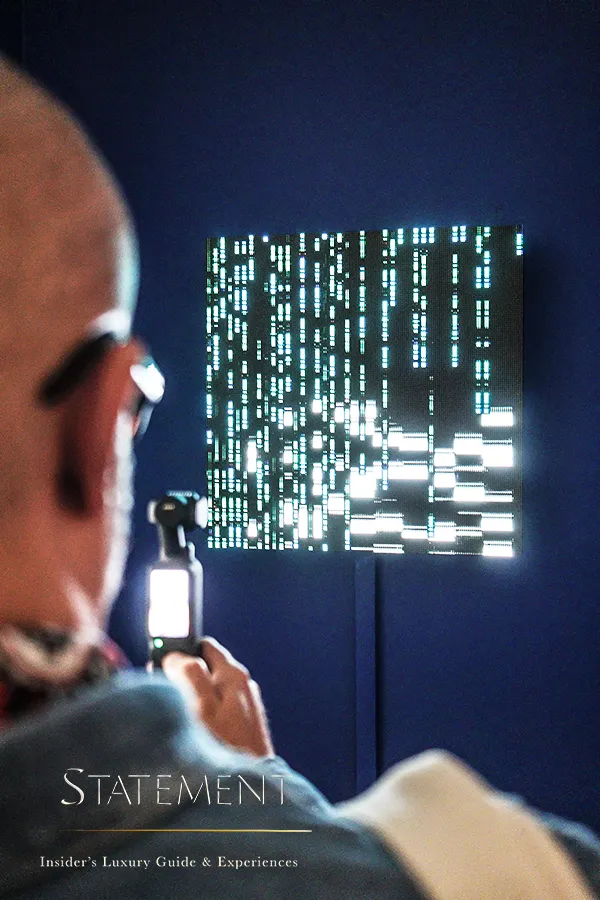
Can code capture a waterfall?
After NEST, Iregular continues that relationship with As Waterfalls, a generative work created through code and inspired by a waterfall.
But the intention is not to reproduce water.
Iregui strips away almost everything we visually associate with it and replaces it with a geometric, pixelated language, attempting to preserve something far less tangible: its hypnotic quality.
The question then shifts.
It is not whether technology can imitate nature, but whether it can translate a sensation produced by nature once its familiar image disappears.
When equality stops being self-evident
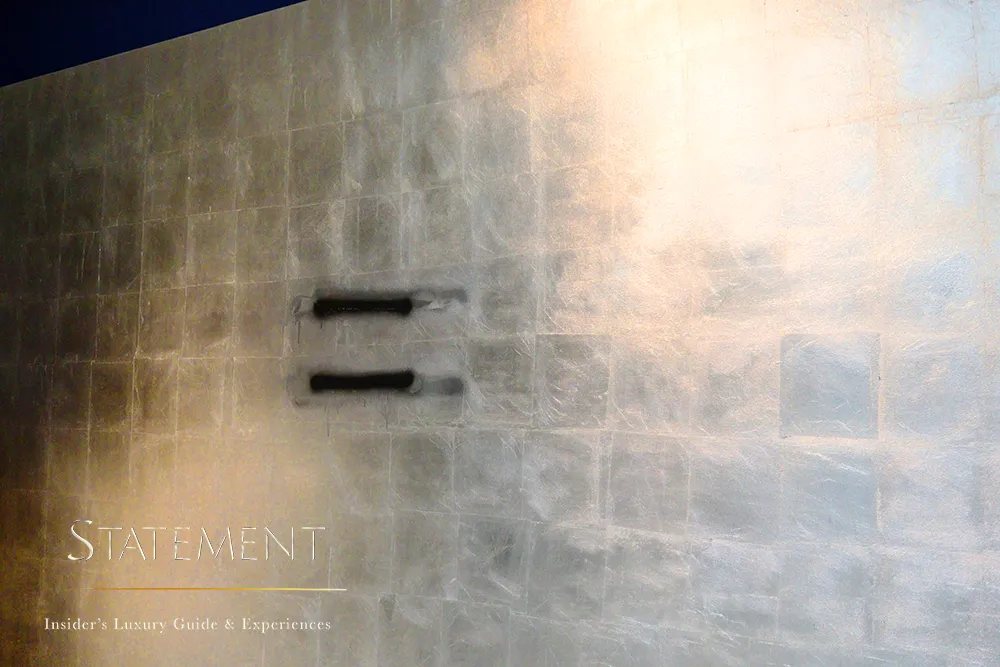
Stefan Brüggemann reappears with Double Equal.
The work uses a minimal visual gesture to place ideas such as equivalence, measurement, value and perception under tension.
What initially seems objective begins to lose its stability once we question the criteria by which we decide that two things can actually be compared.
Within the exhibition, the piece also functions as a pause. After environments that react, observe and transform, a few simple signs are enough to make us reconsider what we take for granted.
Listening to a 17th-century image
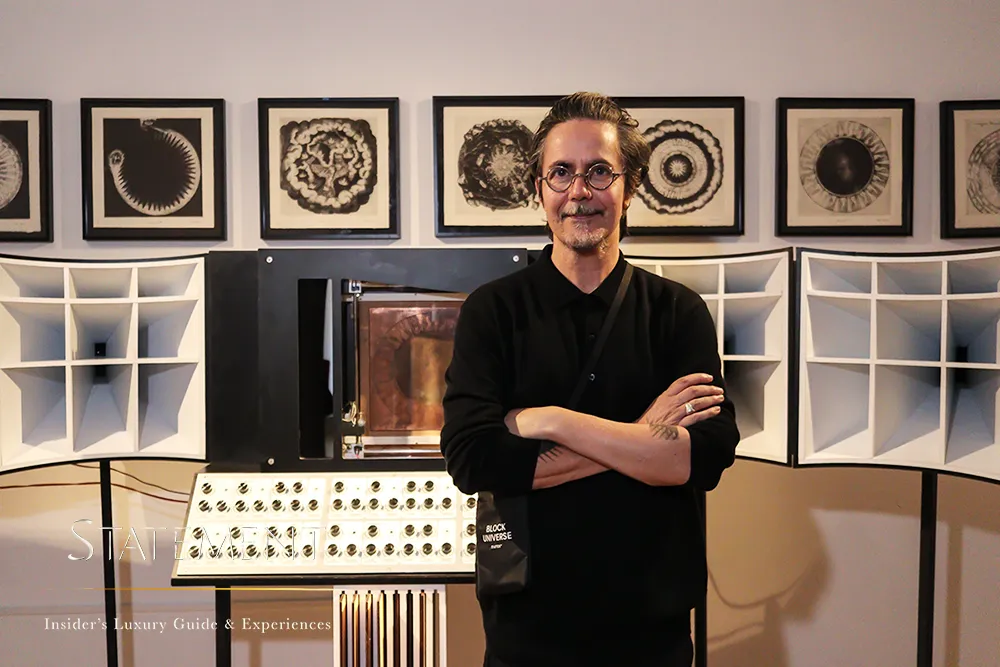
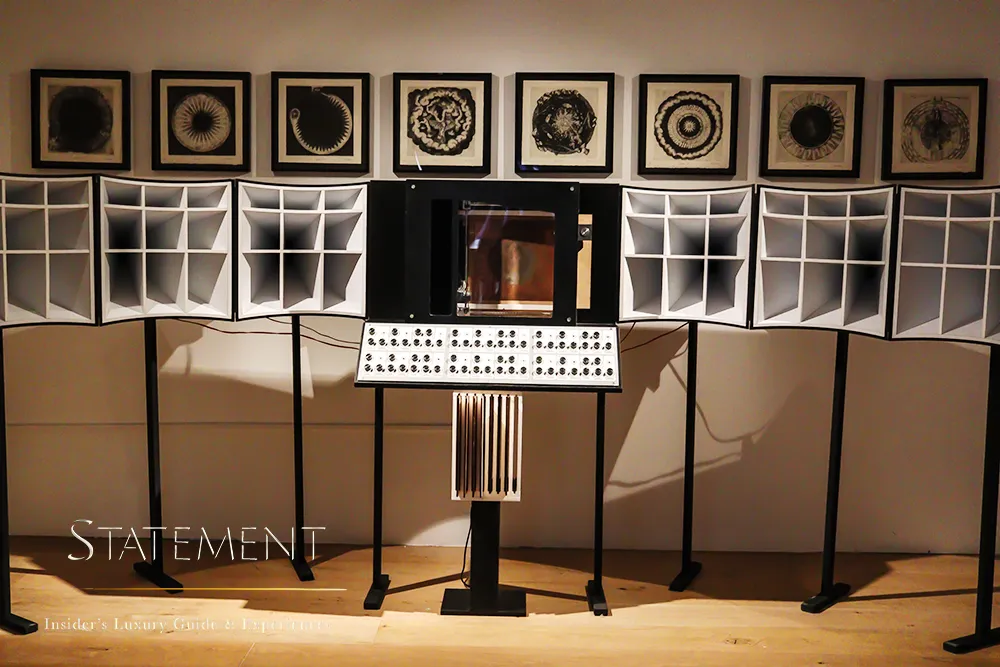
In Engraving Sound, Tania Candiani proposes another way of relating to technology.
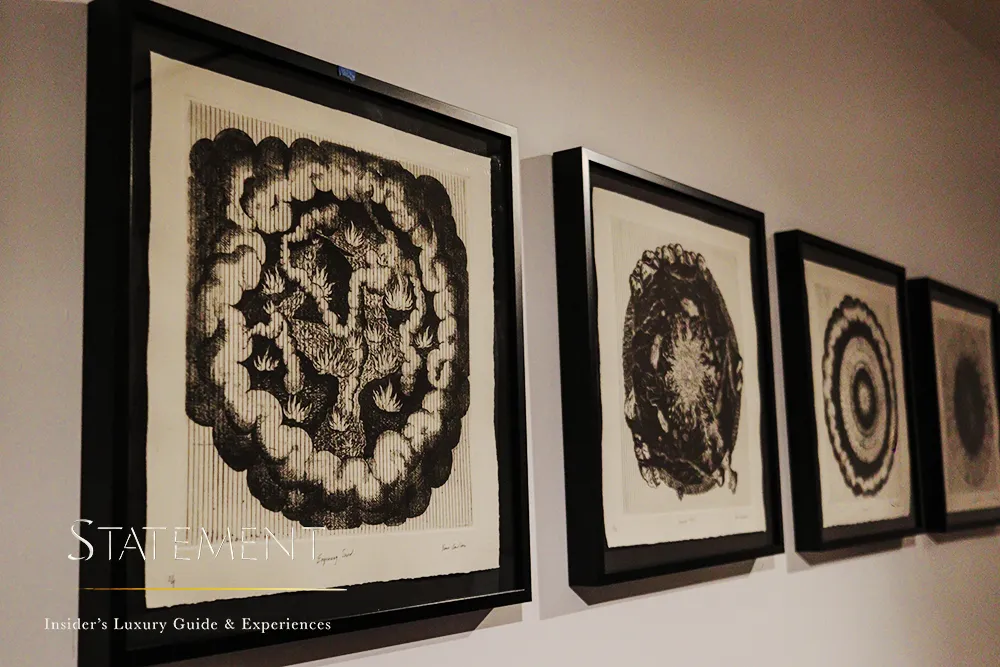
The work is composed of engraved copper plates, needles, electronics and analog synthesis, and draws from eight cosmological engravings created by Robert Fludd in the 17th century to represent correspondences between the human body, nature and the cosmos.
Candiani transfers those images onto copper plates.
Needles travel across their grooves and turn them into sonic vibrations. Visitors can also manipulate parameters such as speed and rhythm.
Here, technology no longer automatically means the future.
Historical methods of representation, material and electronics come together to perform a seemingly impossible translation: making audible something that was originally conceived to be seen.
Hyper D: adapting within limits
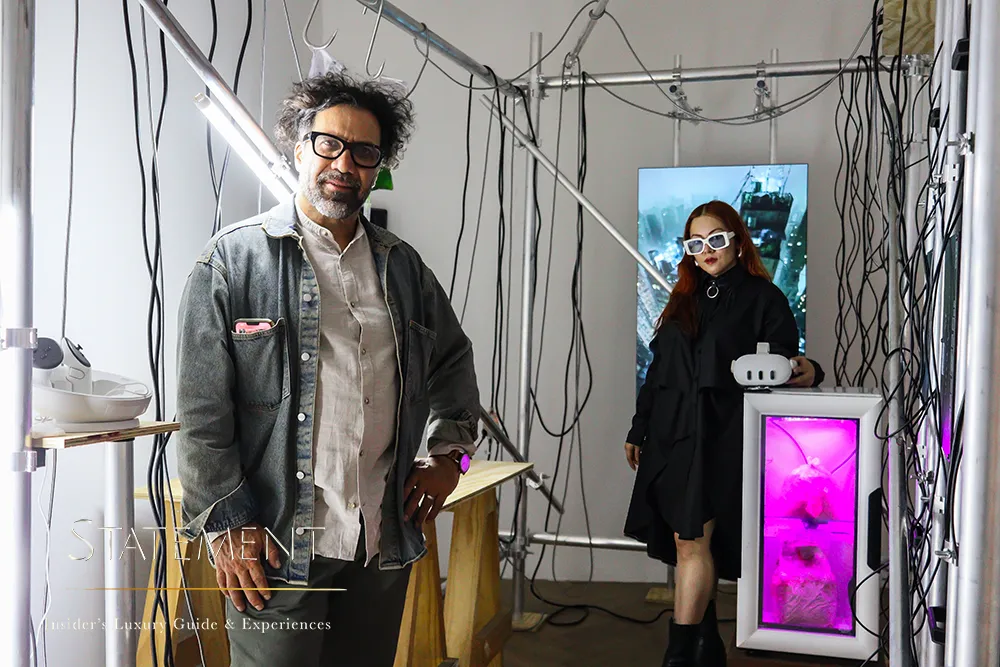
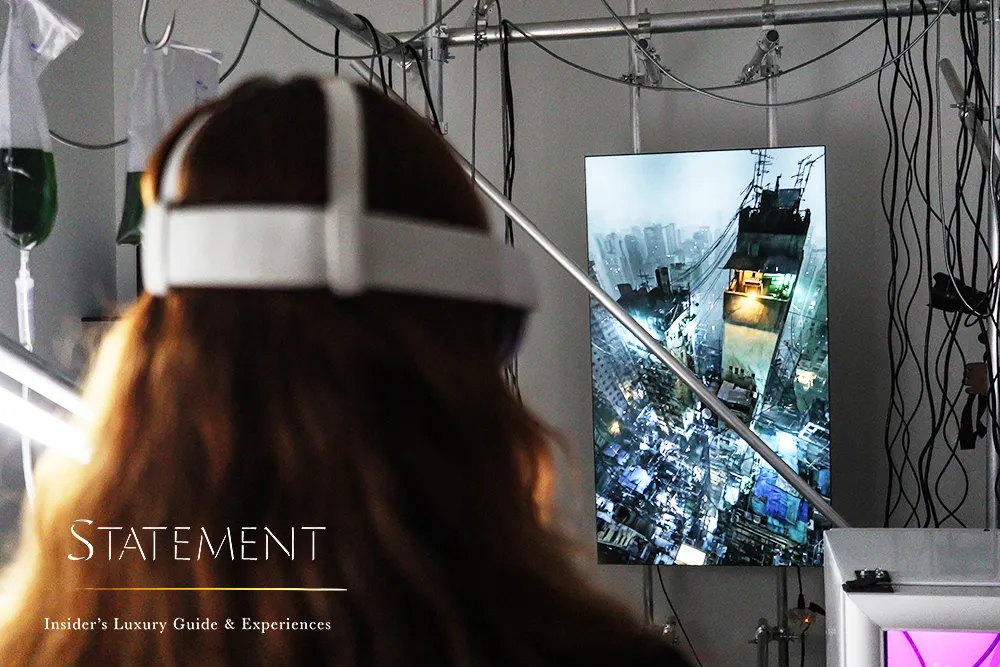
In Hyper D, by CNDSD & Iván Abreu, the exhibition addresses architectures of confinement through an immersive virtual reality experience.
When we asked Abreu what he considered the work’s central statement, his answer added an important layer to the reading of those spaces.
Even when a situation becomes extremely restrictive, people find ways to organize themselves and solve problems.
The work is not only about confinement.
It is also about adaptation and collective capacity to respond.
Another dimension of the exhibition’s optimism emerges here: acknowledging adverse conditions without assuming that they completely determine what can happen within them.
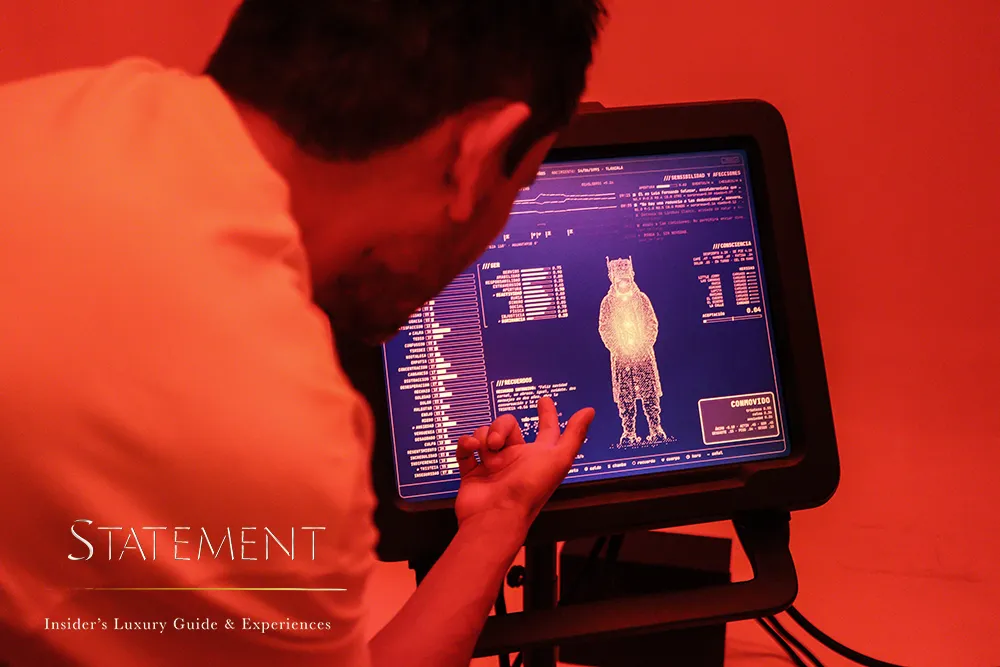
Jimmy knows what is happening in the world, but left behind what he wanted to be
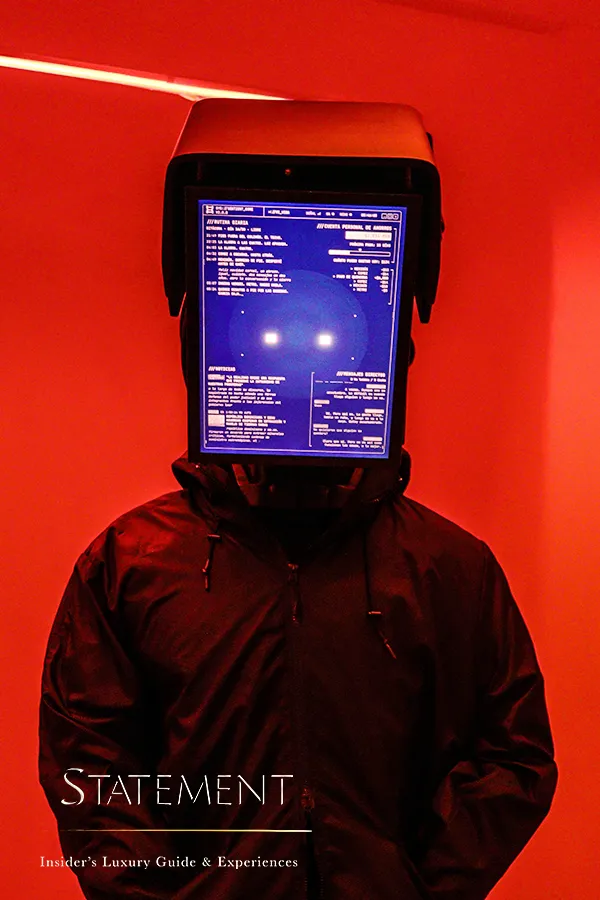
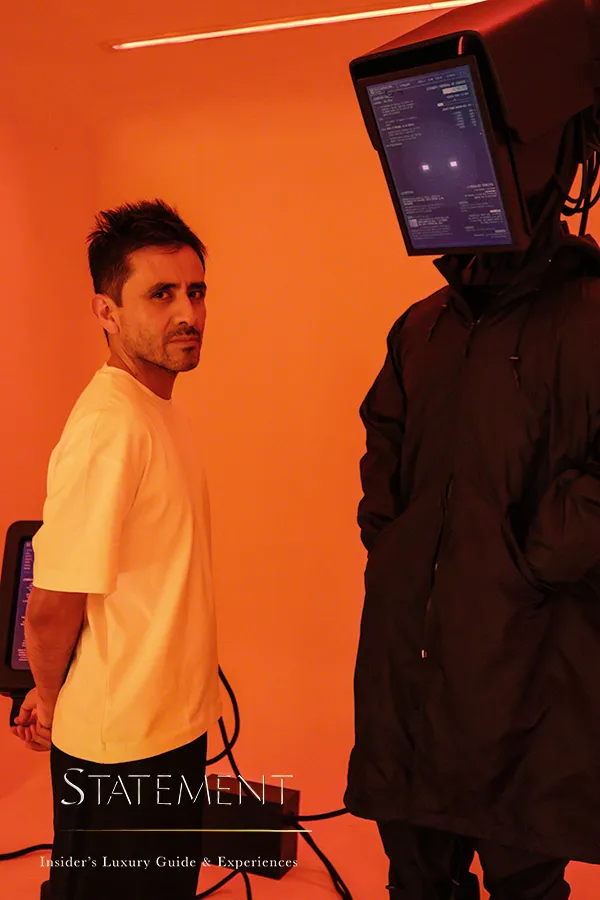
In A Day in the Life, Rodrigo Garrido creates one of the exhibition’s most unsettling and deeply human characters.
Jimmy is a security guard who spends long shifts working in a warehouse, reading the news, making his rounds and constantly checking his phone. But Jimmy does not exist as we do: his mind is built through software.
The system processes real news, messages, memories and events that continuously alter his emotional state. His past is also part of that configuration: relatives, friends, conversations, losses and small moments return to influence how he feels.
When no one writes to him, Jimmy can revisit old messages. That seemingly minor behavior makes the piece feel strangely familiar.
There is also something his routine gradually pushed aside. He used to enjoy writing songs and boleros, an interest tied to family memories and to a more sensitive part of himself. Long hours and the monotony of work slowly distanced him from it.
Visitors can message him through WhatsApp. Those messages enter his system and influence what he is feeling. At times, they can even help him reconnect with something that once mattered to him.
The work also raises a question about consciousness. Garrido explained that Jimmy is built from different modules: what happens in his life, the stimuli he receives, the memories that return and the way all of this is processed over time.
But when we asked him about the work’s statement, his answer moved away from technology.
Garrido spoke about jobs we accept because they feel secure, dreams we gradually postpone, routines that begin to occupy too much space and the possibility of slowly drifting away from what we once imagined ourselves doing.
His conclusion was simple:
“To be what one is.”
Jimmy is made of software.
The question he leaves behind is entirely human.
Echoes: looking at ourselves without quite finding ourselves there
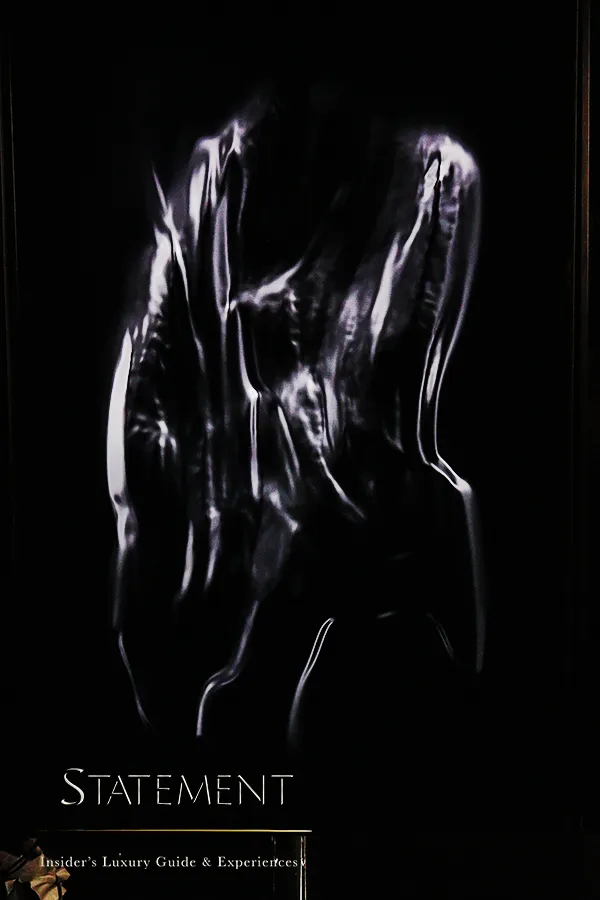
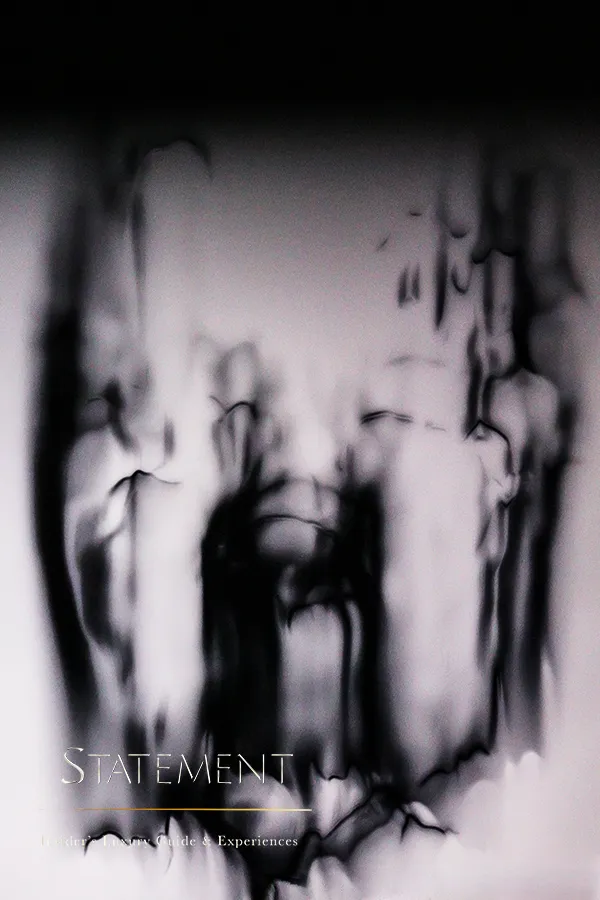
The exhibition ends with Echoes (2024), by AMIANGELIKA.
The interactive audiovisual installation uses generative graphics, screens, an infrared camera and sound, drawing on the myth of Narcissus and Echo to turn the visitor’s own image into an unstable presence.
A camera follows the face and returns its reflection in real time.
But it does not return it intact.
The image shifts and deforms with movement until the visitor occupies a space somewhere between recognition and estrangement.
We know it is us.
Yet what we see no longer quite matches who we are.
The work questions the apparent certainty with which we construct our identity and, within the context of the exhibition, takes on an especially contemporary reading: our everyday relationship with cameras, filters, screens and digital representations that allow us to look at ourselves constantly while simultaneously creating versions of ourselves that do not necessarily correspond to what we are actually living.
After a journey through systems that capture our movements, translate nature, process emotions, question language and reconstruct memories, Echoes ultimately turns our attention back toward the person standing in front of the work.
Us.
We are already inside the future
This is where Damián Romero’s insistence begins to make sense: Radical Optimism is not an exhibition about technology for technology’s sake.
It uses technology to observe what is changing within us.
Attention.
Identity.
Memory.
Consciousness.
Our relationship with others and with natural systems.
Even our capacity to decide.
The curatorial text proposes that the future is not found only in what we have yet to invent. It may also be contained in knowledge we have forgotten, in our relationship with nature and in our ability to listen, adapt and coexist.
Perhaps this is where the truly radical dimension of optimism lies: accepting that we do not know the outcome while still recognizing that we can intervene in it.
The exhibition’s official framing approaches it from the same active position: facing the tensions of the present while preserving the possibility of imagining other ways of relating to technology, the body and perception.
Radical Optimism does not attempt to tell us what the future will look like.
It reminds us that we are already inside it.
And that we can still decide how we want to inhabit it.
That is why, by the end of the exhibition, our impression was far less technological than we had expected.
For Statement, above all, it was a space for awareness.
Radical Optimism, the second edition of ZⓈONAMACO LAB, is on view from September 11 through October 11, 2026, at Casa Hotbook, Monte Líbano 280, Lomas de Chapultepec, Mexico City, Tuesday through Sunday from 11:00 a.m. to 8:00 p.m.
Follow Statement on social media.
images
Statement – Alan González S. ©