Reading Time: 2 min.
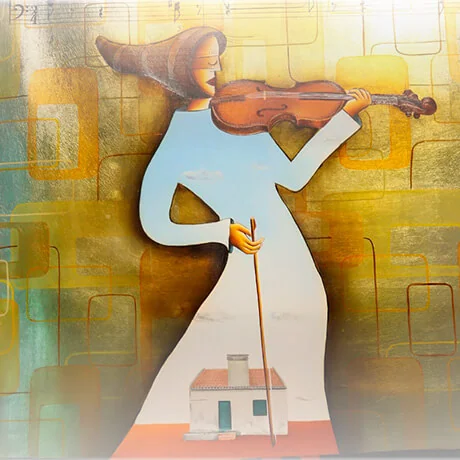
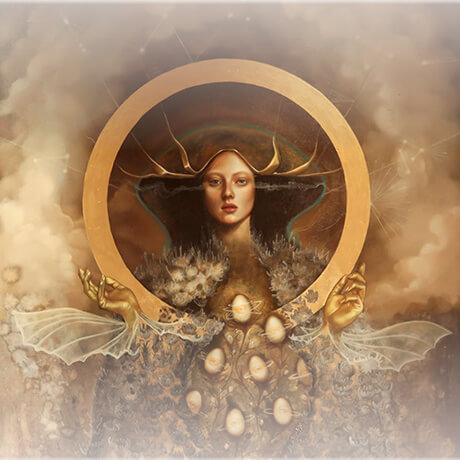
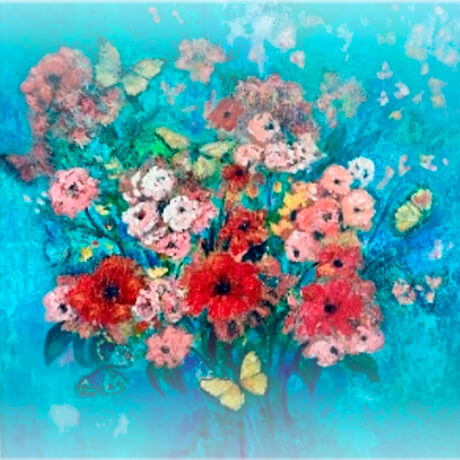
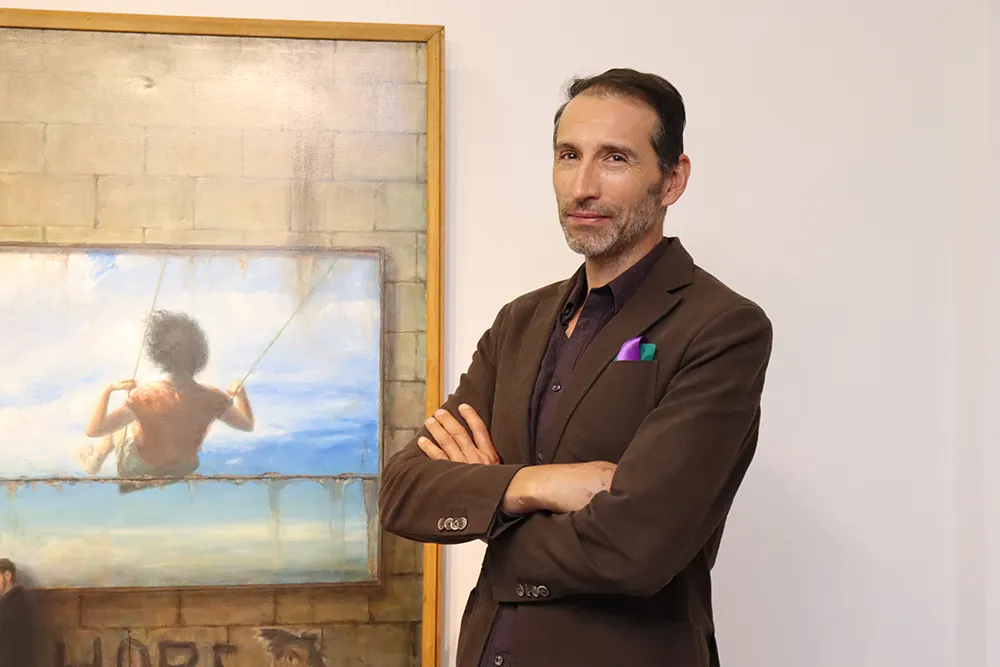
A painter, sculptor, and engineer by training, Ricardo Amezcua y Ornelas brings together four decades of artistic exploration in El Reino de los Espíritus 1.0, an exhibition at Bloomberger Art Gallery that ventures into what begins precisely where the visible ends.
There is something paradoxical about Ricardo Amezcua y Ornelas’s trajectory. He trained to understand how things work, only to devote much of his life to questioning what cannot easily be explained.
A Mechanical and Electrical Engineer from UNAM, Amezcua also took courses at the Academia de San Carlos. For years, his artistic practice coexisted with a professional career that led him to work as a design engineer at General Electric, until he decided to devote himself entirely to the visual arts in 2000.
Painting, however, had entered his life much earlier.
Today, the apparent distance between those two worlds seems considerably smaller.
Matter, consciousness, the cosmos, memory, and spirituality are part of a language Amezcua has developed over decades and which now converges in El Reino de los Espíritus 1.0, his solo exhibition presented at Bloomberger Art Gallery in Mexico City.
What Exists Beyond the Visible
The title is no coincidence.
El reino de los espíritus also appears in Amezcua’s earlier body of work: ARTAC documents an oil on canvas measuring 125 × 125 centimeters under the same title.
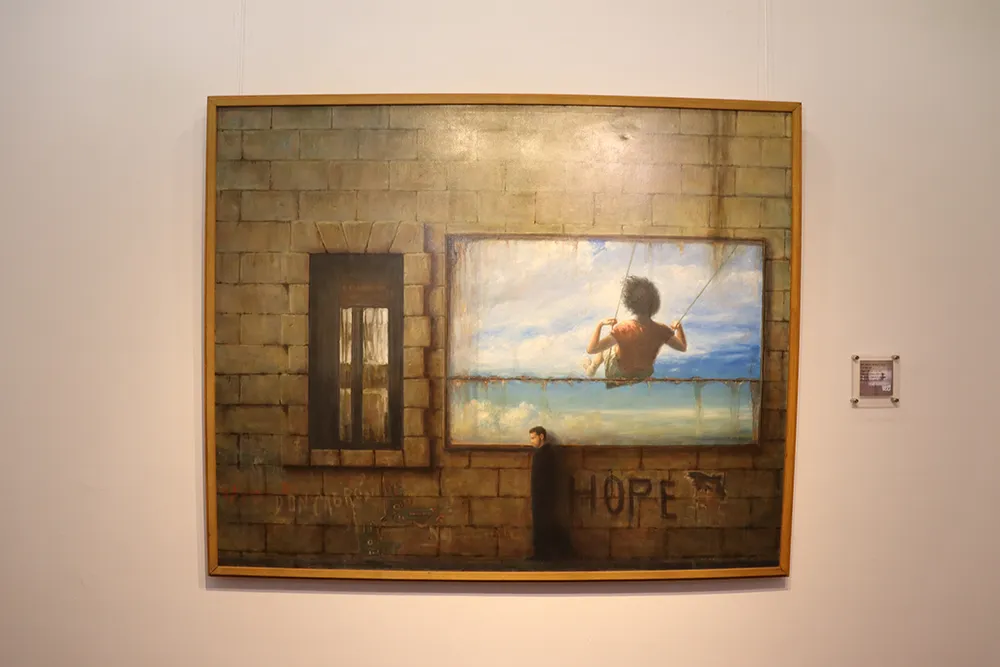
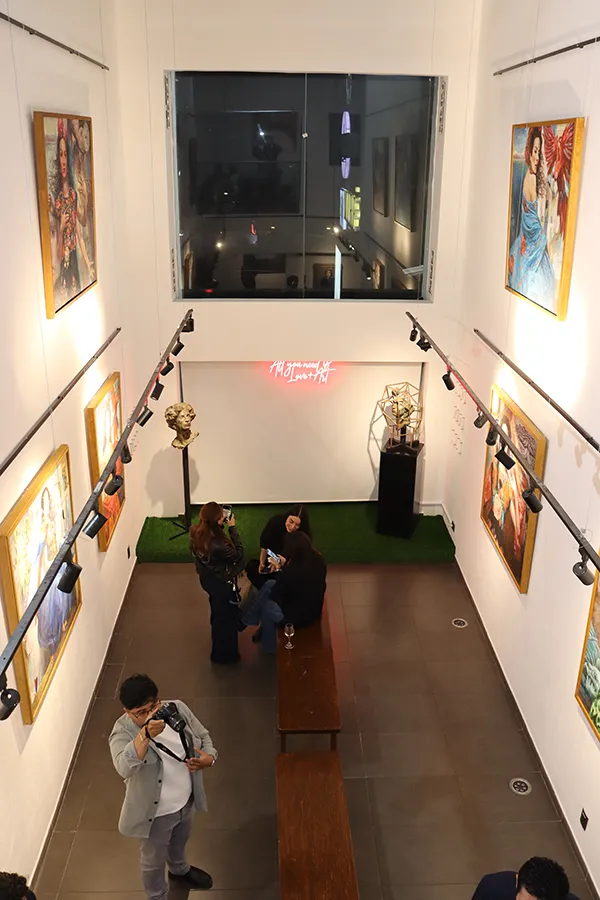
In this new exhibition, that exploration unfolds through painting and sculpture, establishing a dialogue between two territories that have long shaped his work: the material and the spiritual. Existence, memory, the soul, and the possibility of transcending one’s own circumstances all become part of the journey.
Hope is also present, understood as a possibility for transformation even in the face of darkness.
Perhaps this is where Amezcua’s background as an engineer becomes more interesting than it might initially seem.
Although the languages are different, both begin with a similar impulse: to observe, question, and attempt to understand.
Except here, answers do not necessarily exist.
Four Decades of Exploration
Amezcua’s relationship with art began long before he left engineering as a professional activity. According to ARTAC, he began painting as a child and by 1996 was participating in group and solo exhibitions; four years later, he made the visual arts his full-time pursuit.
His trajectory has moved between painting and sculpture, while concepts such as human nature, consciousness, the cosmos, and spirituality have gradually shaped his creative universe.
El Reino de los Espíritus 1.0 therefore functions less as a starting point than as a concentration of questions that have been appearing throughout his work for years.
Even the “1.0” introduces the idea of something that is not necessarily closed: a first formulation of a territory that may continue to transform.
And that seems particularly fitting for a body of work concerned precisely with what changes, remains, or transcends.
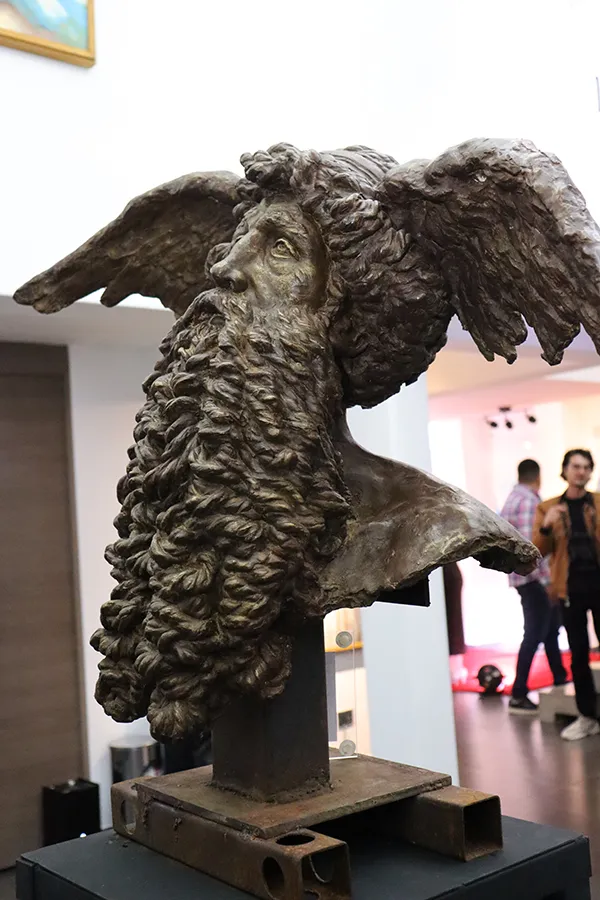
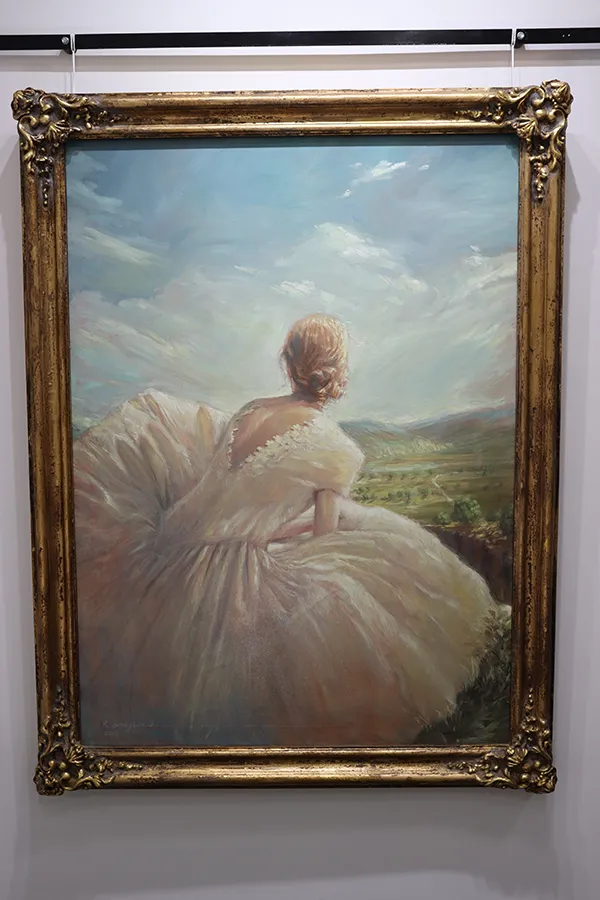
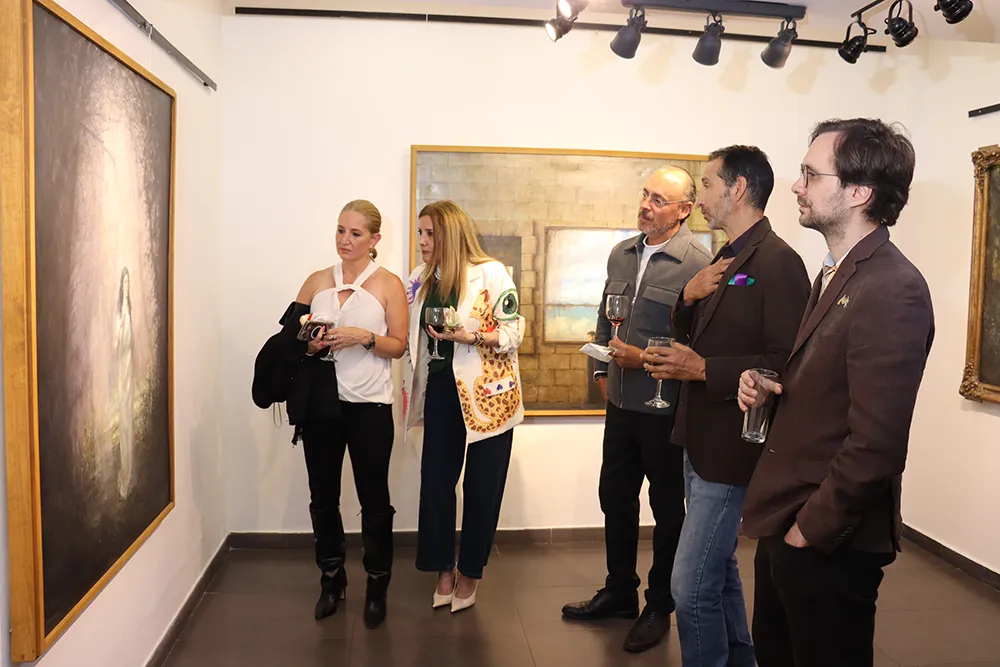
El Reino de los Espíritus Arrives at Bloomberger Art Gallery
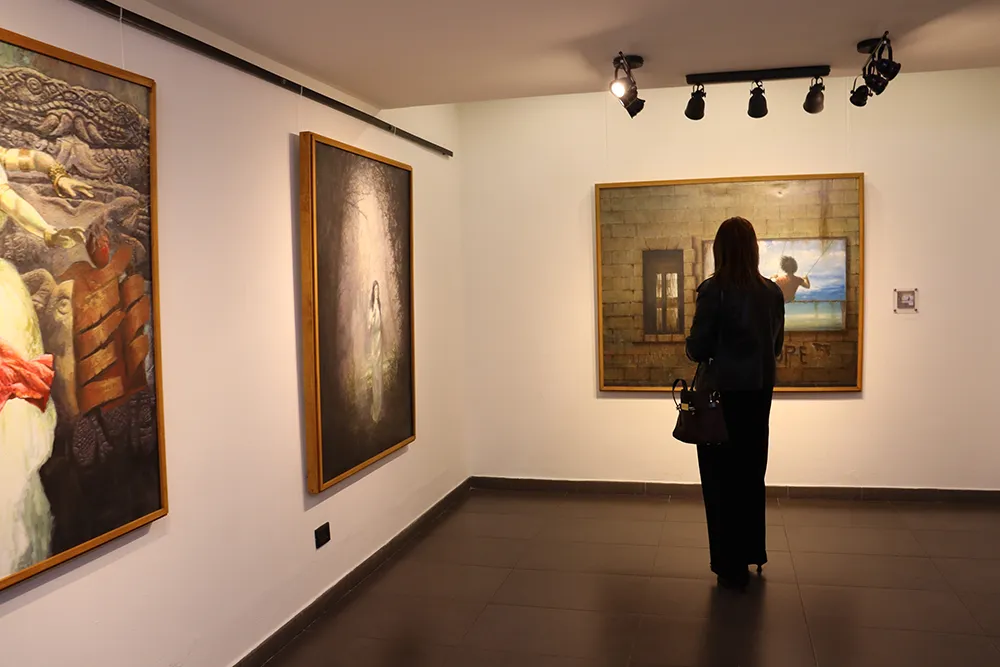
The exhibition was presented at Bloomberger Art Gallery, under the curatorship of Jennifer Piña, who shaped the exhibition’s journey and the dialogue between its different works.
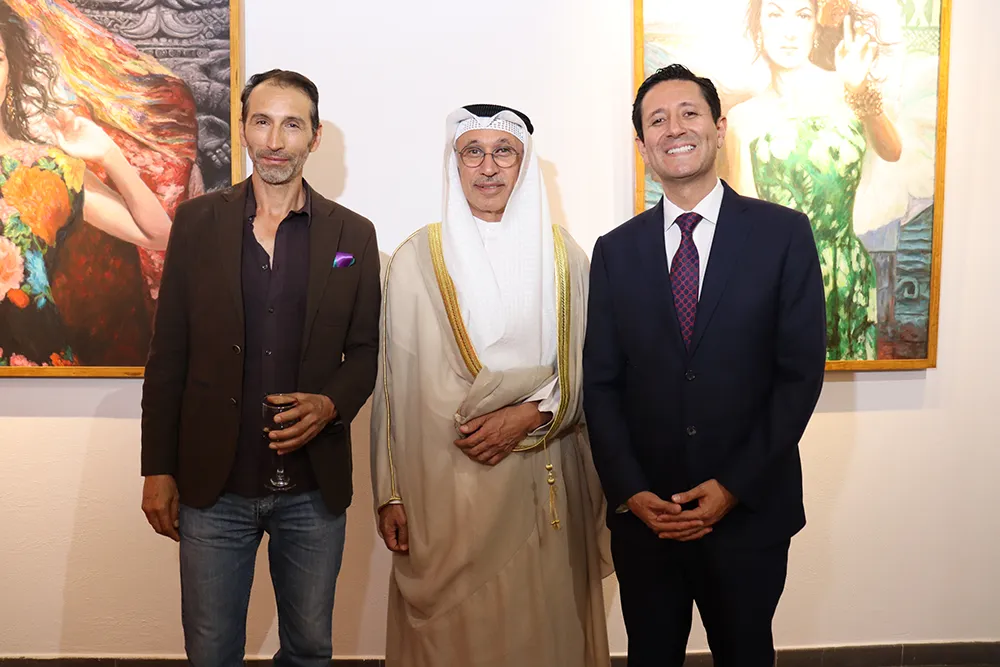
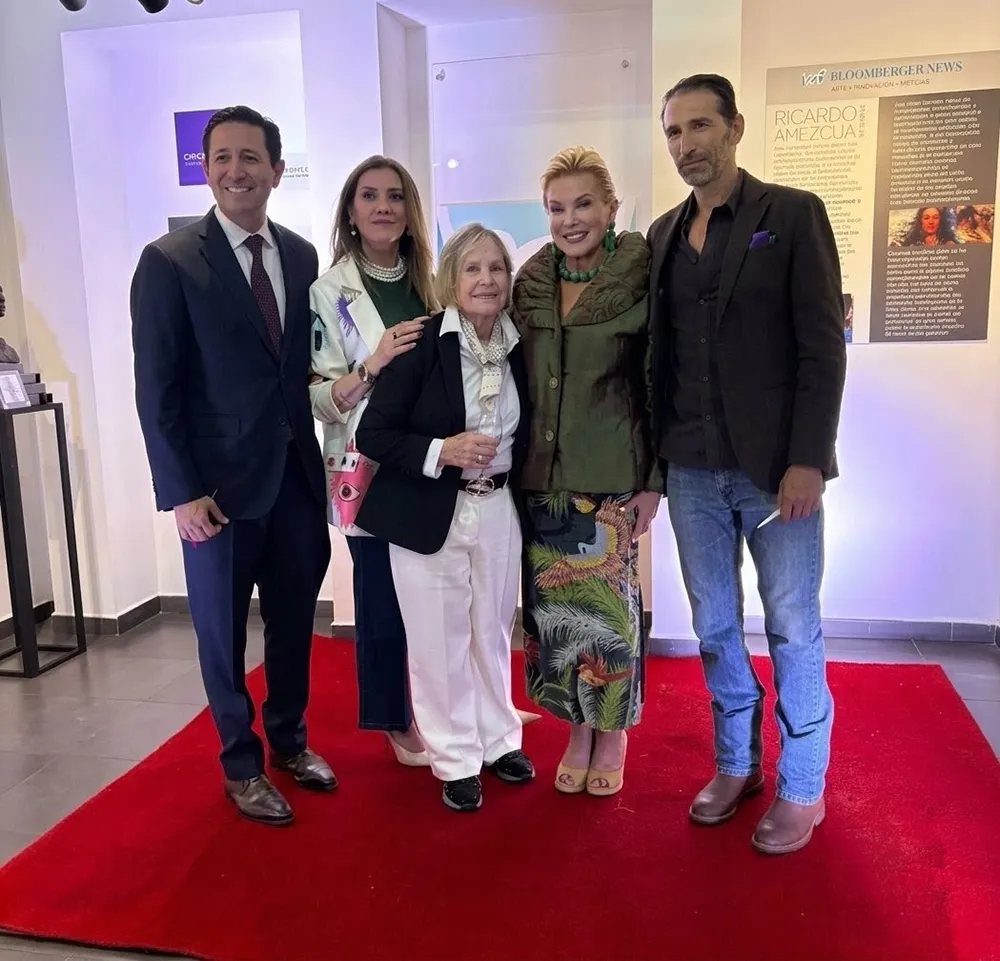
At the opening, Raquel Bessudo participated as guest of honor. Among those in attendance were Salah Suleiman Al-Haddad, Ambassador of the State of Kuwait to Mexico, American designer Marie Abercrombie and the doctor Juan Manuel Chaparro.
Beyond the opening night, however, the question running through the exhibition remains.
After an education built around matter, structures, and precision, Amezcua has spent decades exploring precisely what resists them.
El Reino de los Espíritus 1.0 does not need to offer a definition of the spiritual. It turns it into a territory to observe.
Because perhaps some things do not need to be explained in order to be contemplated.
Follow us on Statement.
images
Bloomberger Art Gallery.