Reading Time: 9 min.
Paint an emotion. Shatter perspective. Invent worlds. Turn an advertisement into an object of desire, a body into geometry, or a photograph into memory. In Madrid, the Museo Reina Sofía traces one of the most extraordinary periods in art history: the moment when creating ceased to mean simply representing what stood before the eye and began exploring everything an image, an object, or an idea could actually do.
There is a small trap in knowing great works of art before ever seeing them.
We encounter them in books, documentaries, campaigns, T-shirts and screens. We can recognize them within seconds and, precisely because of that familiarity, begin to believe we know them.
Walking into Madrid’s Museo Nacional Centro de Arte Reina Sofía quickly dismantles that illusion.
First comes scale. The measurements printed beneath an artwork mean very little until a canvas occupies most of a wall. Then come material, texture, gradations of color, imperfections and the physical distance your body needs to take from a work. Finally, something even more interesting happens: pieces that seemed to belong to separate chapters of art history begin speaking to one another.
Picasso with Juan Gris. María Blanchard with Diego Rivera. Ramón Casas with political posters. Dalí before and after Surrealism. Ángeles Santos inventing a universe. Oskar Schlemmer turning the body into architecture. Miró defending poetry as Europe descended into darkness. Robert Capa and Gerda Taro using a camera to tell the story of a war.
And, eventually, Guernica.
Not as an isolated celebrity hanging on a museum wall, but as part of something much larger.
The story of everything we discovered art could do.
Color Can Say What Words Cannot
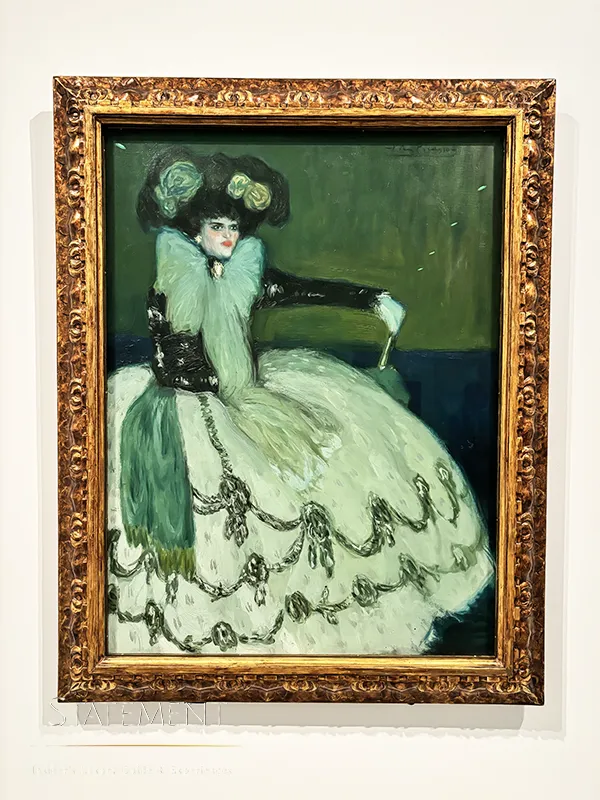
Pablo Picasso painted Woman in Blue in Madrid in 1901, at a fascinating moment precisely because the Picasso we think we know did not yet exist.
The painting brings together references ranging from Modernisme and Toulouse-Lautrec to Van Gogh, El Greco and Velázquez. Picasso submitted it that same year to Madrid’s National Exhibition of Fine Arts, where it passed virtually unnoticed.
Today, such indifference seems almost unimaginable.
The monumental, detached figure is dominated by a blue that does far more than describe a dress. Color begins to acquire an emotional language of its own.
And this would become one of modern art’s great adventures: discovering that faithfully representing reality was merely one possibility.
There were many others.
Reality Can Have More Than One Point of View
Cubism pushed that freedom much further.
Its revolution was not simply about fragmenting bottles, faces and guitars until they became difficult to recognize. The truly radical idea was questioning something that had seemed self-evident for centuries: that representing an object required choosing a single position from which to look at it.
Why should it?
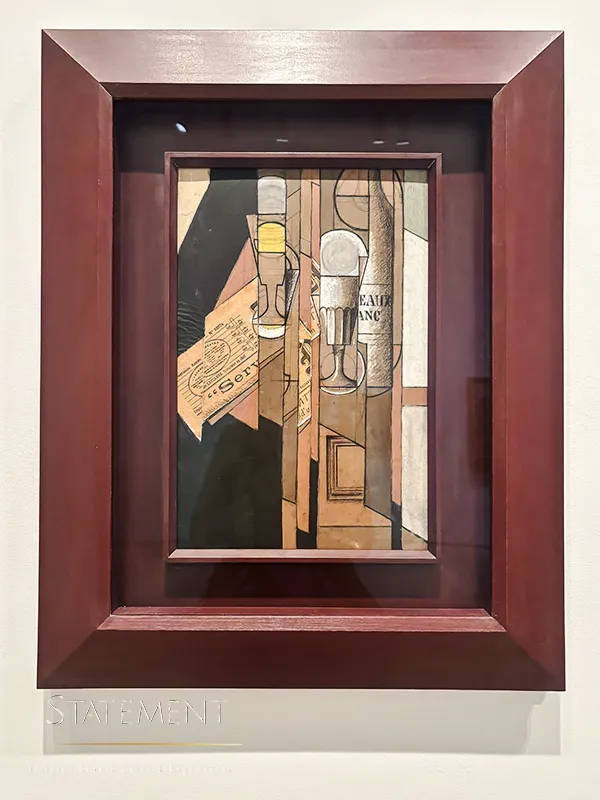
In Juan Gris’s 1913 Glasses, Newspaper and Bottle of Wine, collage, gouache, charcoal and pencil construct a still life that no longer attempts to behave like a window onto a perfectly ordered scene.
Objects can be dismantled and reconstructed. Different angles can coexist on the same surface.
The world and its multiple perspectives can occupy a single plane.
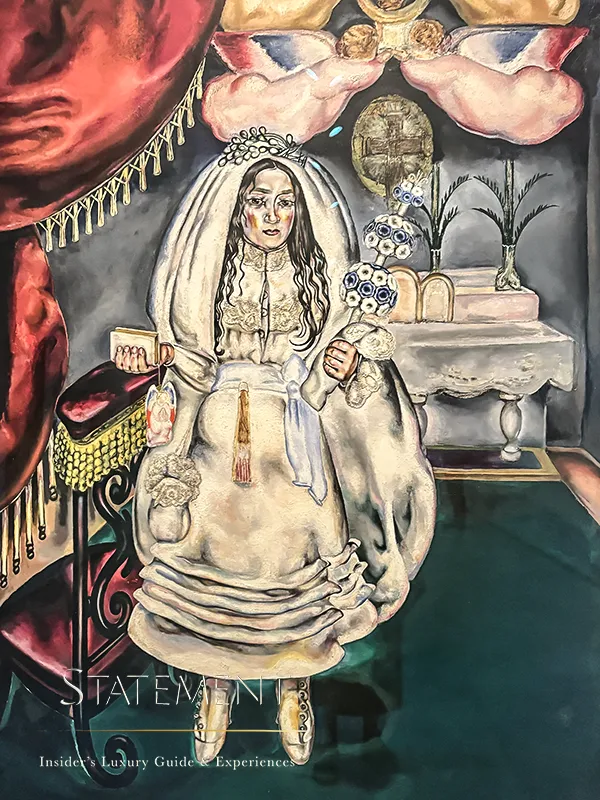
María Blanchard belongs fully within that revolution. Her 1914 La communiante is also a reminder of how much poorer the history of the avant-garde becomes when it is reduced to a handful of famous male surnames.
And then comes a Mexican surprise.
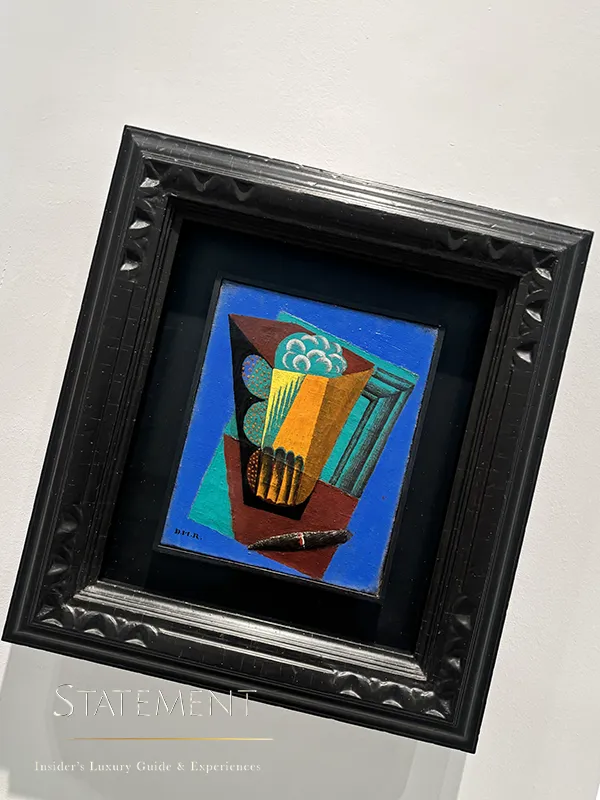
Before the monumental murals that would transform Mexico’s visual history, Diego Rivera participated in European Cubism. His 1917 The Beer Mug reveals his proximity to Juan Gris, but with a far more intense use of color than that associated with much Parisian Cubism.
Picasso, Gris, Blanchard, Rivera.
A single perspective was beginning to seem insufficient.
An Artist Can Still Be Searching for Who He Will Become
And then Salvador Dalí appears.
Not the Dalí of melting clocks. Not the impossible moustache. Not the man who turned his own surname into one of the twentieth century’s most recognizable personal brands.
Before all that, there was a student.
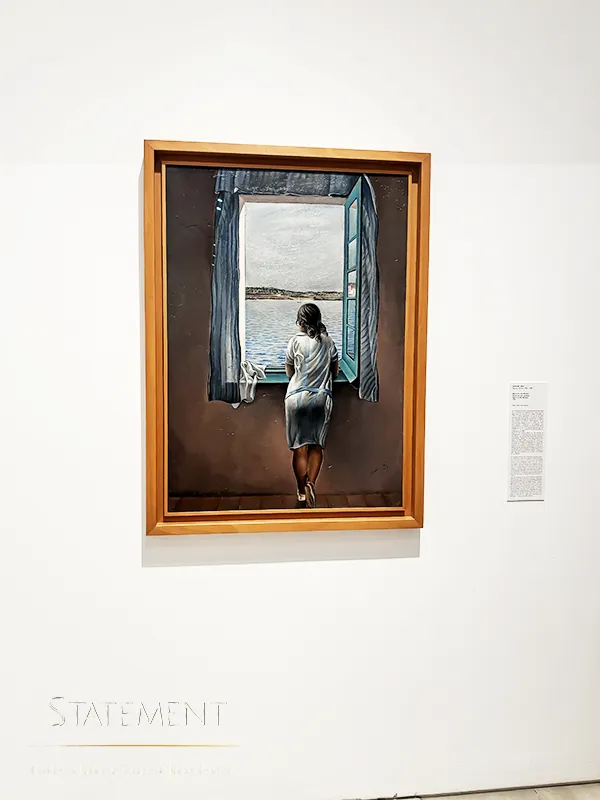
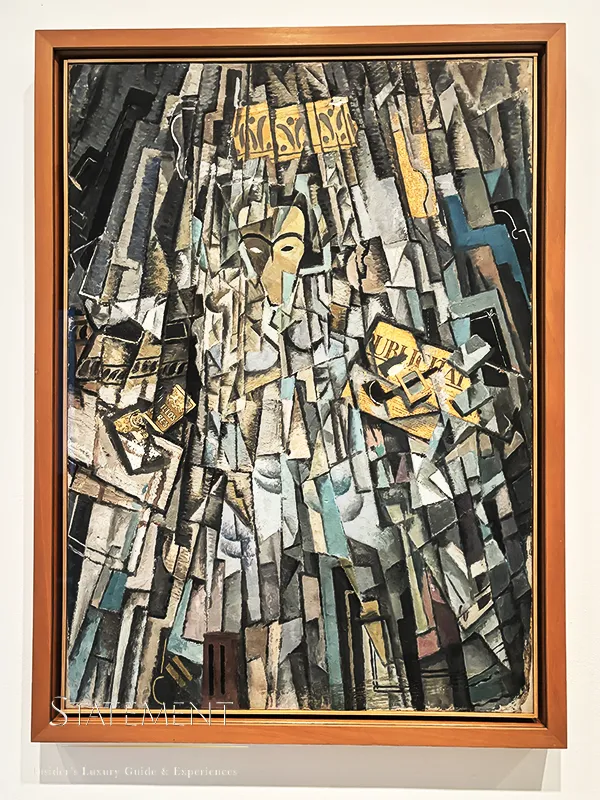
During his years in Madrid, Dalí absorbed different visual languages at extraordinary speed. Portrait of Salvador Dalí, Girl at the Window and, particularly, his Cubist Self-Portrait allow us to encounter an artist testing possibilities before becoming synonymous with Surrealism.
Created in 1923, the latter incorporates Cubism, collage and other avant-garde influences circulating through Europe at the time.
There is something refreshing about meeting this Dalí.
Art history tends to introduce great artists once they have already found their voice. Seeing them search reminds us that talent does not mean having all the answers from the beginning.
Years later would come The Great Masturbator and The Invisible Man.
By then, reality would no longer merely be capable of being observed from different perspectives.
It could conceal another reality within itself.
Advertising Can Be Art, Too
While painters were dismantling representation, another visual revolution was happening beyond studios and salons.
There were products to sell.
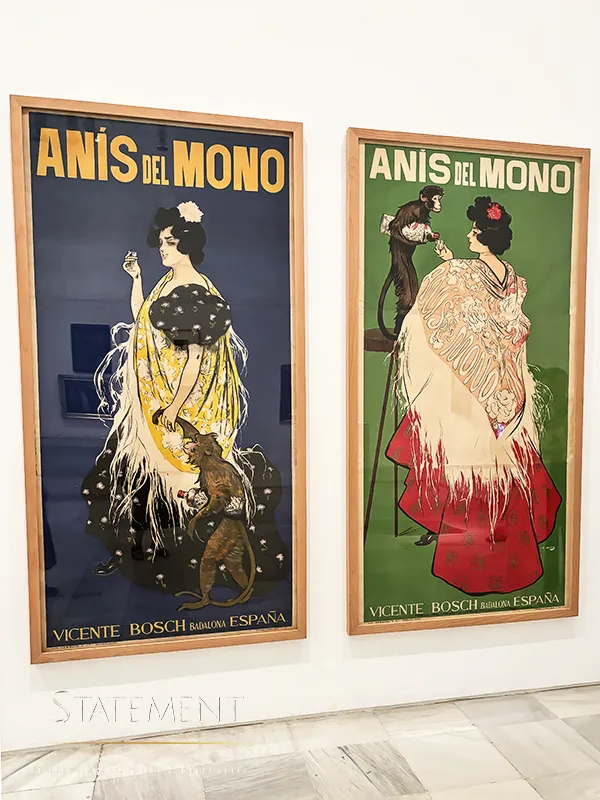
In 1898, Ramón Casas created Mono y mona for the Anís del Mono poster competition. Its monumental figures, flat backgrounds and use of chromolithography belonged to a new graphic language propelled by industry, illustrated magazines and advertising.
Its mission was unmistakable: attract attention and sell a drink.
That did not prevent it from being done extraordinarily well.
More than a century later, those posters still function as advertising, but also as design, illustration, identity and visual culture.
And they pose a surprisingly contemporary question: why should usefulness ever be incompatible with beauty?
Creating to communicate, promote or sell is still creating.
It requires ingenuity. It carries responsibility. And when taken seriously enough, it can also become art.
That idea will reappear later in the museum.
Only then, there will be no bottle to sell.
There will be a society to mobilize.
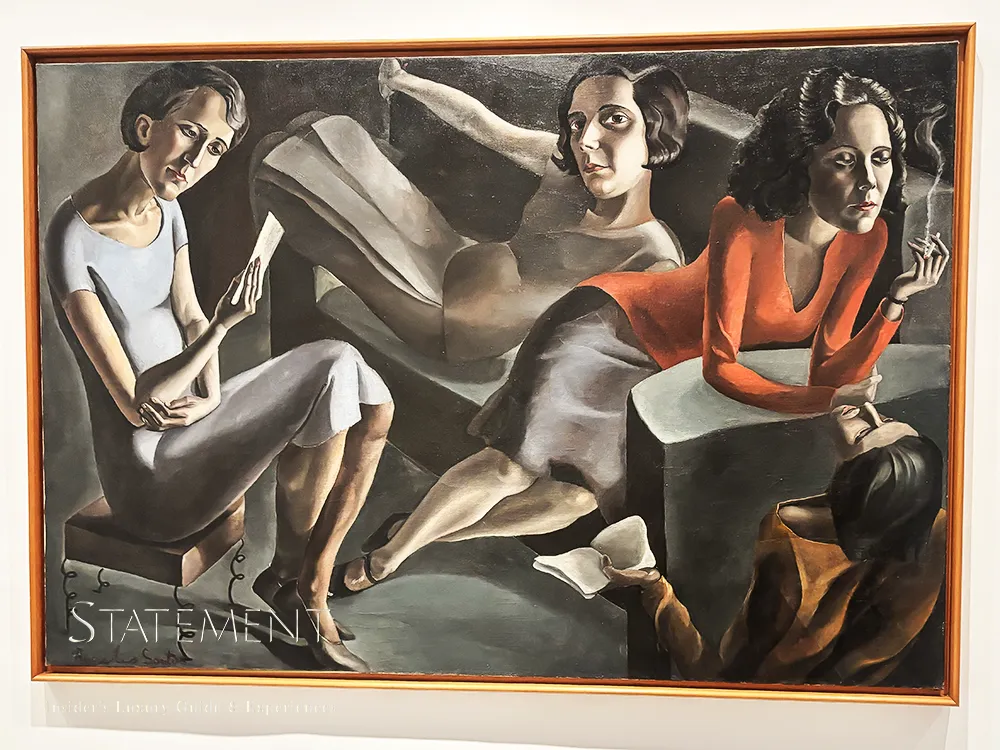
A Teenager Invents A World
And then there is Ángeles Santos.
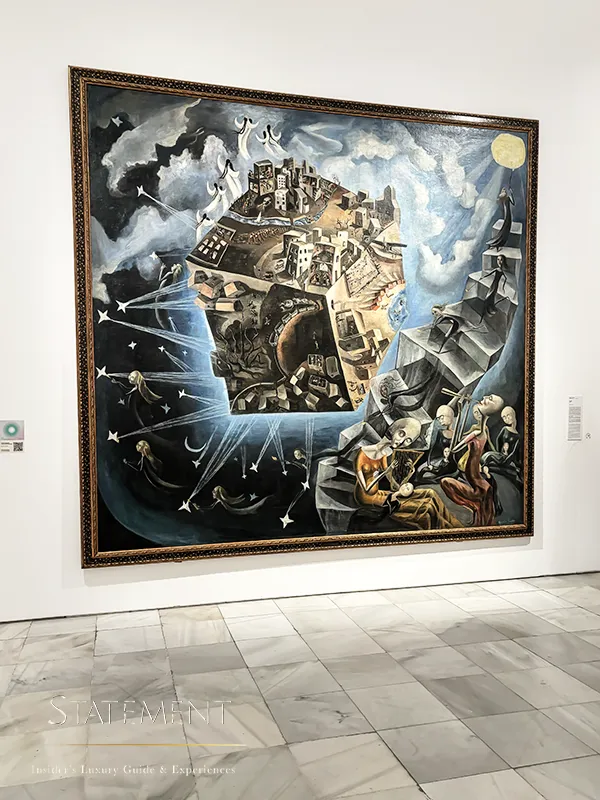
A World does not ask for attention. It occupies it.
The canvas measures 290 by 310 centimeters and was painted in Valladolid in 1929 by a virtually unknown artist who was only 17 years old.
Santos had neither travelled to Paris nor encountered the European avant-garde firsthand. Some of those ideas reached her through magazines and other publications. That did not prevent her from imagining a universe of her own — and requiring almost nine square meters of canvas to contain it.
When the work appeared at Madrid’s Autumn Salon, it caused a sensation.
It is not difficult to understand why.
The planet is no longer round, cities defy recognizable geography and mysterious figures inhabit a private cosmology.
Art no longer needs to reproduce this world.
It can invent another.
Tertulia, also by Santos, performs a different transformation. The everyday becomes strange; the women gathered together inhabit a space charged with modernity, intimacy and an elusive sense of tension.
By this point in the journey, reality already seems considerably less stable than it did when we entered.
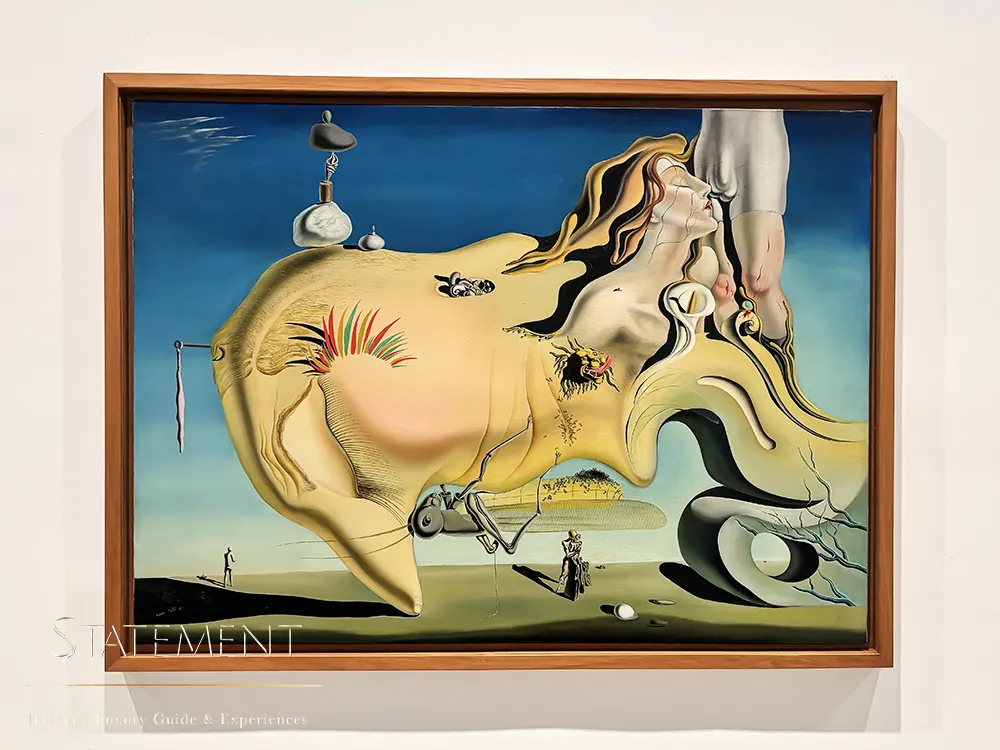
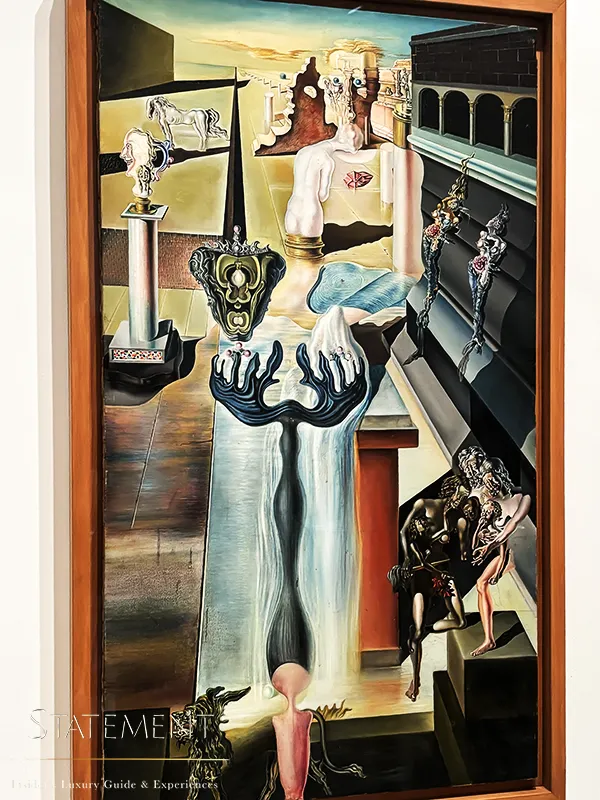
It Can Make Us Distrust Our Own Eyes
Surrealism would exploit that fracture.
In The Great Masturbator, Dalí transforms desire, fear, memory, body and landscape into an image governed less by external logic than by the subconscious.
The Invisible Man plays a different game.
Dalí began the work in 1929, using the device of the double image: elements that initially appear independent eventually construct, simultaneously, an enormous human figure.
What exactly are we seeing?
It depends on how long we look.
Art has moved from reproducing reality to making us wonder whether we are even capable of recognizing it.
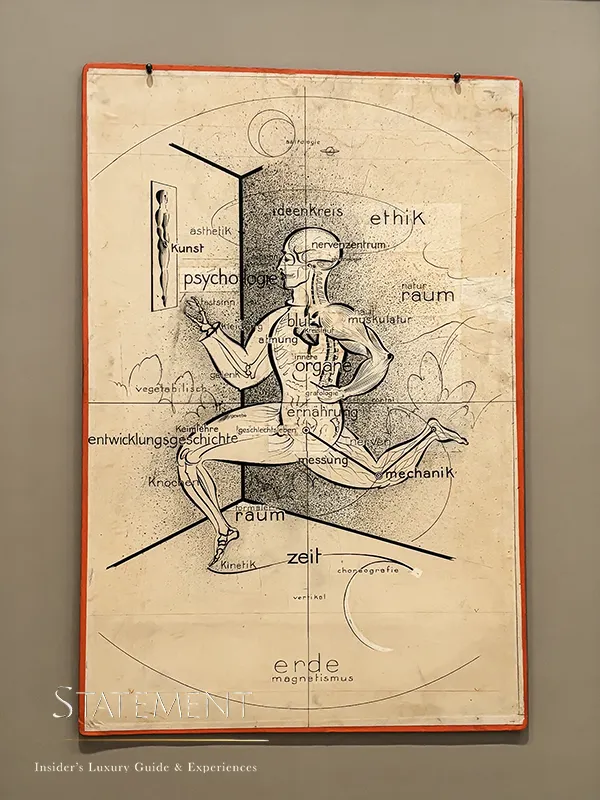
It Can Turn a Body Into an Idea
The avant-garde also refused to accept that art had to remain within a frame.
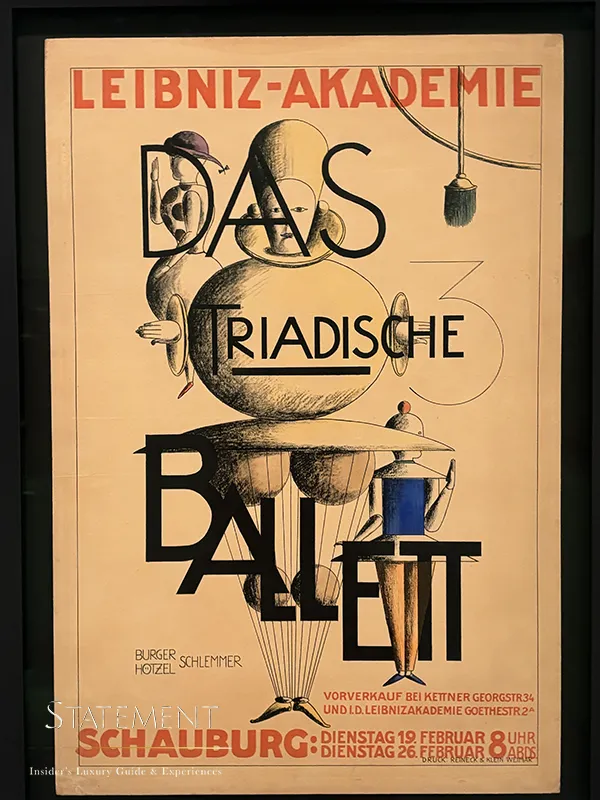
At the Bauhaus, Oskar Schlemmer investigated the relationship between the human figure, geometry, space, color and movement.
Der Mensch im Ideenkreis and materials related to Das Triadische Ballett reveal a radical ambition: to make the body itself part of a spatial composition.
In the Triadic Ballet, costumes alter human proportions until dancers become something resembling moving architecture. Circles, spheres, cylinders, lines and volumes replace the conventional silhouette.
Painting had already dismantled the object.
Now the body could be dismantled and reconstructed as well.
Sculpture posed questions of its own.
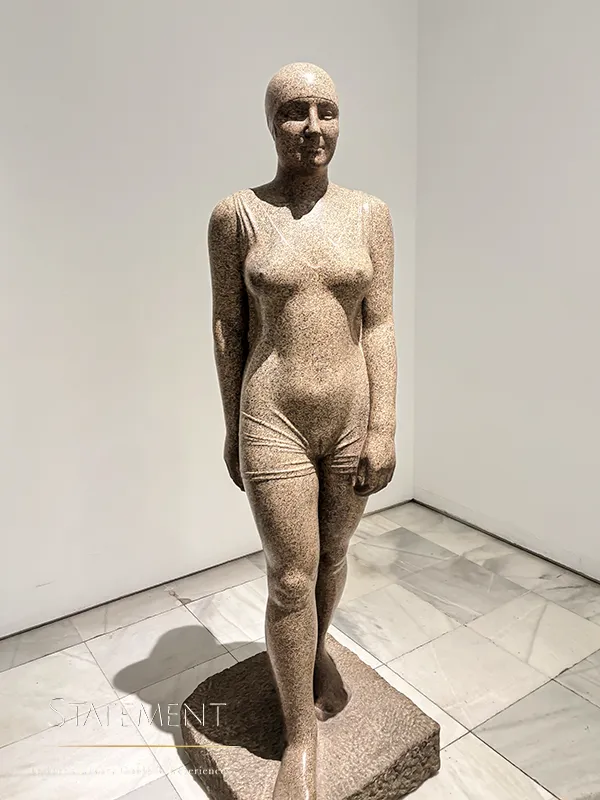
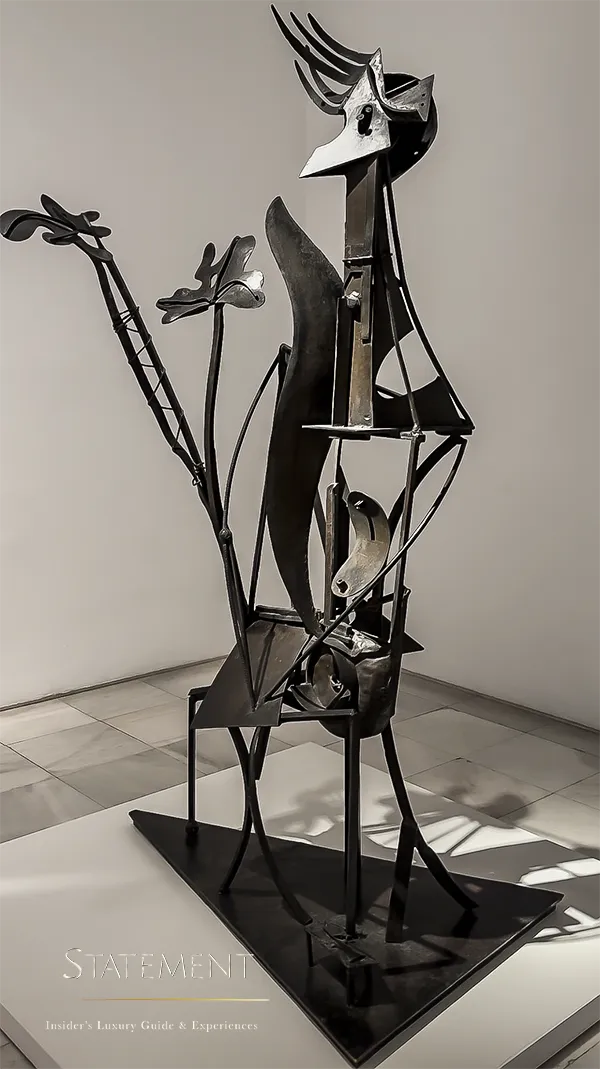
From the material solidity of Mateo Hernández’s Bather to Picasso’s radical Woman in the Garden, the artwork no longer exists solely in front of the viewer. Volume and emptiness force us to move around it, change our position and accept that looking can also require movement.
By now, art has learned to transform color, perspective, objects, bodies, space and even our perception of reality.
It Can Choose Joy
And then comes 1937.
Spain is immersed in Civil War, while Europe is moving towards a darkness that will erupt into another, even greater conflict two years later.
Joan Miró was hardly detached from what was happening. That same year, he created The Reaper for the Spanish Pavilion at the Paris International Exhibition and produced works directly marked by the violence of his time.
But he also painted Peinture (Hirondelle) — Painting (Swallow).
And chose something else.
Poetry. Lyricism. Color. The pleasure of painting.
In this group of works on Celotex, Miró allowed himself to step momentarily away from tragedy and create compositions of graphic marks, patches of color and forms inhabiting something like a private cosmos.
That, too, says something about what art can do.
A painful era does not require artists to produce only painful images.
Preserving imagination, play and joy can also be a refusal to surrender everything to darkness.
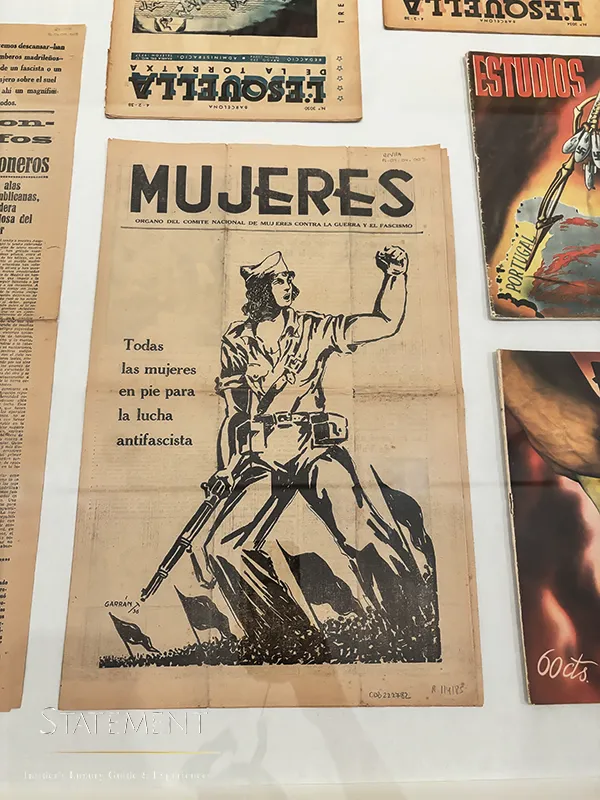
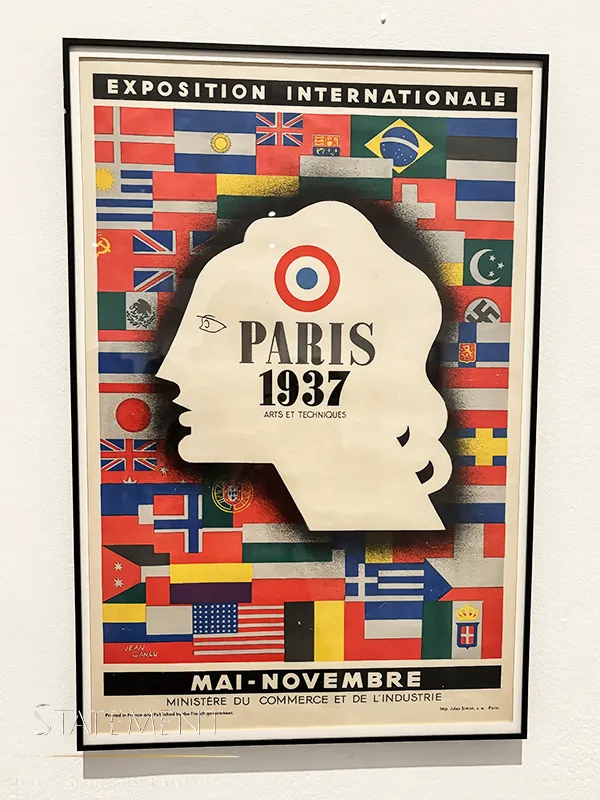
An Image Can Sell. It Can Also Mobilize.
Then the temperature of the museum changes.
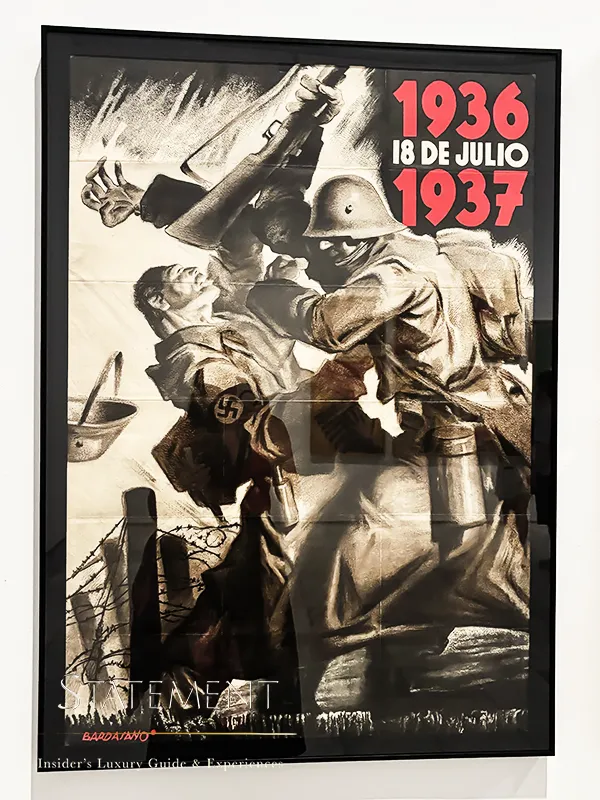
The Spanish Civil War enters the galleries not only through paintings, but through photographs, newspapers, magazines, posters and propaganda.
And something we learned from Ramón Casas suddenly acquires another meaning.
We already know that a carefully constructed image can stop someone in their tracks.
Now we discover that it can also attempt to direct their gaze.
Publications devoted to the mobilization of women and anti-fascist posters transform illustration, composition, typography and color into political tools. The objective is no longer to sell a bottle, but to communicate a cause, construct a collective identity and call people to action.
Categories begin to feel inadequate.
Where does design end and propaganda begin?
Where does documentation end and art begin?
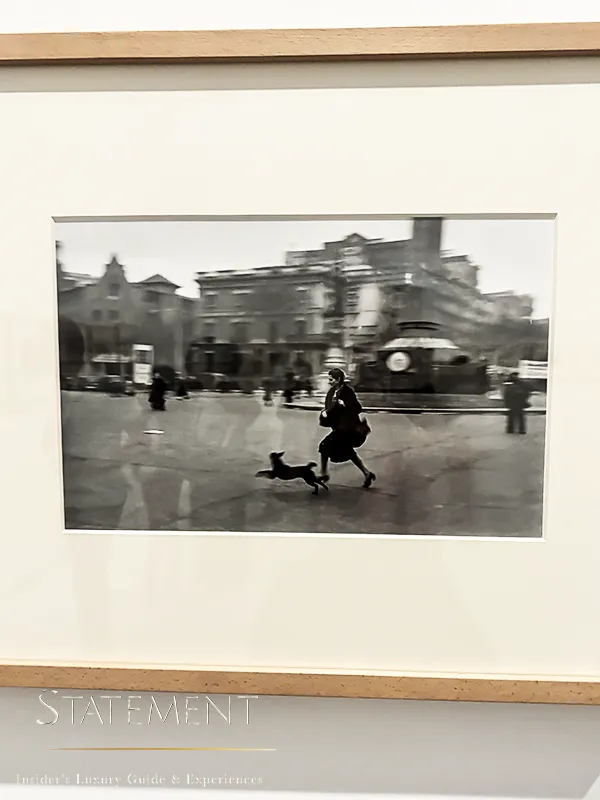
Can a photograph change the way we understand a war?
Robert Capa: Even a Name Can Be Constructed
This is where Robert Capa appears.
Except Robert Capa did not exist.
At least, not initially.
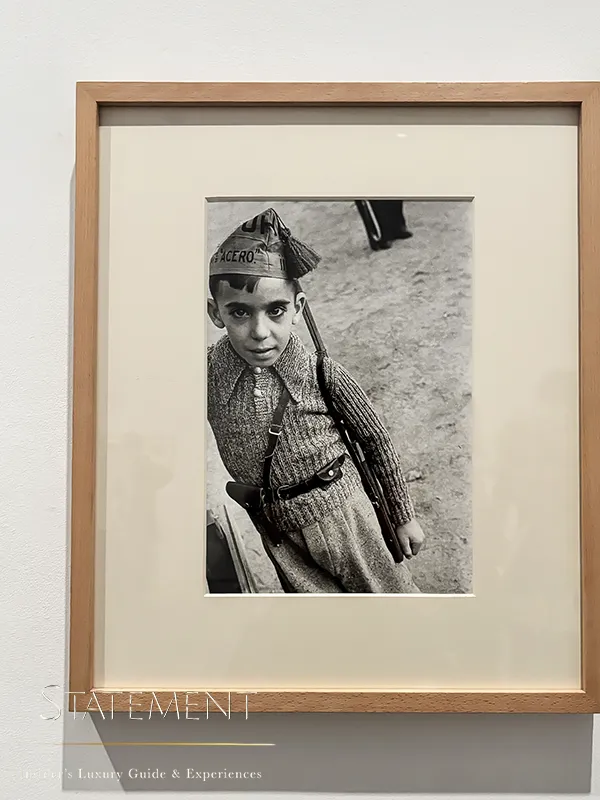
The photographer was born Endre Ernő Friedmann in Budapest. In Paris, he and Gerta Pohorylle devised the identity of “Robert Capa,” supposedly a successful American photographer whose name would help their images command greater attention and higher fees.
Pohorylle would later adopt her own professional name: Gerda Taro.
For a period, photographs by both circulated in connection with that constructed identity before Friedmann ultimately adopted Robert Capa as his professional name and Taro established her own.
There is something irresistible about this story within the Reina Sofía’s broader narrative.
After discovering that a painting can reconstruct an object, advertising can manufacture desire and Surrealism can deceive the eye, we learn that even the identity behind a photograph can be constructed.
The story became more complicated still. Later research into archives and negatives led scholars to reconsider the authorship of Civil War photographs that had for decades been associated exclusively with Capa and helped restore Taro’s fundamental role.
But standing before the photographs, something more immediate happens.
Children, militiamen, cities and people running from bombs introduce the physical reality of war.
Until now, we have watched artists fragment the world.
Now we are watching a world being fragmented for real.
The camera was there.
Art Can Also Take a Position
Photography was not alone.
The Spanish Civil War turned visual communication into another front of the conflict. Posters, newspapers and photomontages were used to inform, persuade, denounce and mobilize.
And in 1937, many of those possibilities converged in Paris.
The government of the Spanish Republic participated in the International Exhibition of Arts and Technology in Modern Life with a pavilion designed by Josep Lluís Sert and Luis Lacasa.
It was not simply a building intended to display Spanish art.
It was also a statement.
Architecture, photography, painting, sculpture, design and propaganda coexisted to communicate internationally the reality of a Spain at war.
Joan Miró created The Reaper.
Alexander Calder presented his Mercury Fountain.
And Pablo Picasso was commissioned to create a major work for the pavilion.
Then, on April 26, 1937, Gernika was bombed by German and Italian forces supporting the Nationalist side.
Picasso learned about the destruction through the press.
And the direction of his work changed.
And Then, Guernica
Something extraordinary happens here in the Reina Sofía’s museography.
Because by the time Guernica finally appears, we have spent gallery after gallery learning — almost without realizing it — the visual language necessary to look at it.
We know perspective can be shattered.
That a body can be fragmented.
That multiple realities can coexist on a single surface.
That an image can seduce.
That it can deceive.
That it can document.
That it can mobilize.
That it can take a position.
And we also know what was happening outside the artists’ studios.
Then Picasso appears.
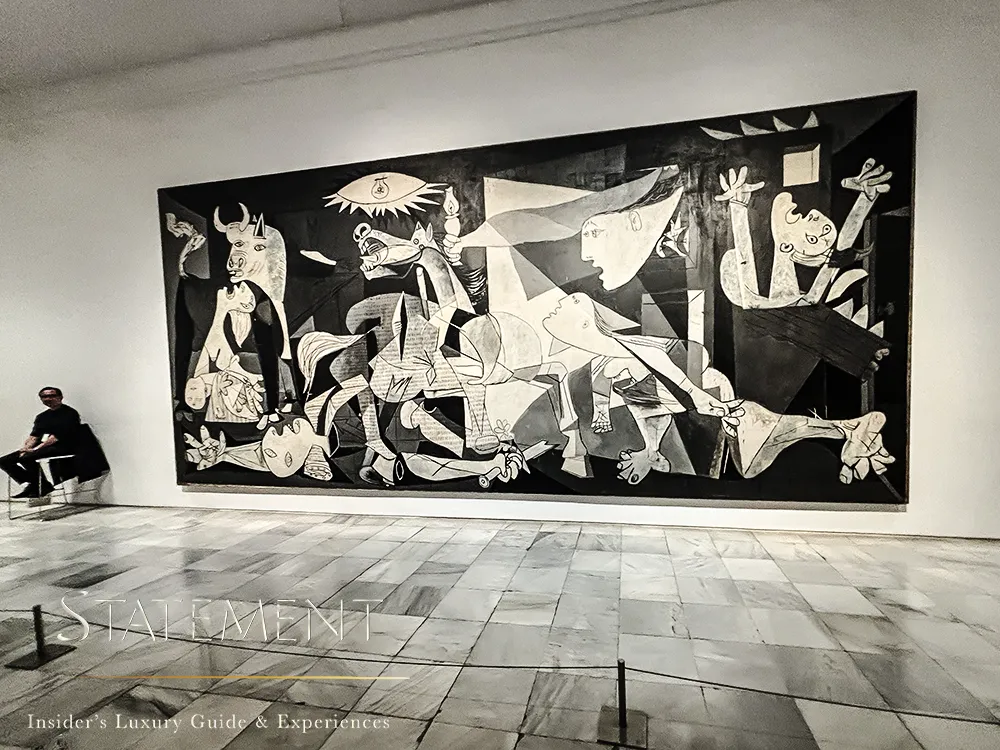
Guernica measures approximately 3.5 meters high by 7.8 meters wide.
Almost eight meters.
Again, scale matters.
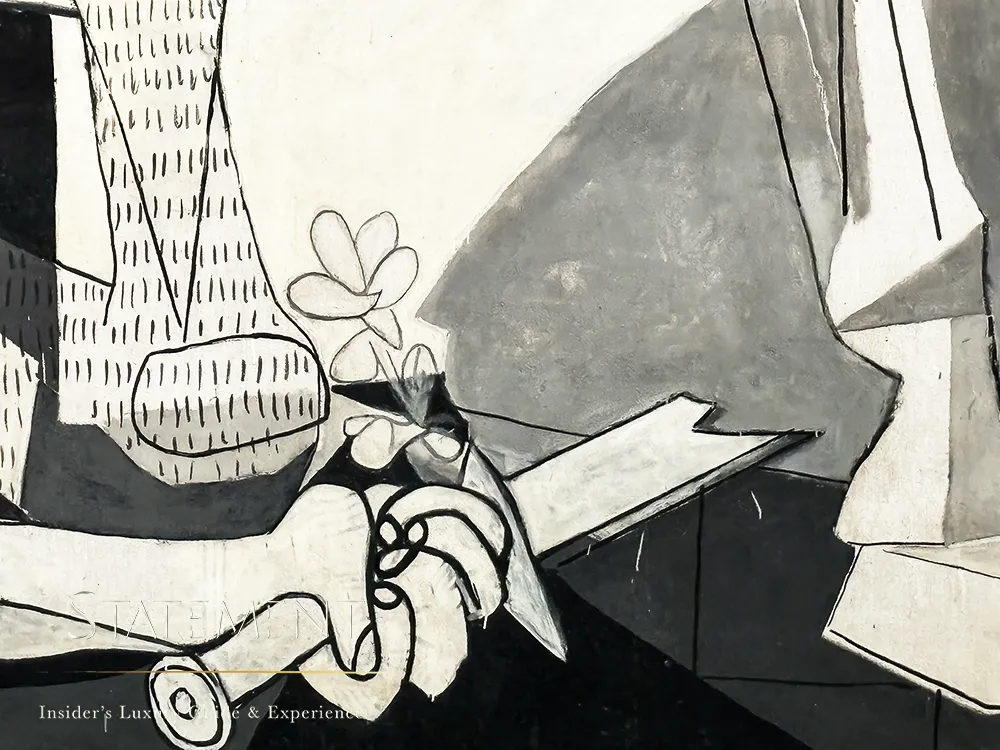
Horse, bull, mother, child, shattered bodies, open mouths and a light seemingly incapable of offering comfort occupy a space no reproduction can anticipate.
But trying to turn every figure into a puzzle with one definitive answer may miss part of what the painting accomplishes.
Picasso took tools the avant-garde had developed to transform representation — fragmentation, distortion, simultaneity, the disruption of perspective — and deployed them against a reality that had itself been shattered.
Formal experimentation encountered historical urgency.
Dora Maar photographed the canvas at different stages of its creation, leaving behind an extraordinary record of the process through which Picasso repeatedly altered the composition.
Guernica was presented at the Spanish Pavilion in Paris in 1937 and, after travelling internationally, spent decades in the custody of New York’s Museum of Modern Art. Picasso stipulated that it should return to Spain once democratic freedoms had been restored.
It returned in 1981.
But there is one final coincidence that makes its current home particularly powerful.
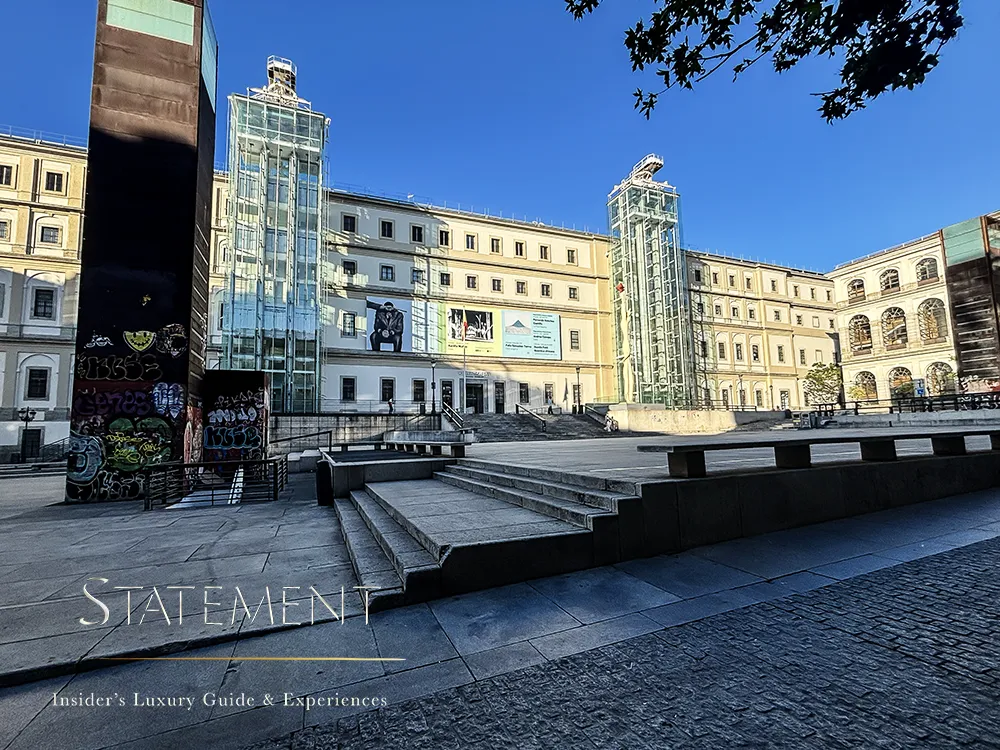
The Reina Sofía’s Sabatini Building was originally a hospital. During the Spanish Civil War, it treated thousands of people, including victims of the bombing of Madrid.
The gallery that now houses Guernica was once part of that hospital.
The painting created in response to the destruction of a civilian population eventually found a home in a space that had witnessed the consequences of another bombed city firsthand.
History is no longer merely represented.
It is in the walls.
Everything Art Can Do
Leaving this journey, it becomes difficult to continue thinking about art merely as a collection of beautiful objects.
The Reina Sofía demonstrates precisely the opposite.
A painting can teach us that color carries emotion.
A collage can destroy perspective.
A teenager can invent a planet.
An advertisement can become visual culture.
A body can become geometry.
A swallow can preserve joy in the middle of a war.
A poster can mobilize.
A camera can construct memory.
And a canvas almost eight meters wide can ensure that the pain of something that happened nearly a century ago remains impossible to contemplate with indifference.
Perhaps that is one reason the Reina Sofía feels so profoundly connected to Madrid.
It does not preserve a perfectly ordered history or a single definition of beauty. It brings together contradictions, experiments, ruptures, wounds, humor, desire, politics, design, imagination and memory.
Like the century it attempts to explain.
And then the intelligence of its museography becomes clear.
Guernica is one of its great masterpieces, but the museum does not need to turn everything else into a prelude.
It does something better.
It shows us how many things art had to discover along the way.
And then it continues.
Because the Reina Sofía does not merely tell the story of how art changed.
It tells the story of everything we discovered art could do.
Special thanks to the Museo Nacional Centro de Arte Reina Sofía for their support and assistance during this visit and in the preparation of this feature.
Follow us on Statement.
images
Statement – Avril Parrillat. ©