Reading Time 3 min.
We stepped inside L’Art de Vivre with its creator to uncover the references to Versailles, the Paris Métro, the City of Light, the Bourse de Commerce and Sainte-Chapelle hidden throughout its nine rooms.
You can walk into The Selfie Experience: L’Art de Vivre thinking you are there to take pictures.
And yes, you probably will take plenty.
But after walking through it with Lacho Villanueva, the creator behind this and other experiences for El Palacio de Hierro, we realized something far more interesting: the photographs are almost a consequence.
Behind the sets, lights, mirrors and immersive spaces is a narrative built around some of the cultural codes that have shaped our idea of France and, particularly, Paris.
Statement attended the opening of L’Art de Vivre Totalmente Palacio, where we had the opportunity to walk through The Selfie Experience as Villanueva personally explained the meaning behind its spaces.
What we discovered completely changed the way we saw it.
Because here, practically nothing is there by accident.
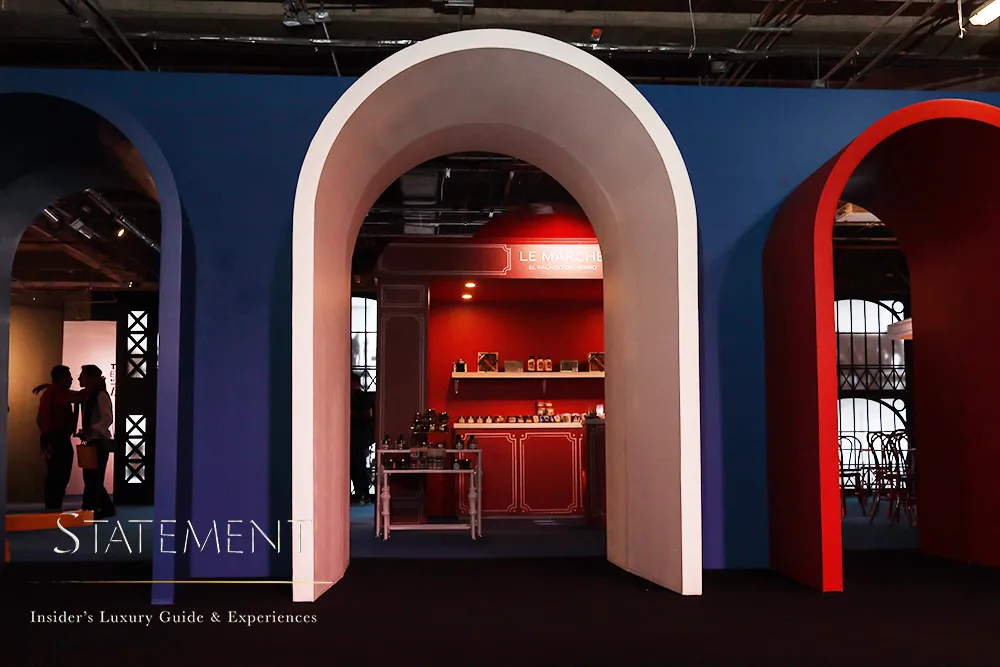
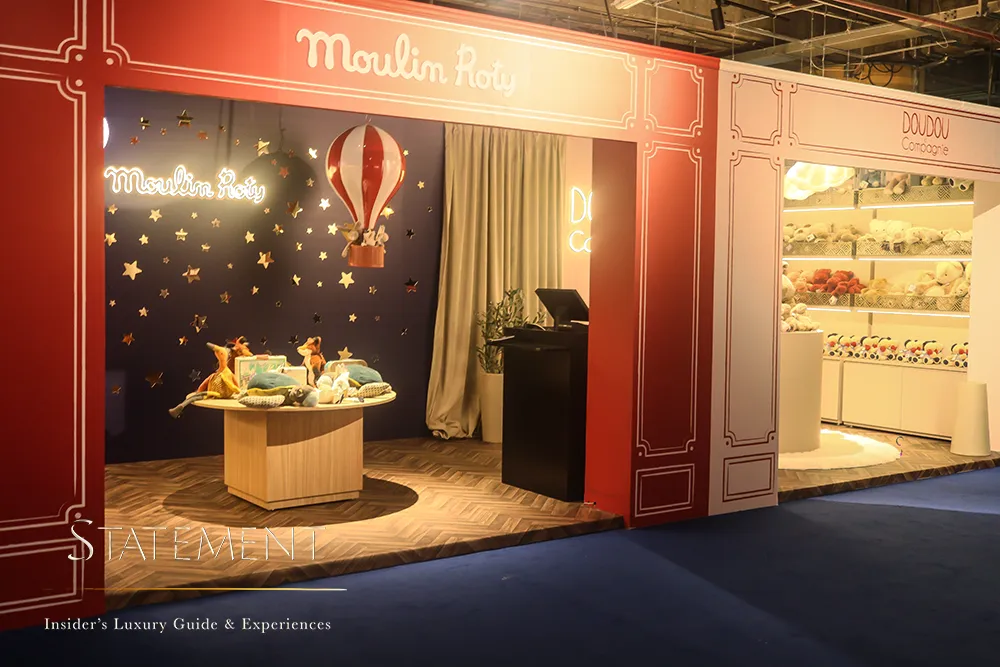
It All Begins with Louis XIV
To understand the experience, you first have to travel back several centuries.
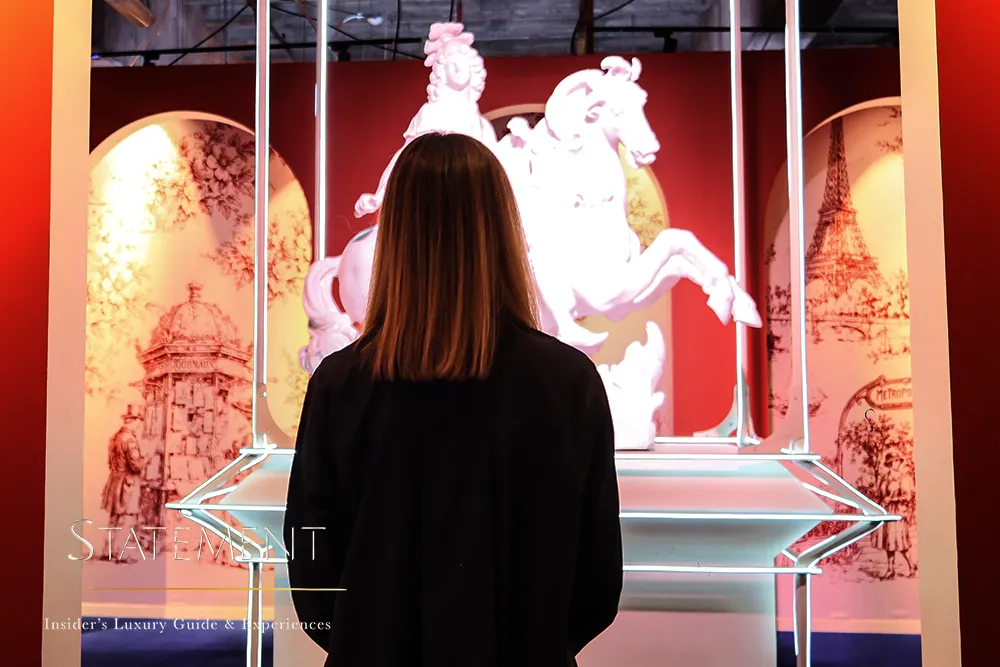
The first major reference is Louis XIV and the Grand Siècle, a period that plays a fundamental role in the experience’s narrative as a way of understanding the development of the decorative arts and a French aesthetic whose influence would eventually extend far beyond the country’s borders.
In the installation, the monarch stands at the center of what feels like a contemporary display case.
But what makes the space interesting is everything around him.
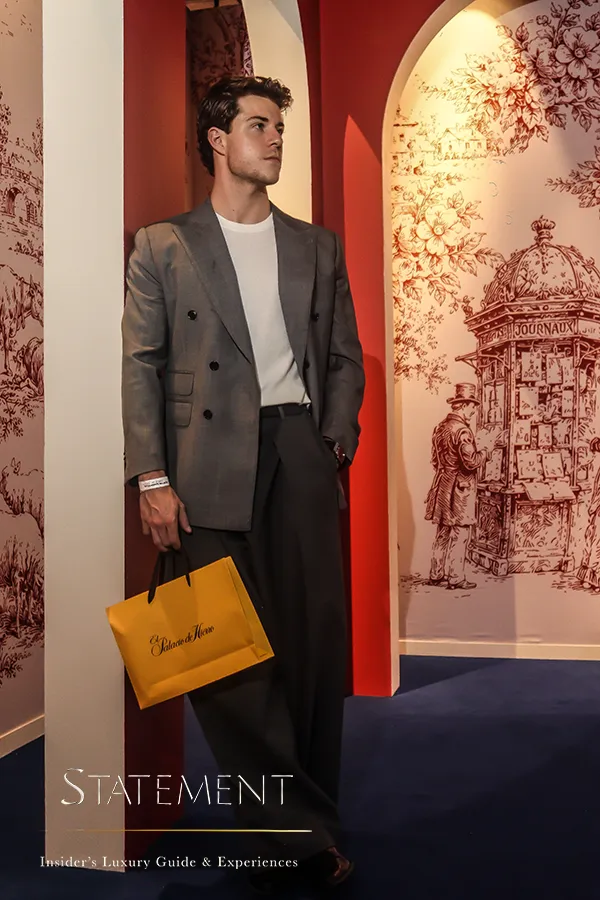
Arches that evoke French architecture, references to the decorative language of Versailles and a large tapestry create a kind of visual timeline, beginning in that historical France and moving toward contemporary Paris.
The intention is not to reproduce the past.
It is to show how certain aesthetic codes survive because each generation finds a new way to reinterpret them.
Stepping into the Heart of Versailles
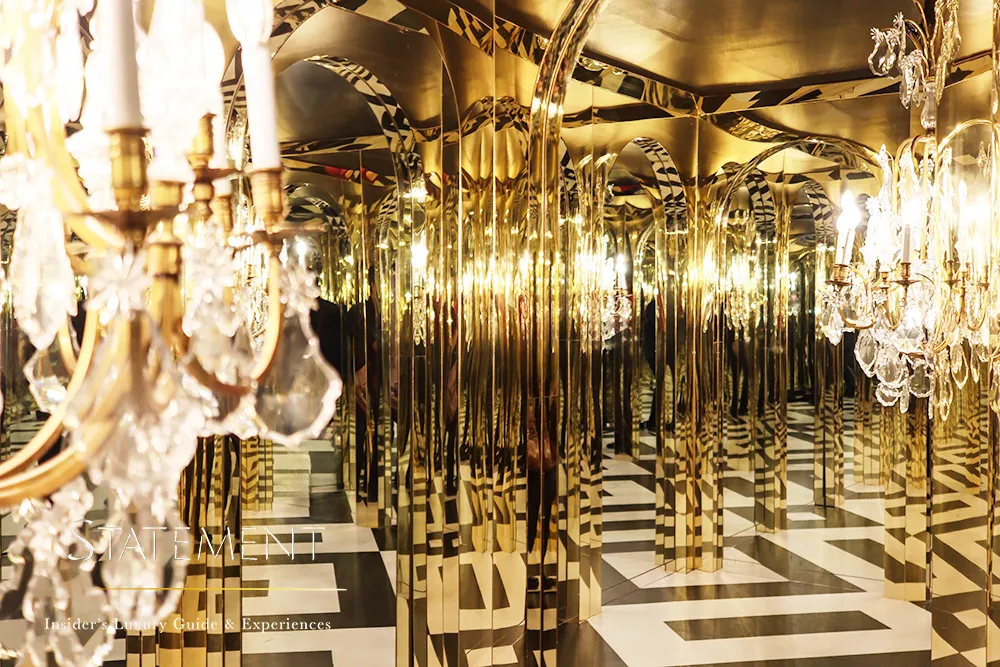
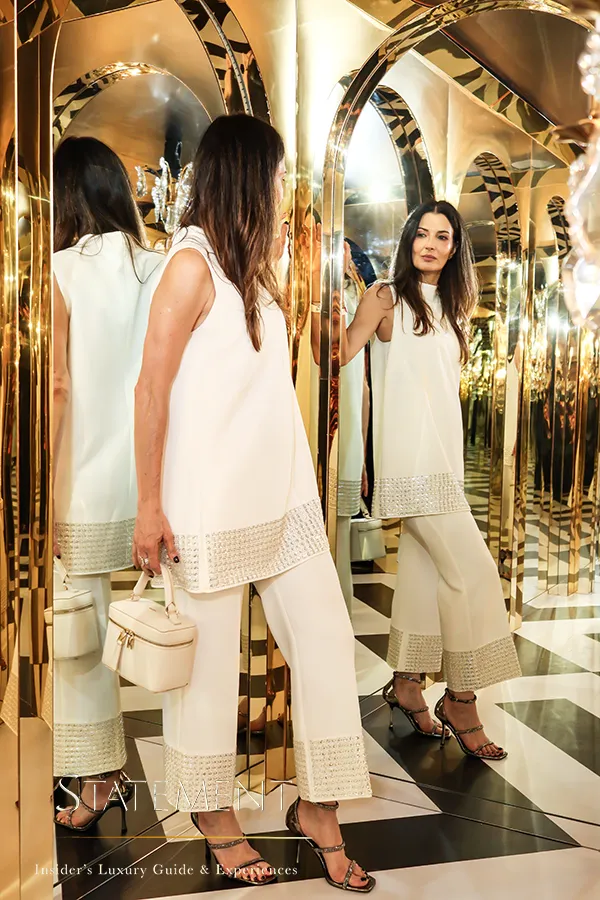
Next comes one of the most recognizable spaces in the experience: a reinterpretation of the world of Versailles and its Galerie des Glaces.
This is where you should slow down.
Because some of its most interesting details are easy to miss.
Look up, but look down as well.
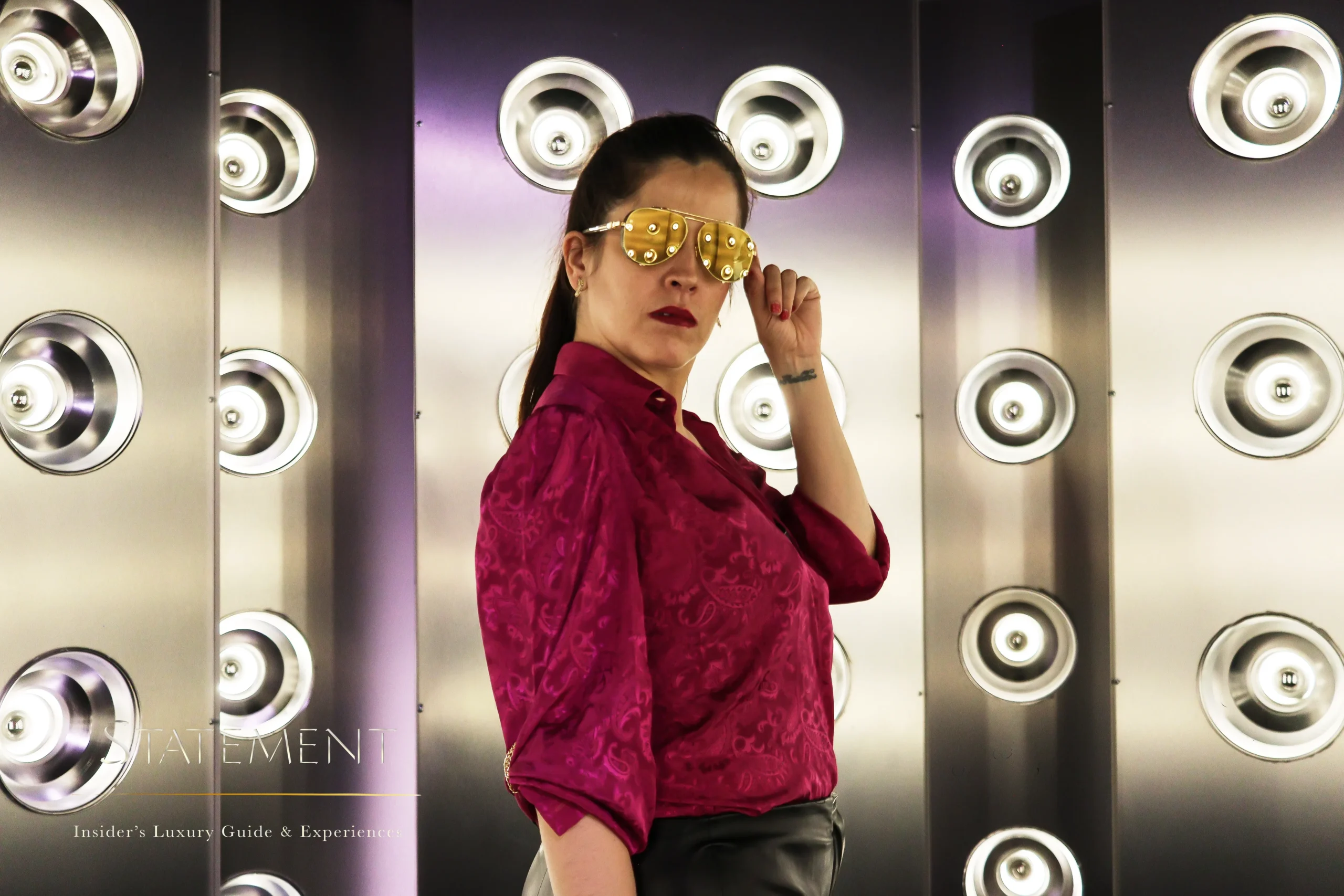
Mirrors, lighting and a black-and-white geometric floor pattern evoke different visual codes associated with French palatial architecture.
During our visit, Villanueva pointed out another particularly interesting connection from a Mexican perspective: the visual relationship between this language and floors found in historic spaces such as Chapultepec Castle.
And this is where you begin to understand the game being played throughout the experience.
It does not attempt to reconstruct Versailles.
It extracts its codes and brings them into the present.
Les Voix de Paris: A City You Can Hear
One of the concepts we enjoyed most begins with something you might not immediately associate with a Selfie Experience:
sound.
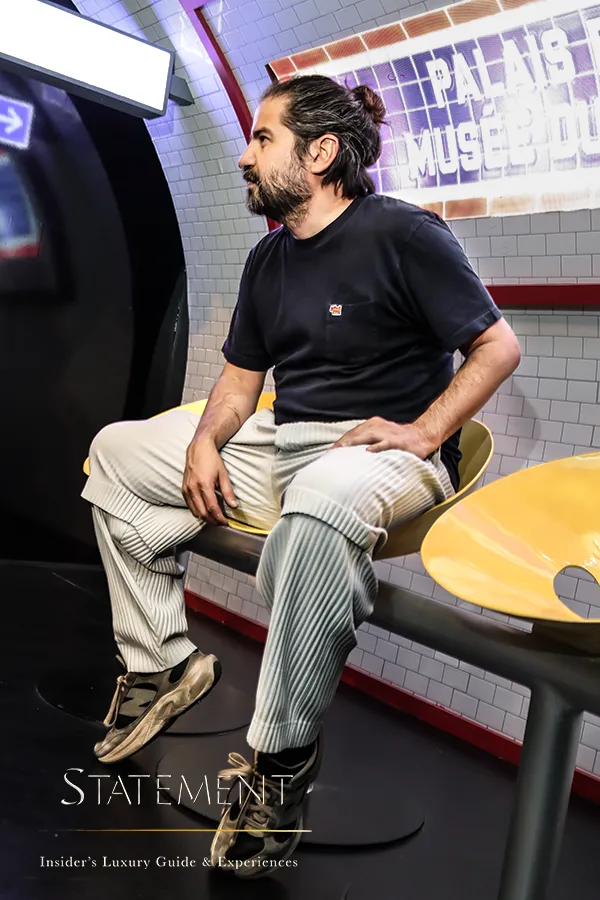
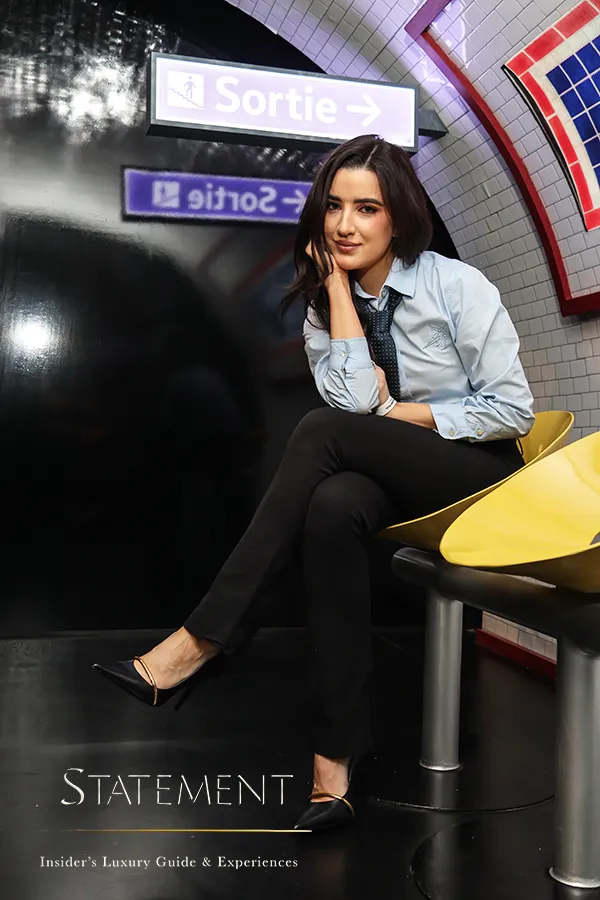
For Villanueva and his team, one way of connecting with Parisian culture is through the Métro and the artists who turn its underground spaces into small urban stages.
That idea becomes Les Voix de Paris.
As you move through different stations within the installation, the music changes too, creating different atmospheres and evoking the cultural diversity of Parisian neighborhoods.
Suddenly, the experience is no longer entirely dependent on what you can see.
You have to listen.
Because Paris does not necessarily sound the same everywhere.
And perhaps that is one of the loveliest ideas in this room:
a city can also be discovered with your eyes closed.
Paris, the World’s Atelier
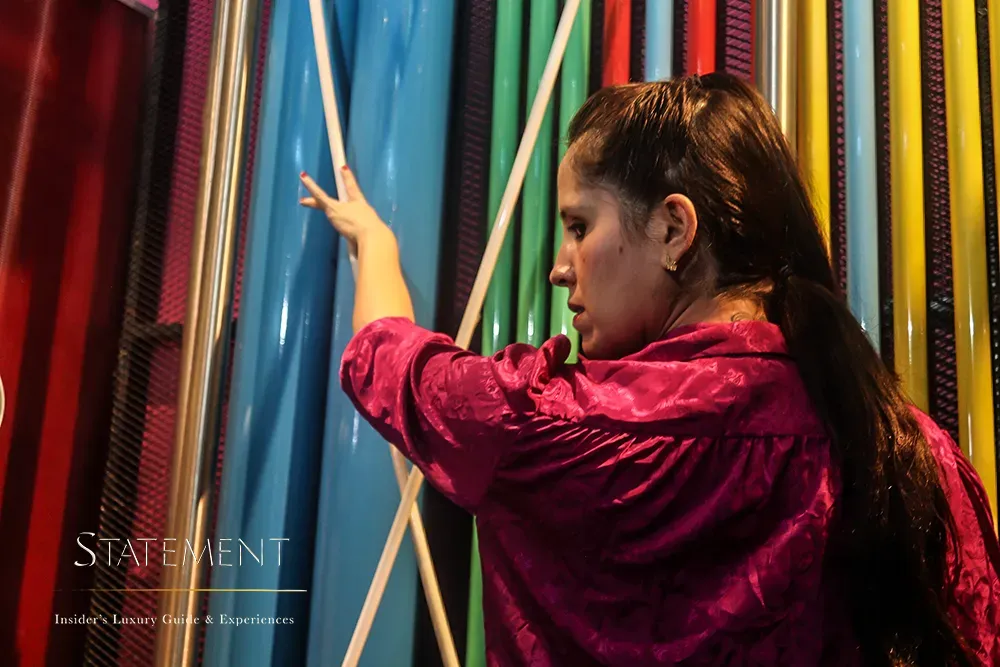
Then comes another idea deeply embedded in our collective imagination of Paris: the city as a place of creation.
For generations, artists from around the world chose Paris as a place to meet, experiment and create.
The experience interprets this through El Atelier del Mundo, an installation inspired by the universe of the Centre Pompidou and, above all, by Paris’s historic ability to become a meeting point for classical, modern and contemporary creators.
Rather than representing one specific museum, the space attempts to capture something larger: Paris as an atelier.
A city capable of attracting talent, mixing disciplines and producing new ways of seeing the world.
Why Is Paris the City of Light?
Then comes the light.
But not only in the literal sense.
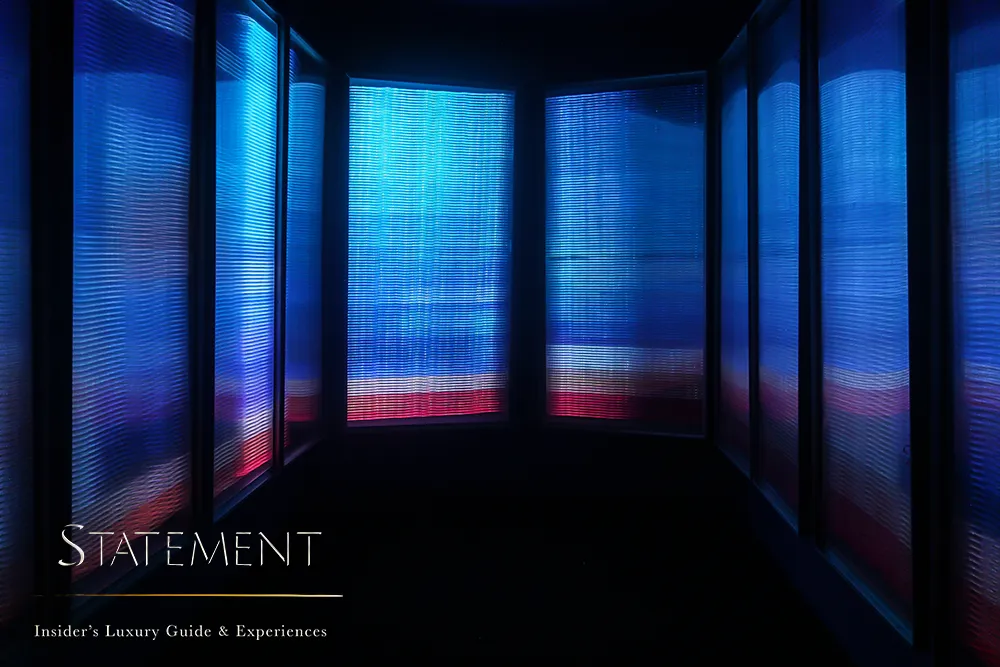
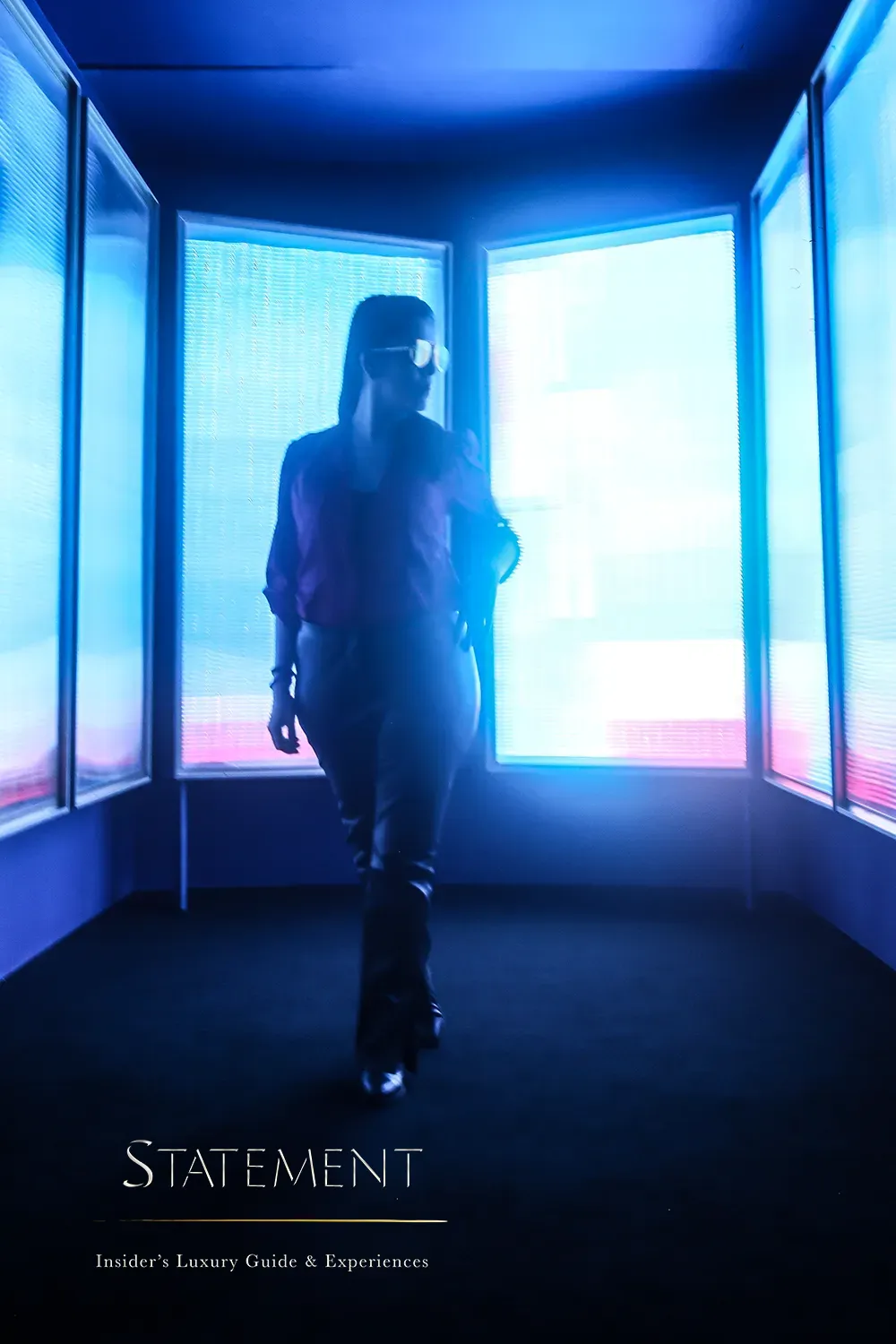
During our visit, Villanueva explained that this room explores the different ways in which Paris can be associated with the idea of illumination: from the physical city to thought, literature, art, architecture and the ideas that have traveled from France to the rest of the world.
The installation plays with precisely these different interpretations.
At certain moments, the lighting evokes reflections on the Seine at night.
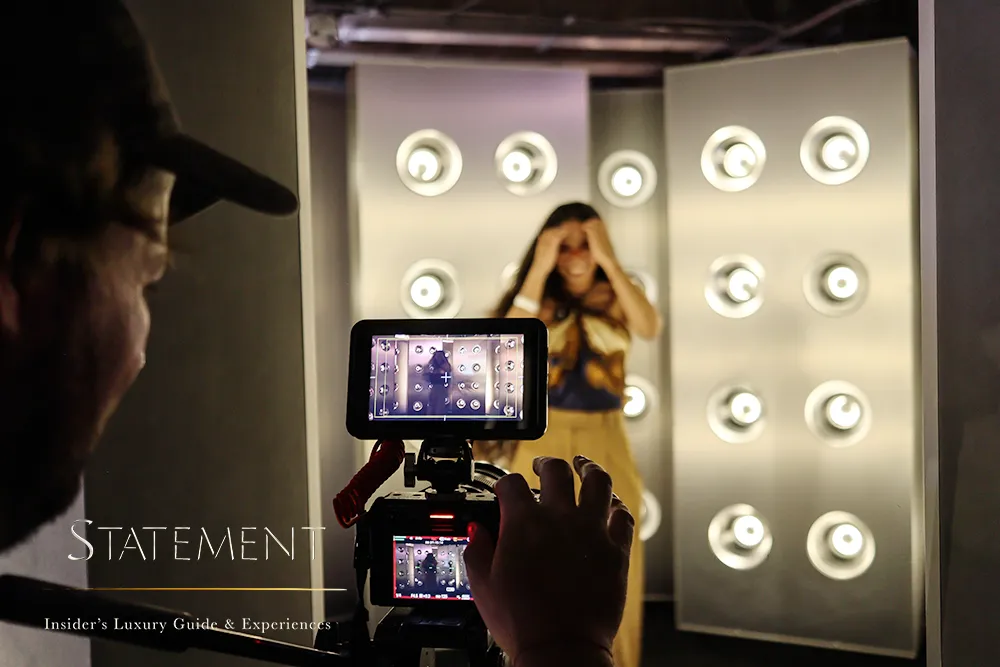
At others, flashes recall the cameras at a fashion show.
And then light stops being something physical and becomes a metaphor.
Thought. Poetry. Literature. Architecture. Art.
Different ways of illuminating.
One city.
An Architectural Reference Hidden in Plain Sight
Here we find one of those details you would probably miss without knowing the story behind the space.
The circular architecture in this part of the experience finds one of its references in the Bourse de Commerce in Paris, where historic architecture coexists with a contemporary intervention by Tadao Ando.
That encounter between a classical building and a radically contemporary architectural language inspires another idea that appears repeatedly throughout The Selfie Experience:
the past does not have to disappear for something new to emerge.
It can enter into dialogue with it.
It can be transformed.
It can become raw material for creating something entirely new.
A Stained-Glass Window That Never Looks Exactly the Same
Toward the end of the experience comes another monumental Parisian reference:
Sainte-Chapelle.
But once again, do not expect a reproduction of its celebrated stained-glass windows.
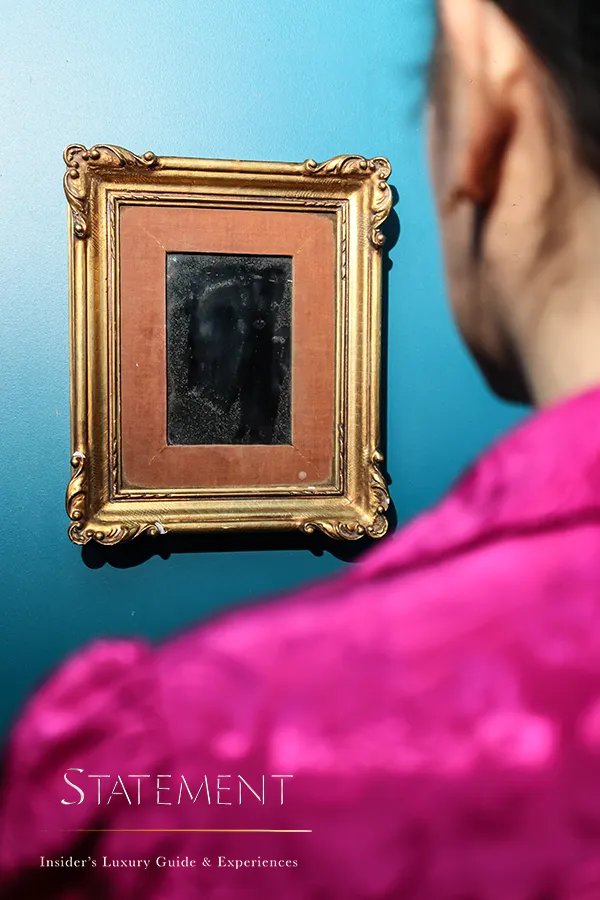
Instead, the experience takes the concept of stained glass and transforms it into a contemporary, abstract composition.
During our walkthrough, Villanueva offered us a particularly beautiful way of reading this room.
Historic stained-glass windows capture moments and stories.
Our memories do something similar.
We preserve scenes, people and experiences, but as time passes, we can return to them and see them from an entirely different perspective.
The moment may remain the same. Its meaning changes.
The installation also plays with the movement of light and the transformation that occurs as stained glass receives different intensities and angles of illumination throughout the day.
This might be the perfect place to put your phone away for a few seconds.
And simply look.
From Montmartre to a Paris You Can Transform
Toward the end, the experience moves even further away from the idea of observing Paris from a distance.
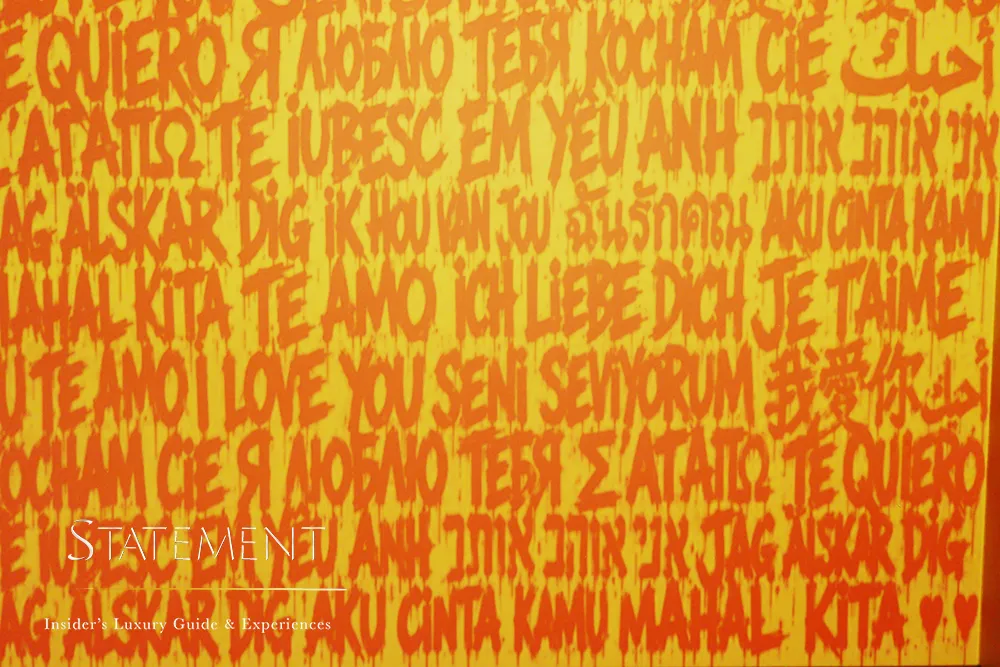
A reinterpretation of the visual universe of Montmartre’s famous Mur des Je t’aime appears through a language closer to graffiti and urban expression.
And finally, technology enters the story.
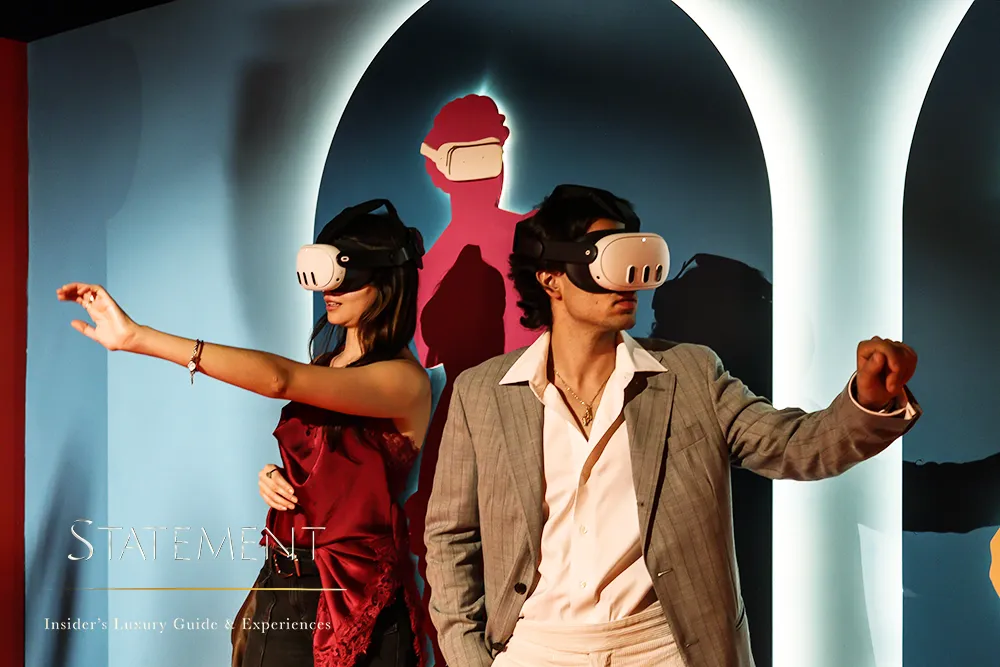
A virtual reality experience allows visitors to participate, intervene and, in a way, color Paris.
After moving through centuries of cultural references, you are no longer simply observing the city.
You interact with it.
You reinterpret it.
You make a little piece of it your own.
So Why Call It a Selfie Experience?
After discovering what lies behind these rooms, we found ourselves asking the same question.
Because yes: these spaces work extraordinarily well in front of a camera.
There are mirrors, perspectives, lighting, architecture, color and moments designed to produce spectacular images.
But experiencing them only through photography would mean missing much of what makes the project interesting.
Louis XIV. Versailles. The Métro. Artists. The Centre Pompidou. The Seine. Fashion. The Bourse de Commerce. Tadao Ando. Sainte-Chapelle. Montmartre.
Behind the images, references to French history, architecture and culture emerge again and again.
And behind them lies a much more interesting question:
How do you reinterpret centuries of culture without turning them into a set from the past?
The Selfie Experience answers by mixing everything together.
History with technology.
Architecture with light.
Heritage with contemporary design.
Memory with a camera.
Because perhaps a culture remains relevant precisely when we are still able to look at it from a new perspective.
Statement Tip
When you visit The Selfie Experience, do something we were fortunate enough to do while walking through it with Lacho Villanueva:
ask yourself why.
Why that floor?
Why that arch?
Why does the light change?
Why are you hearing that music?
Why is that room shaped that way?
Look first.
Then take the picture.
We promise you will experience it completely differently.
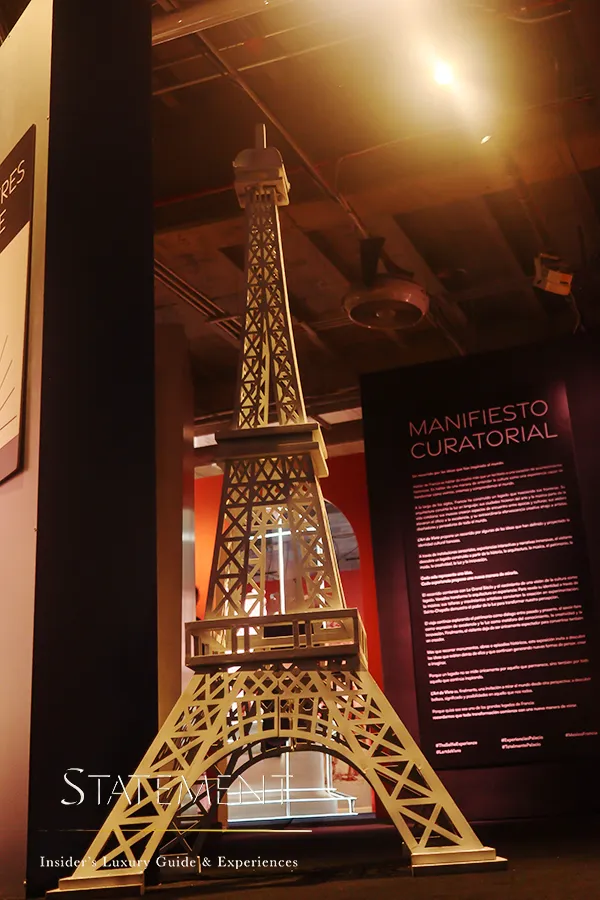
The Selfie Experience: L’Art de Vivre
Where: El Palacio de Hierro Polanco, Av. Moliere 222, Polanco, Mexico City
Dates: August 14 through September 27, 2026
What it is: An immersive journey through nine themed rooms combining architecture, sound, fashion and design.
Access: Registration is available via QR code upon arrival at the store.
Planning your visit to Palacio de Hierro Polanco?
Full Guide: Check dates, hours, and all L’Art de Vivre Mexico & France exhibits
Want to see how opening night unfolded?
Exclusive Gallery: Inside the Guest List at The Selfie Experience
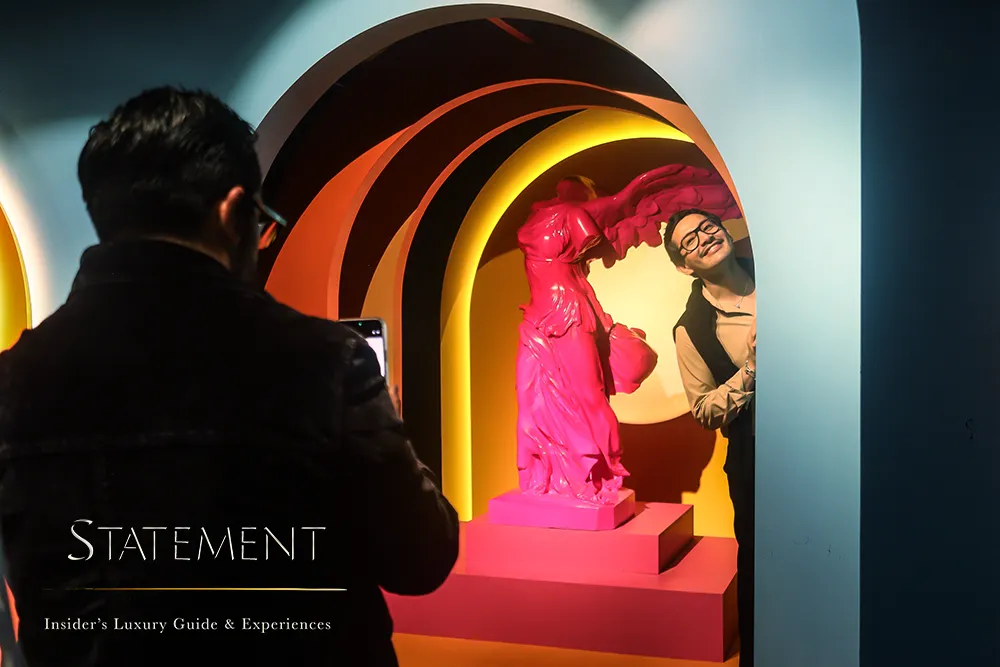
Follow our networks on Statement.
images
Statement – Alan González S. ©