Reading Time: 7 min.
Seven centuries of painting, from the Old Masters to Pop Art, make Madrid’s Museo Nacional Thyssen-Bornemisza more than one of the world’s great collections. They turn it into an extraordinary lesson in how to look, feel and experience art.
To say I love the Museo Nacional Thyssen-Bornemisza would be an understatement.
I could talk about what I consider one of the most complete, impressive, intelligent, and beautiful collections I have ever seen. I could mention the names that appear, almost absurdly, one after another as you move through its galleries. I could try to describe the feeling of standing before a work you have known for years, only to discover that seeing it in person is something else entirely. But to talk about the Thyssen without talking about its museography would be a terrible omission.
Because few museums manage something that sounds deceptively simple but is remarkably difficult to achieve: they make us feel that we can inhabit them.
It does not matter how much — or how little — you know about art. The Thyssen invites you to discover, wander, pause, retrace your steps, ask questions and, above all, enjoy.
It also invites you to look in different ways.
A Museum You Can Also Touch
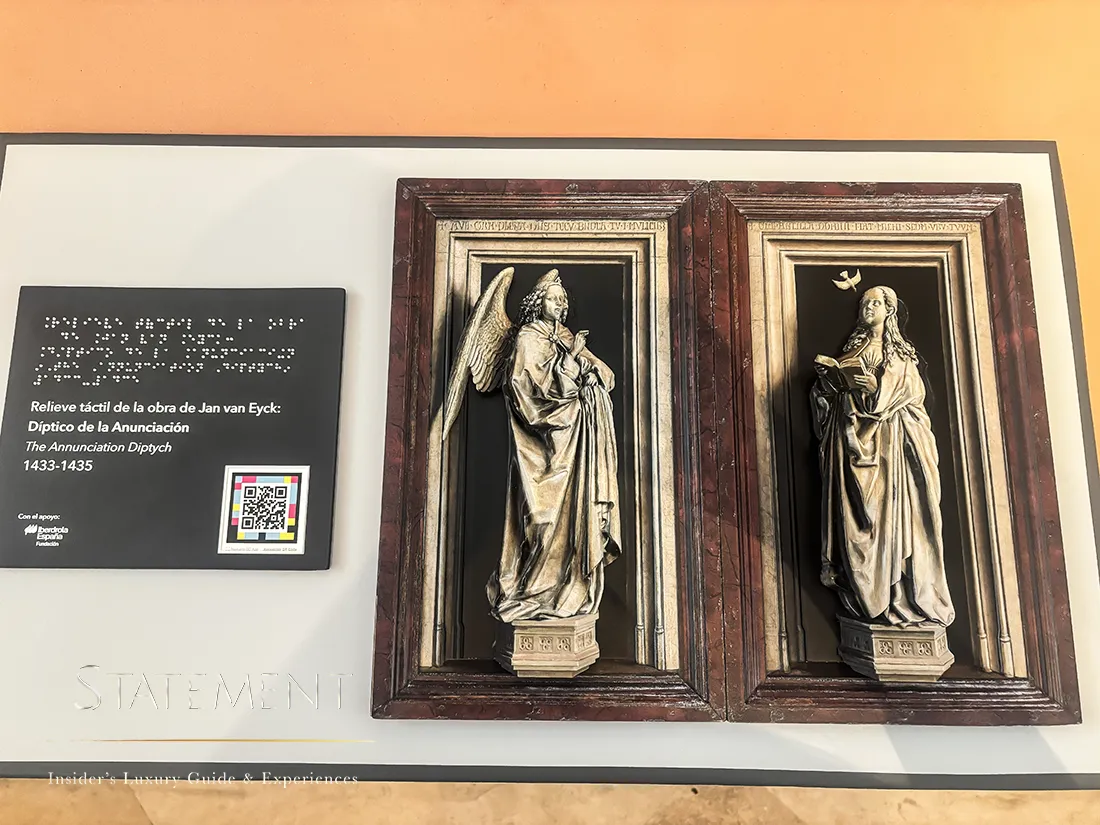
Perhaps one of the best examples is Touching the Prado— no, not the Prado. At the Thyssen, the initiative is Touching to See (Tocar para ver), a tactile route created to make some of the collection’s masterpieces accessible to blind and visually impaired visitors.
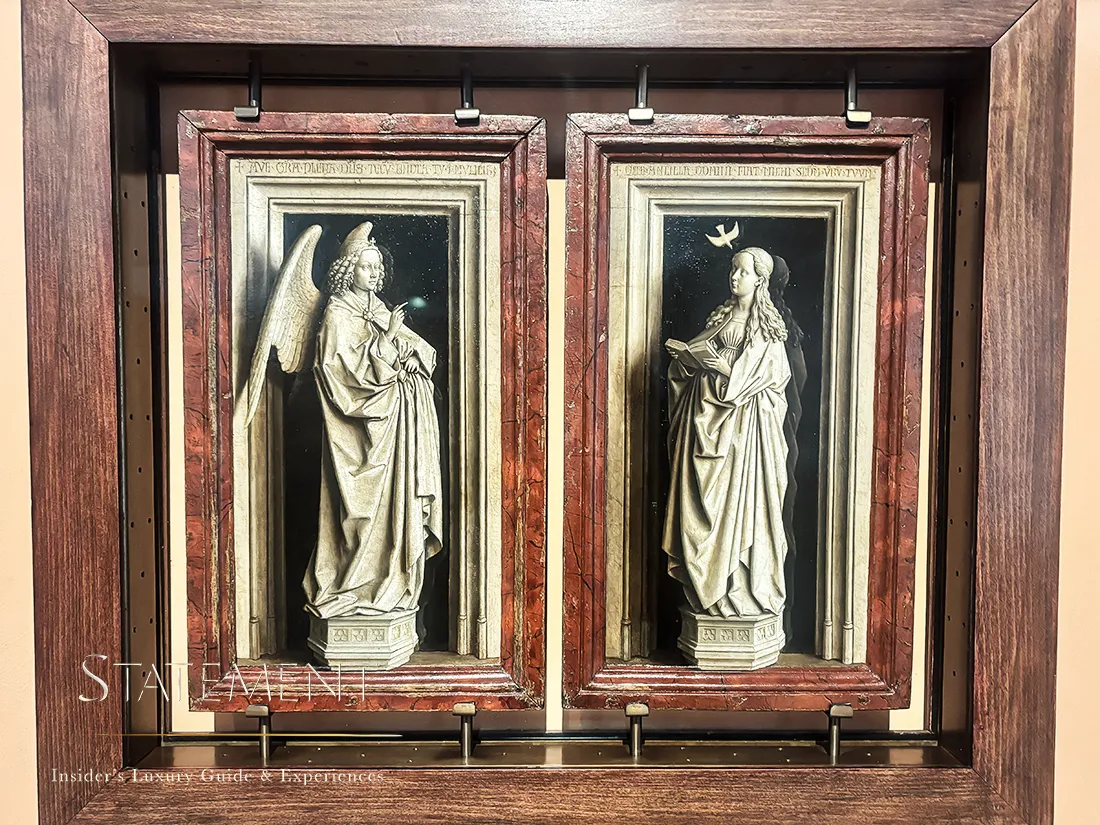
Five paintings have been recreated as tactile reliefs, allowing visitors to explore composition, perspective, volume and texture through touch. Among them is Jan van Eyck’s extraordinary The Annunciation Diptych, painted around 1433–1435.
The original, oil on panel, masterfully employs grisaille to create the illusion that we are looking at small sculptures. In its tactile interpretation, hands can explore what the eyes perceive: space, shadows, forms, and the extraordinary delicacy of its details.
It is not simply an adaptation. It is another way of looking.
And perhaps that is our first clue to understanding what makes the Thyssen so special: from the very beginning, it seems to remind us that experiencing art should not be reserved for those who already understand its codes.
What to See at the Thyssen-Bornemisza: Seven Centuries of Art
The recommended route begins on the second floor, where the permanent collection introduces us to the Old Masters, before gradually descending toward modernity.
What follows feels like a journey through time.
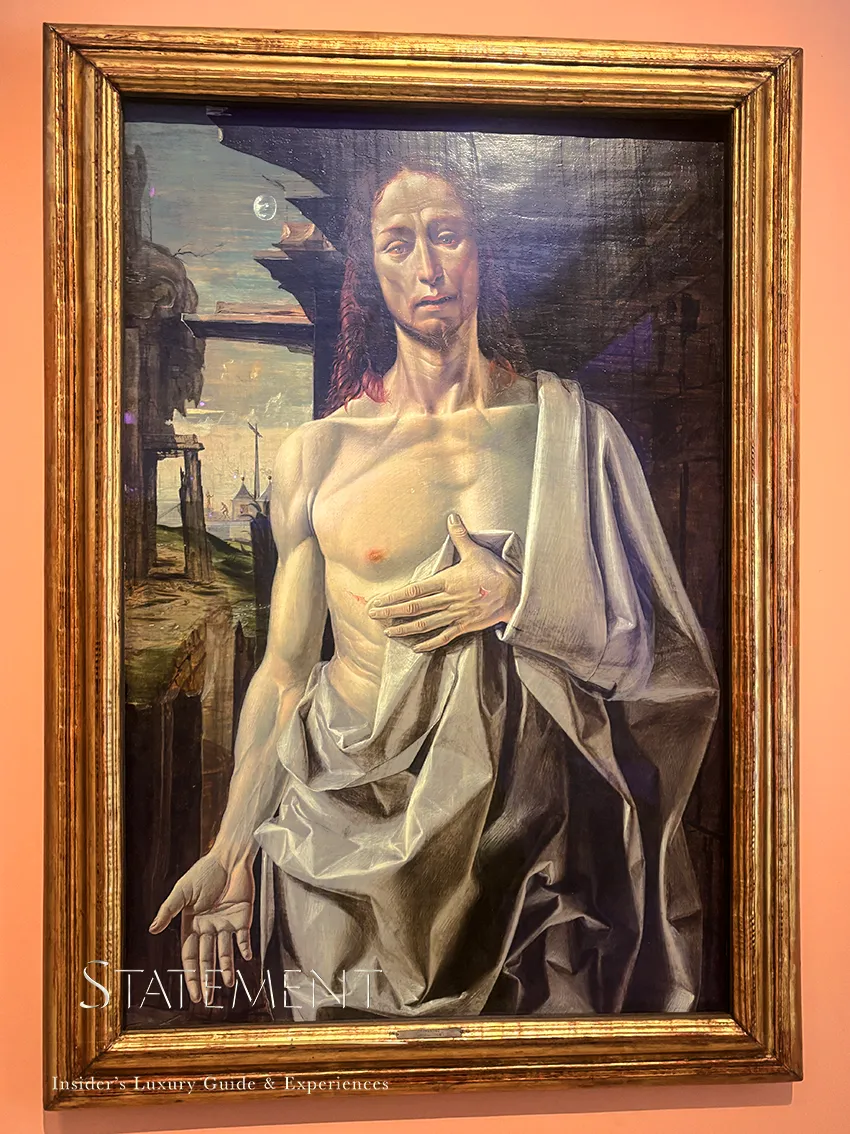
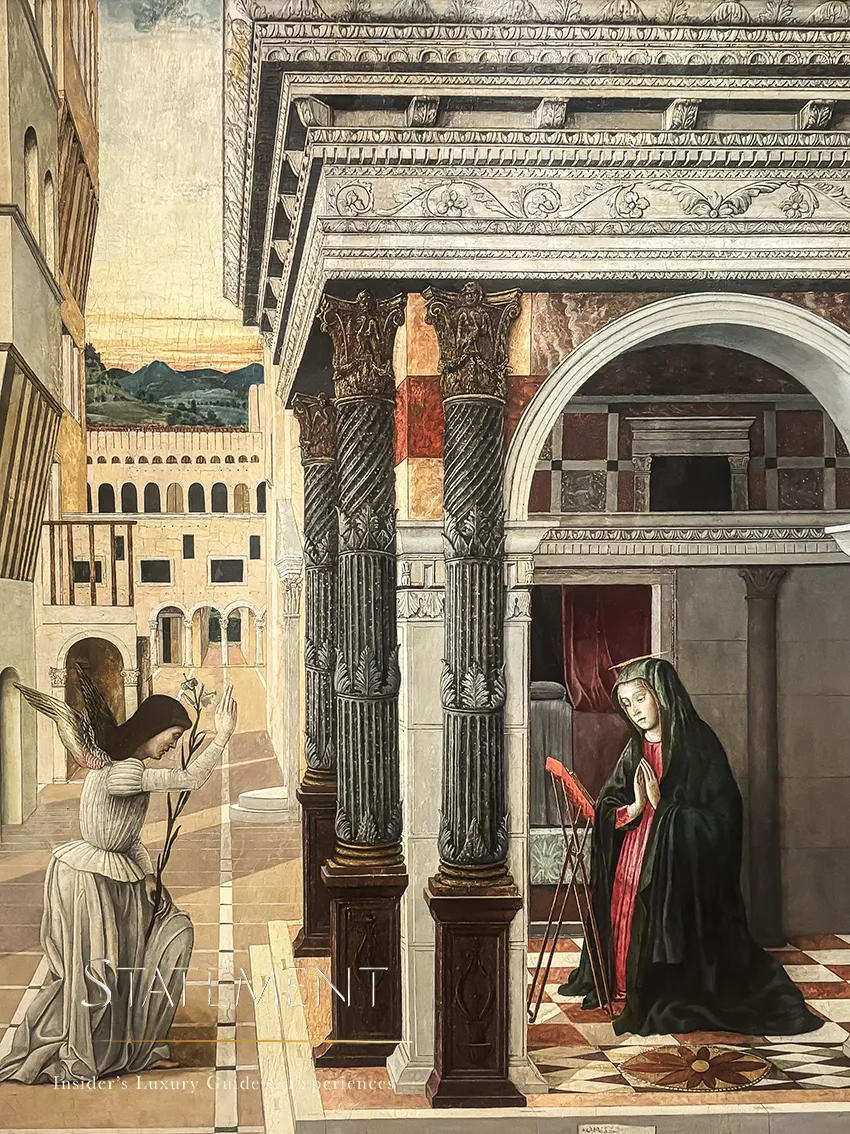
Gentile Bellini appears among the first great names. Soon after, Bramantino’s The Risen Christ takes our breath away. Religious scenes coexist with portraits, interiors, landscapes, still lifes, and fragments of everyday life that unfolded centuries before our own.
And then comes Caravaggio.
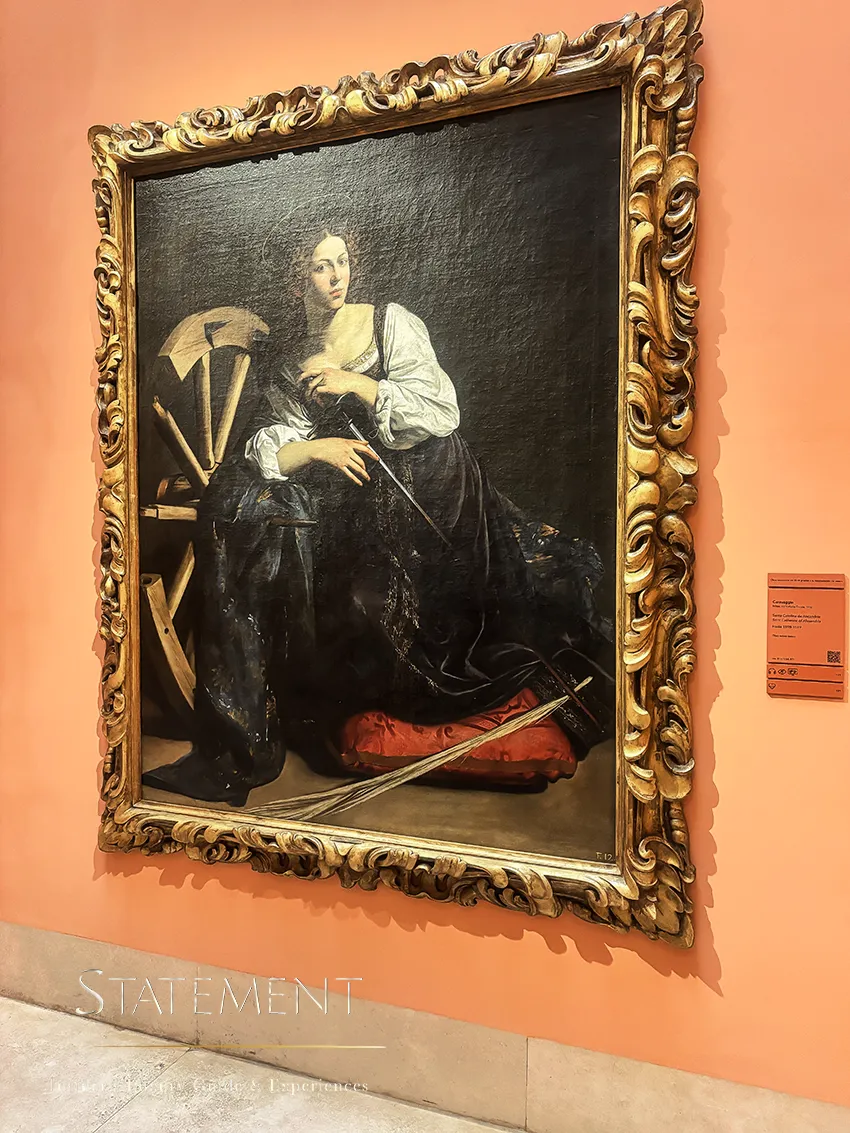
In Saint Catherine of Alexandria, painted around 1598–1599, Fillide Melandroni — the model identified as the saint — looks directly at us. She is surrounded by the instruments of her martyrdom, yet there is something in that gaze capable of crossing centuries.
The dramatic light, the naturalism, the sword, the wheel and the palm tell one story. Her eyes seem to tell another. There is complicity there. Perhaps even a hint of flirtation. As if Caravaggio, his model, and those of us standing before her shared a secret we have yet to fully understand. And then something fascinating happens.
As we move through the museum, our way of looking changes because the way artists look at the world changes too.
When Painting the World Was No Longer Enough
The collection follows a historical logic, yet experiencing it feels far less rigid than following a timeline.
For centuries, we watch artists perfect their ability to represent what stands before them: a face, a landscape, a body, a table, the light entering a room. Until reproducing the world is no longer enough. Artists begin painting how they understand the world. How they remember it. How they dream it. How they feel it. And suddenly, the mind — and color — explodes.
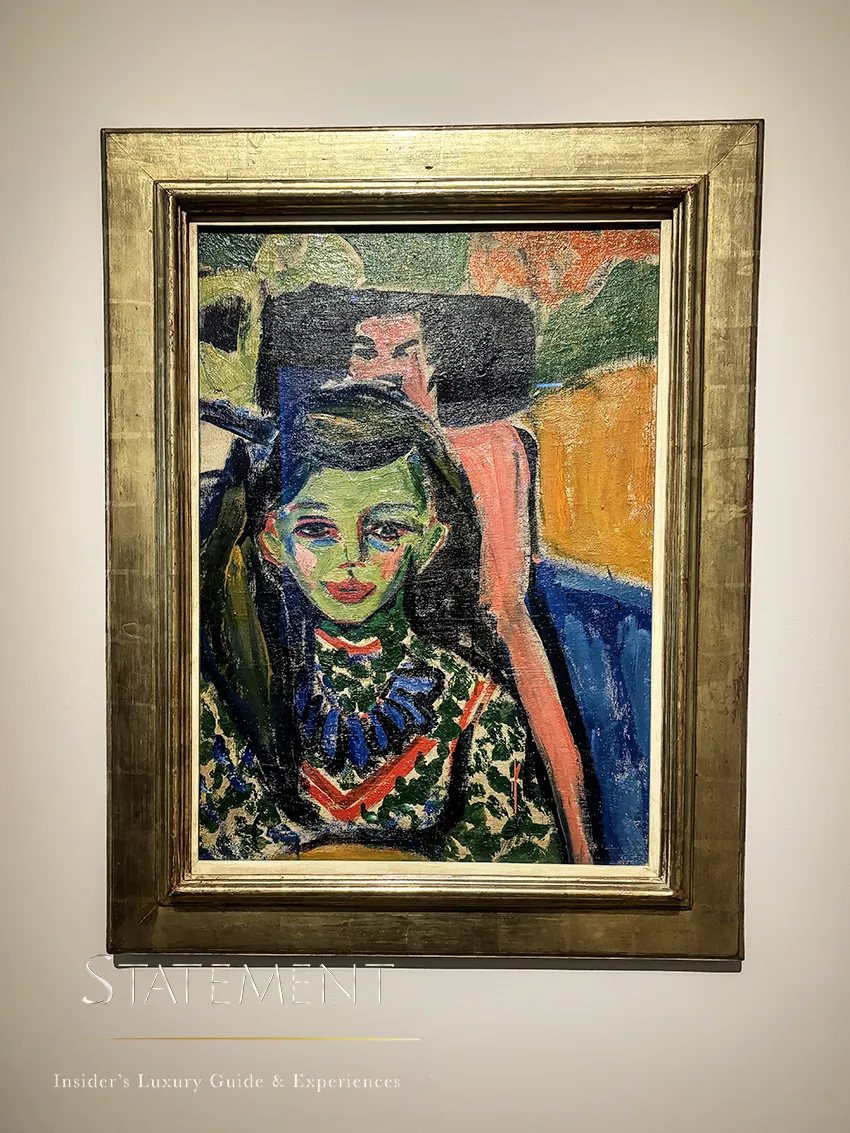
German Expressionism is one of those moments when the rules seem to break before our eyes. In Ernst Ludwig Kirchner’s Fränzi in Front of a Carved Chair (1910), simplified forms meet deliberately unnatural colors. The young girl’s green face would make little sense if the objective were still merely to reproduce reality. But it no longer is. Fränzi looks directly back at us.
And there is something in that frontal, curious and challenging gaze that almost becomes an invitation to continue through the museum in exactly the same way: with childlike eyes, filled with wonder and questions born from genuine curiosity.
From the Outside World to the Inner One
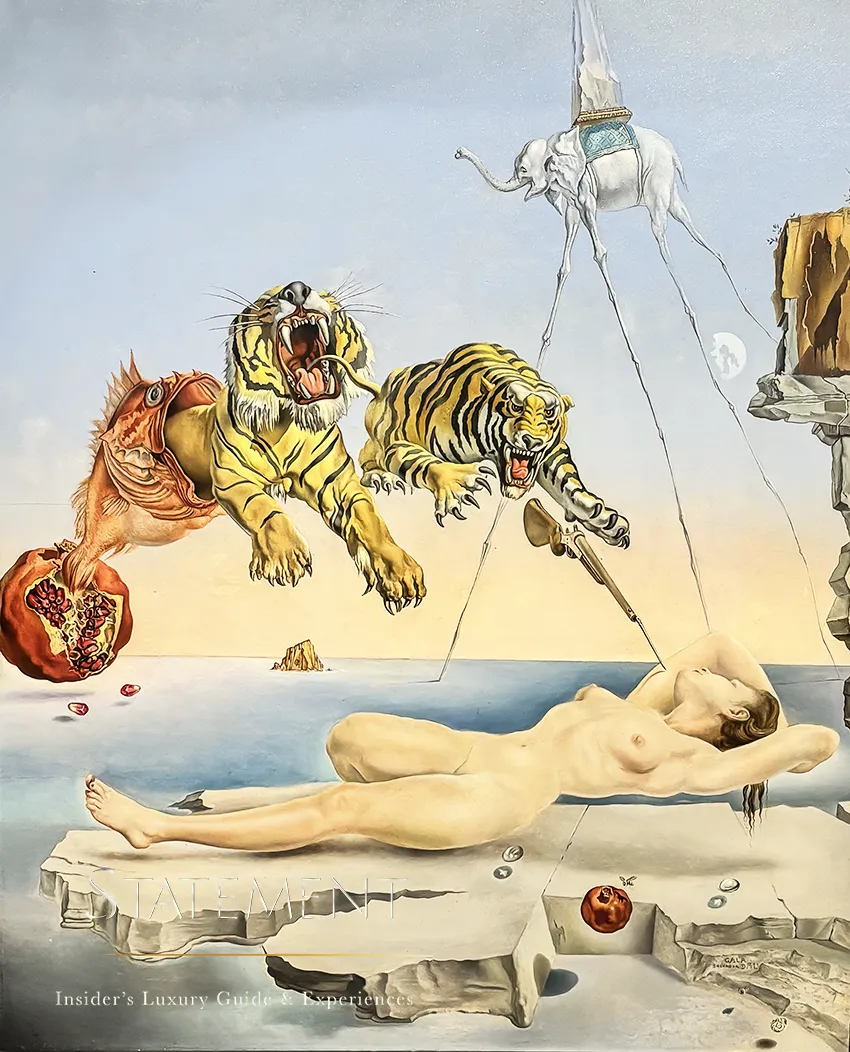
By now, we understand that art has no obligation to explain reality to us. It can invent it. Distort it. Enter our dreams. And Salvador Dalí understood that perhaps better than almost anyone.
In Dream Caused by the Flight of a Bee Around a Pomegranate a Second Before Waking Up, from 1947, we encounter a Dalí fully confident in his Surrealist language, with Gala at the center of an impossible universe where dreams, desire and the subconscious alter the rules of what we consider real. The museum has already taken us very far from where we began. And yet something is still missing. Because art can also force us simply to watch.
Looking Into Someone Else’s Intimacy
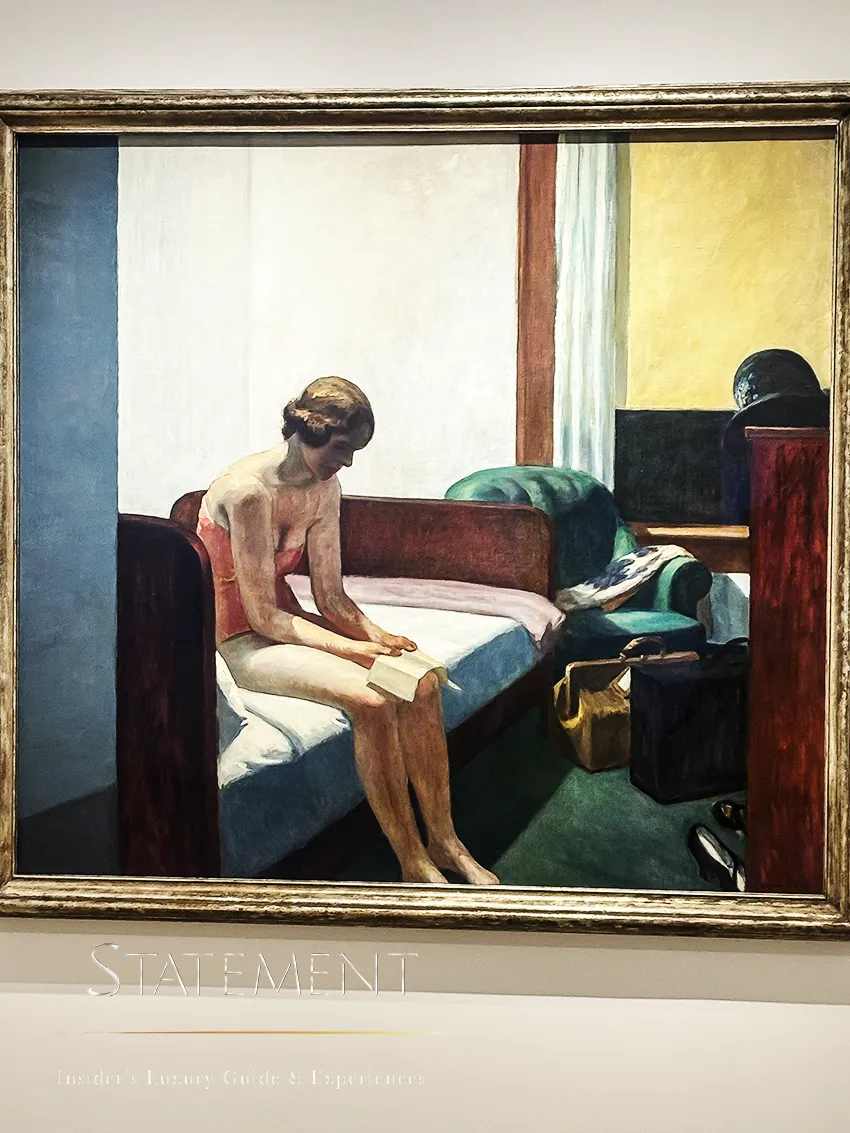
In Edward Hopper’s Hotel Room (1931), we become expectant observers.
A woman sits on the edge of a bed. It is nighttime. She has removed her dress, shoes and hat. Her luggage remains unopened, and in her hands she holds the timetable for the train she will take the following day.
Nothing is happening. And everything is happening. The architecture of the composition directs our gaze toward this absorbed woman, contained within the cold, anonymous geometry of a hotel room.
We can see her. She cannot see us. The museum itself describes how Hopper’s construction of space effectively turns the viewer into a voyeur. Suddenly, we are no longer simply contemplating a painting. We are witnessing a private moment belonging to someone who does not appear to know we are there.
After centuries spent learning how artists look at the world, Hopper makes us aware of our own gaze.
And Then Art Has Fun
The journey still has one more transformation in store. Because after gods, saints, aristocrats, landscapes, still lifes, revolutions in color, dreams and silent hotel rooms, what we call art begins to look toward popular culture.
Enter Roy Lichtenstein.
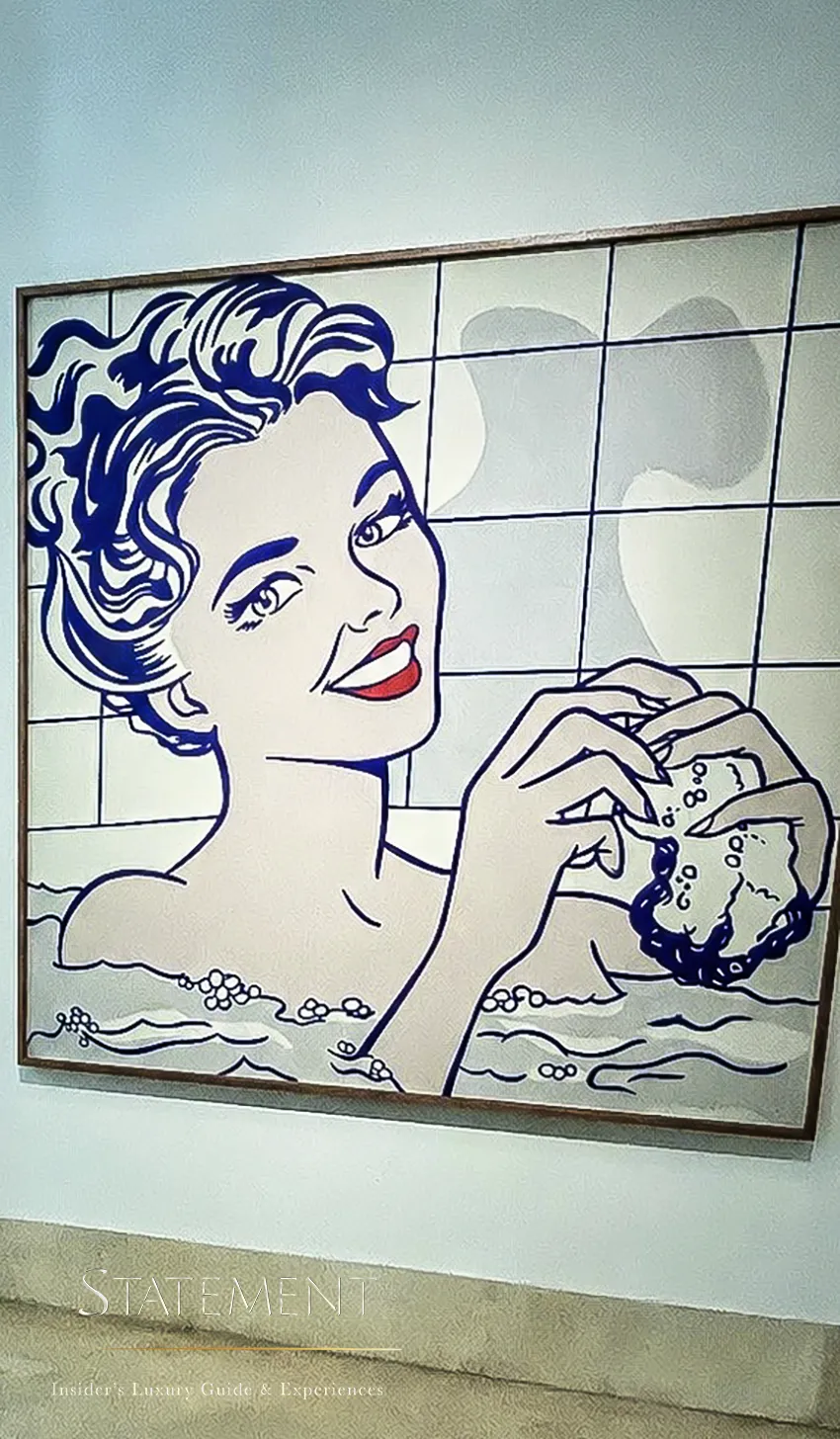
Woman in Bath (1963) contains everything that made American Pop Art one of the most recognizable visual languages of the 20th century: primary colors, thick black outlines and the famous Ben-Day dots borrowed from the mechanical printing language of comic books.
Yet even here, the Thyssen manages to close one of those circles that make its collection so intelligent. The image of a woman bathing did not begin with Pop Art. It is a subject that runs through centuries of art history.
Lichtenstein simply takes that tradition and transforms it through the visual language of his own time. After everything we have seen, art changes the rules again. It can be popular. It can appropriate the language of comics. It can make us smile. It can be fun. And still make us look.
Learning to Look Again
Perhaps that is why explaining the Museo Nacional Thyssen-Bornemisza by simply listing its masterpieces feels almost impossible.
Of course they are there. But doing so would reduce the experience to a list of famous names. What is truly extraordinary happens between one work and the next.
We begin by observing how artists attempted to represent the world. Then we discover how they began to interpret it, distort it, dream it, abstract it and reconstruct it. Painting gradually stops asking only what do we see? and begins asking how do we see?
And as we travel through those seven centuries, something changes in us too. We move closer. We stop. We touch. We feel. We ask questions. We look again. Until, perhaps, we recover a little of the curiosity with which Fränzi looks back at us from her chair.
That is why saying I love the Thyssen would be an understatement. Some museums preserve the history of art. The Thyssen makes you want to keep discovering it.
Follow us on Statement.
images
Statement – Avril Parrillat. ©